 2018, Vol. 29


In recent years, water pollution problems occur in the whole world making a great influence on people's life, and dye pollution in the water environment to humans is always major concerns [1-3]. Only tiny amounts of dye in water can be toxic to creatures in water. Therefore, the removal of all kinds of dye from waste effluents becomes environmentally important. Among several chemical and physical methods, adsorption process is one of the effective methods to remove dyes from wastewater. Many studies have been carried out to find efficient adsorbents to lower dye concentrations from waste effluents, which include activated carbon [4], polysaccharide-based materials [5], silica [6], and others [7, 8]. However, the adsorption capacity of the above adsorbent is not high enough in practical application. Therefore, researches on efficient absorbents to improve adsorption performance are imperative.
BiOI has attracted wide attention and research activity due to its unique layered crystal structure and photocatalytic property [9]. However, there are few reports about adsorptivity of BiOI. In this work, BiOI microspheres were prepared in the presence of SDS via a simple and facile method at room temperature. To the best of our knowledge, this is the first time to report the SDS-assisted synthesis for BiOI with excellent adsorption performance for different dyes.
Herein, the chemicals used in this work were of analytical reagent grade, without further purification. Bi(NO3)3·5H2O and KI were chosen as the Bi and I sources, respectively. In a typical synthesis, 3.34 g of Bi(NO3)3·5H2O was dissolved in 7 mL of glacial acetic acid using magnetic stirring for 30 min at room temperature. The mixture was then added into 10 mL of buffer solution which contains 1.66 g of KI and 1.64 g of CH3COONa. And then a certain amount of SDS solution was added to the mixed solution. After stirring for 3 h at room temperature, the samples was washed with deionized water and ethanol several times to remove residual ions, and dried at 60 ℃ for 12 h. The as-prepared samples were labeled as BiOI, 2% SDS-BiOI, 4% SDS-BiOI, 6% SDS-BiOI, 8% SDS-BiOI and 10% SDS-BiOI corresponding to the molar ratio of SDS to BiOI.
To investigate the structure of the samples, the as-prepared samples were characterized by X-ray powder diffraction (XRD, Bruker D8 Advance) with Cu Kα radiation, S-4800 scanning electron microscopy (SEM, Hitachi, Japan), High-resolution transmission electron microscopy (HRTEM, Tecnain G2 F30), BrunauerEmmett-Teller (BET, NOVA4000e, Quantachrome, U.S.A.) and X-ray photoelectron spectroscopy (XPS, measured in Thermo Fisher Scientific ESCALAB 250). In addition, the adsorption performance for RhB (rhodamine B, 10 mg/L, 100 mL) and MO (methyl orange, 10 mg/L, 100 mL) solution over the as-prepared samples (80 mg) was carried out at 25 ℃. The equilibrium solution pH was adjusted to 3.0 with HNO3 and NaOH. The mixture was shaken in an orbital shaker (150 rpm) under dark conditions. Specifically, the concentration was analyzed using a UV-7504 UV-vis absorption spectrophotometer with wavelength at 553 nm and 500 nm, respectively. The equilibrium adsorption can be quantified and calculated according to the following equation:

|
(1) |
where qe (mg/g) represents the adsorption capacity of adsorbent, C0 (mg/L) is the initial concentration of RhB or MO in the aqueous solution, and Ce (mg/L) is the equilibrium concentration of solution after adsorption. V (L) is the volume of solution, and m (g) is the mass of the as-prepared sorbent.
The phase structure and crystallinity of the as-prepared samples were characterized by X-ray powder diffraction (XRD). As shown in Fig. 1, the peaks of (102), (110), (104) and (212) for the samples could be well indexed to the tetragonal BiOI (JCPDS No.100445) with the lattice constants of a = b = 3.994 Å and c = 9.149 Å [10]. The rest of minor peaks are corresponding to the XRD data file, and no other peaks of impurities were detected, indicating that the composites are pure BiOI.

|
Download:
|
| Fig. 1. XRD patterns of BiOI samples. | |
Figs. S1a-f (Supporting information) show the SEM images of BiOI samples, respectively. In the absence of SDS, the sample consists of the spherical structure with the diameter of several to several tens of microns (Fig. S1a). However, when SDS is added to the reaction system, the size of the microspheres is approximately uniform. Furthermore, it is worthwhile to note that the microspheres of 8% SDS-BiOI tended to be arranged into claviform powders (Fig. S1e and Fig. 2a). Consequently, we can confirm that the addition of SDS is one of the key factors in the formation of the claviform structure BiOI. In order to investigate the elements and distribution of the 8% SDS-BiOI, energy-dispersive spectroscopy (EDS) mapping was carried on the sample. As shown in Figs. 2b-d, the results indicate that the samples consists of three elements, Bi, O and I elements, which are well dispersed in the BiOI microspheres. As shown in Fig. 2e, the HRTEM image of BiOI shows that the lattice fringes spacings of 0.301 nm is consistent with the (102) plane of the tetragonal BiOI [11], indicating the sample is well crystallized.

|
Download:
|
| Fig. 2. SEM image (a) and EDS mapping of 8% SDS-BiOI: Bi (b), O (c) and I (d); (e) HRTEM of 8% SDS-BiOI. | |
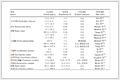
The porous structures with a large specific surface area can provide more reactive adsorption/desorption sites for dye molecules, and therefore the samples were characterized by N2 adsorption/desorption isotherm (Fig. S2 in Supporting information). The specific surface parameters of the BiOI samples are listed in Table 1. It can be seen that adding SDS into the synthesis system greatly enlarges the specific surface area of BiOI, and the specific surface area increases from 12.12 m2/g for BiOI to 23.84 m2/g for 8% SDS-BiOI. The pore volume also increases from 0.014 cm3/g for BiOI to 0.058 cm3/g for 8% SDS-BiOI.
|
Table 1 Effect of SDS on the specific surface parameters of BiOI. |


The surface chemical composition and the oxidation state of BiOI and 8% SDS-BiOI were investigated by XPS analysis (Fig. 3). The correlative XPS peak position is calibrated by using the contaminant carbon (C 1s = 284.6 eV) as a reference. As shown in Fig. 3a, the sample contains C, Bi, O, and I elements. The peaks at the binding energy of 158.7 eV and 164.0 eV are assigned to Bi 4f7/2 and Bi 4f5/2, respectively [9], which are the characteristic of Bi3+ ions. The peaks at 618.5 eV and 630.0 eV are assigned to I 3d5/2 and I 3d3/2, respectively [12], which are characteristic of I- ions. The O 1 s of BiOI can be fitted by two peaks, including Bi-O bonds (529.6 eV) and O-H bonds (532.1 eV). However, the O 1s of 8% SDS-BiOI can be fitted by three peaks at 529.6 eV, 531.6 eV and 533.2 eV. The peak at 531.6 eV can be attributed to the O-atoms in the vicinity of an oxygen vacancy [13], suggesting that the addition of SDS is favorable to forming oxygen vacancy.

|
Download:
|
| Fig. 3. XPS spectra of BiOI and 8% SDS-BiOI (a) survey scan, (b) Bi 4f, (c) I 3d and (d) O 1s. | |

To evaluate the adsorption capacity of the as-prepared samples, cationic RhB and anionic MO were chosen as the simulated pollutants and the results are shown in Figs. 4a and c illustrate that the equilibrium was reached of all samples within 15 min. Interestingly, 8% SDS-BiOI exhibited the highest adsorption capacity of RhB with the adsorption quantity of 12.10 mg/g and the adsorption efficiency was about 96.4%, which was 2.4 times larger than that of pure BiOI. As shown in Figs. 4b and d, the pure BiOI shows negligible activity for MO adsorption. By contrast, adding some SDS greatly affects adsorption capacity of BiOI, and the adsorption efficiency of 8% SDS-BiOI was 6.1 times higher than that of pure BiOI. To evaluate reusability and stability of the 8% SDS-BiOI, the cycling experiments for adsorption of RhB and MO by 8% SDS-BiOI were carried out.

|
Download:
|
| Fig. 4. Dark adsorption of RhB (a and c) and MO (b and d) by BiOI samples; the cycling experiments for adsorption of RhB (e) and MO (f) by 8% SDS-BiOI. | |

After four consecutive runs, the adsorption quantity of RhB and MO declined by 0.40 mg/g (Fig. 4e) and 0.42 mg/g (Fig. 4f), respectively, which indicated a high stability adsorptive activity for adsorption of RhB and MO. It is well known that the porous structure and the large specific surface area are propitious to the adsorption ability. Most importantly, BiOI is an important Ⅴ-Ⅵ-Ⅶ ternary compound with the layer structure characterized by [Bi2O2]2+ slabs interleaved by double slabs of halogen ions, and its layered structure can induce an static electric field between the [Bi2O2]2+ slab and double [I]- slabs. Oxygen vacancy can strength the electrostatic interaction and act as active adsorption sites for adsorbent [14, 15]. It can be concluded that the crystal defects strongly influence on the adsorption property of BiOI.
In summary, we have successfully synthesized BiOI microspheres via a facile SDS-assisted hydrolytic method. Although all of the samples are of 3D structure, the BiOI samples in the presence of 8% SDS-BiOI possessed the same sizes of microspheres, larger specific surface area and more oxygen vacancies compared with the pure BiOI. Moreover, owing to the effect of oxygen vacancies, the 8% SDS-BiOI showed the higher adsorption performance compared with the pure BiOI samples. The adsorption efficiency of RhB with 8% SDS-BiOI reached almost 94.6% within 15min, and the sample exhibited the highest adsorption capacity of MO with the adsorption quantity of 9.85mg/g within 10min. The work not only sheds lighton the roleof oxygenvacancies in improving adsorption ability, but also paves a new way for constructing efficient adsorbents of dyes.
AcknowledgmentsThis work was supported by the National Natural Science Foundation of China (No. 11179029), the Science Technology Plan Project of Hebei Province (No. 15211109D) and Hebei Normal University (No. L2017K05).
Appendix A. Supplementary dataSupplementary data associated with this article can be found, in the online version, at https://doi.org/10.1016/j.cclet.2017.12.016.
| [1] |
M. Rafatullah, O. Sulaiman, R. Hashim, A. Ahmad, J. Hazard. Mater. 177 (2010) 70-80. DOI:10.1016/j.jhazmat.2009.12.047 |
| [2] |
V.K. Gupta, J. Suhas, Environ. Manage. 90 (2009) 2313-2342. |
| [3] |
Z.M. Liu, L. Peng, A.W. Tang, Chin. Chem. Lett. 27 (2016) 1801-1804. DOI:10.1016/j.cclet.2016.04.016 |
| [4] |
Y.S. Al-Degs, M.I. El-Barghouthi, A.H. El-Sheikh, G.M. Walker, Dyes Pigments 77 (2008) 16-23. DOI:10.1016/j.dyepig.2007.03.001 |
| [5] |
G. Crini, Prog. Polym. Sci. 30 (2005) 38-70. DOI:10.1016/j.progpolymsci.2004.11.002 |
| [6] |
P.K. Jal, S. Patel, B. Mishra, Talanta 62 (2004) 1005-1028. DOI:10.1016/j.talanta.2003.10.028 |
| [7] |
S.S. Li, X.Z. Kong, X.B. Jiang, X.L. Zhu, Chin. Chem. Lett. 24 (2013) 287-290. DOI:10.1016/j.cclet.2013.02.012 |
| [8] |
V.P. Mahida, M.P. Patel, Chin. Chem. Lett. 27 (2016) 471-474. DOI:10.1016/j.cclet.2015.12.015 |
| [9] |
Y.Y. Li, H.A. Qin, H.J. Sun, et al., Mater. Lett. 152 (2015) 248-251. DOI:10.1016/j.matlet.2015.03.126 |
| [10] |
J.L. Zhao, X.W. Lv, X.X. Wang, et al., Mater. Lett. 158 (2015) 40-44. DOI:10.1016/j.matlet.2015.05.037 |
| [11] |
J. Di, J. Xia, M. Ji, et al., Langmuir 32 (2016) 2075-2084. DOI:10.1021/acs.langmuir.5b04308 |
| [12] |
F.Q. Ma, J.W. Yao, Y.F. Zhang, Y. Wei, RSC Adv. 7 (2017) 36288-36296. DOI:10.1039/C7RA06261C |
| [13] |
Y. Zhao, X. Tan, T. Yu, S.C. Wang, Mater. Lett. 164 (2016) 243-247. DOI:10.1016/j.matlet.2015.10.155 |
| [14] |
M. Guan, C. Xiao, J. Zhang, et al., J. Am. Chem. Soc. 135 (2013) 10411-10417. DOI:10.1021/ja402956f |
| [15] |
S. Wu, J. Xiong, J. Sun, et al., ACS Appl. Mater. Interfaces 9 (2017) 16620-16626. DOI:10.1021/acsami.7b01701 |