 2018, Vol. 29


Inorganic silica-based aerogels are the earliest and widely-used aerogels, which possess super low densities and are generally nonflammable, but the poor mechanical property and high production cost remarkably limit their applications [1, 2]. In contrast, polymer/clay composite aerogels [3-5], which combine the advantages of the polymer and the clay and easily overcome the fragility of the silica aerogels, have aroused heterogeneous interests because of their high performances. Moreover, these composite aerogels are always prepared by freeze-drying method with water as the solvent, making the preparation process facile, environmentally friendly and cost economic. Consequently, polymer/clay composite aerogels are highly promising for various areas, such as oil contaminant removal [6, 7], drug delivery [8], building insulation [9], etc.
Polyvinyl alcohol (PVA) is a proper candidate for polymer/clay composite aerogels for its highly hydrophilic, nontoxic and mechanically strong. Chen et al. [10] prepared PVA-based composite aerogels with several clays and nano silica, and studied the performances of the aerogels. Clays can migrate to the surface which is driven by the lower surface free energy compared with carbon-based polymers and promote the formation of a protection layer [11, 12]. The flame retardant property of the sample is thus improved. However, the protective barrier formed by MMT in the fire region mainly retards the flame spread rather than reduce fire load, ignitability or flammability of the material [13]. Because PVA is a highly flammable polymer, the PVA-based composite aerogels are still with fire risky. Higher fire resistance could be achieved by addition of effective flame retardants, such as ammonium polyphosphate (APP) [14], but they had poor compatibility and dispersion with the polymer. Wang et al. [15] used piperazine-modified APP (PA-APP) instead of APP to maintain the mechanical strength of the aerogels. However, a negative impact on the strength is inevitable.
Herein, we demonstrate a facile heat treatment method to improve the thermal stability and flame retardancy of the PVA/ MMT composite aerogel. After a high temperature treatment, PVA decomposed with partial elimination of hydroxy groups. Consequently, the thermal stability and flame retardant performances of the aerogels were improved significantly.
Poly(vinyl alcohol) (PVA) having a polymerization degree of 1000 or more and a saponification degree of 99 mol% or more (PVA-1799) were supplied by Kelong Chemical Reagent Corporation (Chengdu, China). Sodium montmorillonite (Na+-MMT; PGW grade; cation exchange capacity (CEC) 145 meq/100 g) was purchased from Nanocor Inc. All ingredients were used without further purification.
A 5 wt% aqueous solution of PVA was prepared by dissolving 5 g PVA to 100 mL DI water at90 ℃ under stirring for 8h.5g MMT was mixed with 100 mL of 5wt% PVA solution at 14.000 rpm (A-555, INAYOU, China) to prepare a PVA/MMT solution. The PVA/MMT solution was then poured into a mold and frozen with liquid nitrogen, following with freeze drying using a VFD-1000 lyophilizer (Boyikang Co., Ltd., China) at -20℃ with an air pressure < 1 Pa. The resultant aerogel was named P5M5, where P and M denotes to PVA and MMT, respectively, and the numbers refer to the percentages of these materials in water. The freeze-dried aerogels were then treated in a vacuum oven at 150 ℃ or 200 ℃ for 3hto prepare the final aerogels, which were named P5M5-150 and P5M5-200, respectively.
Fourier transform infrared (FTIR) spectroscopy was used to characterize the structural changes of the aerogels through a heat treatment process. The FTIR spectra were shown in Fig. 1. The peak at about 3300-3400cm-1 represents the stretching vibration of hydroxyl. The peak intensity decreases with the treatment of 150℃ and increases with the treatmentof200℃. A new peak can be observed in the FTIR spectra of P5M5-200 at 1713 cm-1, which belongs to C=O. By comparison [16, 17], we can speculate that the hydroxyls of the sample dehydrated into ether bonds at 150 ℃ and the ether bonds fractured at 200 ℃ subsequently. Finally, partial elimination of hydroxyl groups was achieved with subsequent formation of carbonyl groups.

|
Download:
|
| Fig. 1. FTIR spectra of the heat treatment aerogels. | |
To further confirm the conjecture, X-ray photoelectron spectroscopy(XPS) was conducted. Fig. 2 shows the C1s and O1s spectra of P5M5, P5M5-150 and P5M5-200. For P5M5-200, a new peak can be observed at the binding energy of 287.0 and 531.2 eV in the C1s and O1s spectra, respectively, which belong to chemical bond of C=O and correspond to the previous results. However, because the binding energy of C—O—C is close to that of C—O (the binding energy of 286.3 eV in C1s spectra and 532.9 eV in O1s spectra), it is difficult to discuss the XPS results of the aerogel treated at 150 ℃.

|
Download:
|
| Fig. 2. Spectra ofX-ray photoelectron spectroscopy for P5M5 (1), P5M5-150 (2) and P5M5-200 (3) in a muffle for 3min in N2 atmosphere: C1s (a) and O1s (b). | |
The density and mechanical property of P5M5 and the heat treated aerogels are summarized in Table 1. The density of P5M5-150 was closed to the control. As PVAwas decomposed in advance, the mass of the sample decreased while the volume did not vary, resulting in a density reduction for P5M5-200. The heat treatment process decreased the mechanical strength of the aerogels, for the hydrogen bonding interaction between PVA and MMT was partially destroyed. As compensation, the formation of covalent crosslinking bond (C—O—C) in P5M5-150 sample replaced part of the loss of mechanical property, therefore, the compressive modulus of P5M5-150 was relatively higher than that of P5M5-200.
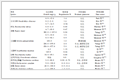
|
Table 1 Density and mechanical property of P5M5, P5M5-150 and P5M5-200 aerogels. |

Fig. 3 shows TGA weight loss and corresponding DTG curves of P5M5, P5M5-150 and P5M5-200 aerogels, the deduced key parameters, including the onset decomposition temperature (defined as the temperature at which 5wt% weight loss takes place, or Td5%), the maximum decomposition temperature (Tdmax), the decomposition rate at the Tdmax (dW/dT) and the residual weight (%) are summarized inTable 2. Because MMT only released a little crystalline water, as a result, the decomposition of PVA/ MMT composite aerogel was mainly the decomposition of PVA chains, which was indicated by two peaks at 280-290℃ for the removal of hydroxyl groups and at 410 ℃ for decomposition of the main chain, respectively. The hydrophilic propertyofMMT made a little peak appear before 100℃, leading to a lower Tdmax of P5M5 aerogel compared with neat PVA aerogel. The results showed that the thermal stability ofP5M5-150 had little change compared with that of the control. After heat treatment at 200℃, the thermal stability of the aerogel improved significantly due to the decomposition of hydroxyl groups in advance. Td5% and Tdmax of P5M5-200 increased by 53.4 ℃ and 63.6 ℃ comparing with those values of P5M5, respectively. The polymer content decreased for P5M5-200 because elimination of hydroxy groups resulted in an increase of residual weight. The obvious decrease of the decomposition rate at the Tdmax and increase of residual weight also demonstrated a remarkable improvement of thermal stability for the aerogel.

|
Download:
|
| Fig. 3. TGA weight loss and corresponding DTG curves for P5M5, P5M5-150 and P5M5-200 aerogels. | |
|
|
Table 2 TGA parameters of the resulting aerogels in the N2 atmosphere. |

The limiting oxygen index tests were carried out to investigate the flammabilities of the samples. Neat PVA aerogel is a highly flammable material, which had a low LOI value of 19.5%. The LOI value ofP5M5 increased to 24.0% due to the addition ofMMT. After heat treatment at 200 ℃, elimination of hydroxy groups further increased the LOI value to 27.8%, indicating an improvement of flame retardancy.
Cone calorimetry (CC) tests were used to mimic the combustion behaviors of the aerogels in a real fire scenario. The heat release rate (HRR), total heat release (THR), rate of smoke release (RSR) and total smoke release (TSR) curves were recorded in Fig. 4, and corresponding key parameters are listed in Table 3, including time to ignition (TTI), peak of heat release rate (PHRR), total heat release (THR), time to PHRR (TTPHRR), fire growth rate (FIGRA) and residue. The neat PVA aerogel (P5), which was from the pure PVA solution (5 wt%) as the precursor solution, was used as the control.

|
Download:
|
| Fig. 4. Heat release rate (HRR, a), total heat release (THR, b), rate of smoke release (RSR, c) and total smoke release (TSR, d) plots of the resulting aerogels under a heat flux of 50kW/m2. | |
|
|
Table 3 Burning parameters of the resulting aerogels. |


The value of TTI implies the time of combustible gas, came out from the degradation of the polymer, reaches to the critical concentration of combustion [18]. A longer TTI value indicates slower flame spread rate and less degradation of the material. PVA is an extremely flammable polymer, and the neat PVA aerogel had a short ignition time (3 s). The TTI value was further decreased for P5M5, which can be attributed to the catalytic degradation of the nanoclay to the polymer [19]. The TTI value of the heat treated aerogels slightly increased, which was closed to that of the neat PVA aerogel.
The flame retardancy of the aerogel was improved significantly with addition of MMT and the mechanism had been elaborated previously [20]. As no essential change occurred under the heat treatment of 150 ℃, the burning parameters of P5M5-150 had minor change compared with those of neat PVA aerogel. After heat treated at 200 ℃, the flame retardancy of the aerogel was further improved. Comparing with P5M5, the PHRR and THR values of P5M5-200 decreased by 32.4% and 48.8%, respectively, indicating a remarkable improvement of fire safety. FIGRA was calculated to evaluate the flame spreading rate, and it was also decreased with heat treatment at 200 ℃. The elimination of hydroxy group resulted in a lower polymer content. Therefore, the carbon residues increased and the smoke release had a certain degree of reduction for P5M5-200. All these results demonstrated that the flame retardant performance of the aerogel was improved significantly with heat treatment at an elevated temperature of 200 ℃.
The PVA/MMTcomposite aerogels with higher thermal stability and fire safety can be prepared via a simple freeze-drying and a heat treatment process. After treated at 200 ℃ for 3 h, PVA in the composites decomposed, during which hydroxyl groups were eliminated and carbonyl groups were formed, resulting in a little decrease of the mechanical property. Meanwhile, the thermal stability of the heat treated aerogels was improved significantly due to the elimination of hydroxyl groups in advance. In addition, the resulting aerogels showed a remarkable improvement of flame retardant property in cone calorimetry test. This study hence proves a facile technology for a lightweight, porous material with good fire safety.
AcknowledgmentsThis work was financially supported by the National Natural Science Foundation of China (Nos. 51320105011, 51121001 and 51603130), Program for Changjiang Scholars and Innovative Research Team in University (No. IRT. 1026), Key Science Project of Department of Education, Sichuan Province (No. 16ZA0004) and Sichuan Province Youth Science and Technology Innovation Team (No. 2017TD0006).
Appendix A. Supplementary dataSupplementary data associated with this article can be found, in the online version, at http://dx.doi.org/10.1016/j.cclet.2017.08.017.
| [1] |
S.S. Kistler, Nature 127 (1931) 741. |
| [2] |
G. Pajonk, J. Non-Cryst. Solids 225 (1998) 307-314. DOI:10.1016/S0022-3093(98)00131-8 |
| [3] |
K. Shang, W. Liao, J. Wang, et al., ACS Appl. Mater. Interfaces 8 (2015) 643-650. |
| [4] |
H.B. Chen, B.S. Chiou, Y.Z. Wang, D.A. Schiraldi, ACS Appl. Mater. Interfaces 5 (2013) 1715-1721. DOI:10.1021/am3028603 |
| [5] |
H.B. Chen, Y.Z. Wang, M. Sánchez-Soto, D.A. Schiraldi, Polymer 53 (2012) 5825-5831. DOI:10.1016/j.polymer.2012.10.029 |
| [6] |
J. Wang, D. Zhao, K. Shang, et al., J. Mater. Chem. A 4 (2016) 9381-9389. DOI:10.1039/C6TA03146C |
| [7] |
A. Mulyadi, Z. Zhang, Y. Deng, ACS Appl. Mater. Interfaces 8 (2016) 2732-2740. DOI:10.1021/acsami.5b10985 |
| [8] |
A. El Kadib, M. Bousmina, Chem.-Eur. J. 18 (2012) 8264-8277. DOI:10.1002/chem.v18.27 |
| [9] |
H.B. Chen, Y. Zhao, P. Shen, et al., ACS Appl. Mater. Interfaces 7 (2015) 20208-20214. DOI:10.1021/acsami.5b05776 |
| [10] |
H.B. Chen, Y.Z. Wang, D.A. Schiraldi, ACS Appl. Mater. Interfaces 6 (2014) 6790-6796. DOI:10.1021/am500583x |
| [11] |
M. Lewin, Fire Mater. 27 (2003) 1-7. DOI:10.1002/(ISSN)1099-1018 |
| [12] |
M. Lewin, Polym. Advan. Technol. 17 (2006) 758-763. DOI:10.1002/(ISSN)1099-1581 |
| [13] |
B. Schartel, M. Bartholmai, U. Knoll, Polym. Advan. Technol. 17 (2006) 772-777. DOI:10.1002/(ISSN)1099-1581 |
| [14] |
L. Wang, M. Sánchez-Soto, M.L. Maspoch, Mater. Des. 52 (2013) 609-614. DOI:10.1016/j.matdes.2013.05.096 |
| [15] |
Y.T. Wang, S.F. Liao, K. Shang, et al., ACS Appl. Mater. Interfaces 7 (2015) 1780-1786. DOI:10.1021/am507409d |
| [16] |
B. Holland, J. Hay, Polymer 42 (2001) 6775-6783. DOI:10.1016/S0032-3861(01)00166-5 |
| [17] |
P. Thomas, J.P. Guerbois, G. Russell, B. Briscoe, J. Therm. Anal. Calorim. 64 (2001) 501-508. DOI:10.1023/A:1011578514047 |
| [18] |
M. Zanetti, Flammability and Thermal Stability of Polymer/Layered Silicate Nanocomposites, Woodhead Publishing Ltd., Cambridge, UK, 2006, pp. 256-272.
|
| [19] |
F. Laoutid, L. Bonnaud, M. Alexandre, J.M. Lopez-Cuesta, P. Dubois, Mat. Sci. Eng. R 63 (2009) 100-125. DOI:10.1016/j.mser.2008.09.002 |
| [20] |
P. Kiliaris, C. Papaspyrides, Prog. Polym. Sci. 35 (2010) 902-958. DOI:10.1016/j.progpolymsci.2010.03.001 |