 2017, Vol. 28


 , Ke-Min Wang, Xiang-Xian Meng, Bao-Yin Yuan, Jun Wan, Yuan-Yuan Chen
Prostate cancer (PCa), the most common malignancies in men, is one of the leading causes of cancer death worldwide. According to statistics, the global incidence of prostate cancer has a sharp increase trend in these years [1]. Screening and therapy of prostate cancer at early stage could greatly improve the 5-year survival rate [2]. Currently, the early diagnosis of prostate cancer is mainly based on digital rectal examination [3] (DRE), multi-parametric MRI [4], prostate-specific antigen (PSA) screening [5] and biopsy examination [6]. Unfortunately, these methods often give contradictory advice and should be appraised critically [7, 8]. Therefore, the development of novel and effective molecular probes specifically recognizing prostate cancer to facilitate early diagnosis and effective therapeutics is urgently required.
Aptamers, single-stranded oligonucleotide molecules evolved by systematic evolution of ligands by exponential enrichment (SELEX), can bind strongly and selectively to their targets and have become attractive alternatives to traditional antibodies [9]. In recent years, aptamers have been intensively studied in various biomedical applications, such as the early diagnosis and classification of cancer, the discovery of tumor biomarker and the exploration of mechanism underlying tumor occurrence and development [10-12]. Especially, the aptamers generated by cell-SELEX (SELEX against live cells) can bind to the target molecule in natural configuration and have great potential in cancer diagnosis and therapeutics. Up to now, there have been many reports recording aptamers targeting various cancer cell lines, including leukemia [13], lung cancer [14-16], colon cancer [17], hepatocellular carcinoma [18, 19], ovarian cancer [20], prostate cancer [21], nasopharyngeal carcinoma [22], and gastric cancer [23-25]. As to PCa, although some aptamers targeting PCa related proteins such as PSMA [26] (Prostate Specific Membrane Antigen), PSA [27], AMACR [28] (alpha-methylacyl-CoA racemase) have been reported, there is only the aptamers targeting PC-3 cells of PCa was selected by Cell-SELEX21. For the typically cell line PC-3M of PCa, there is still no oligonucleotide aptamer evolved. Therefore, it is very important and urgent to develop more aptamers based on Cell-SELEX with high specific and effective to promote the early diagnosis and therapy of PCa.
In this study, we tried to employ cell-SELEX technology to screen DNA aptamers that can bind selectively to metastatic prostate tumor cells. Two cell lines that derived from one parent prostate cancer cell line PC-3M but with opposite metastasis ability were employed, cell line PC-3M-1E8 with highly metastatic as the target cells and PC-3M-2B4 with low metastatic as the negative cells. Four aptamers were successfully obtained that can both bind to PC-3M-1E8 cells and PC-3M-2B4 with high affinity and specificity. A 51-nt truncated sequence named Xq-2-C1 was identified after further elaborative analysis on the secondary structure. More importantly, the obtained aptamer were further revealed specific recognition to clinical prostate cancer tissue with a detection ratio of 85%.
2. Results and discussion 2.1. Selection of DNA aptamer against prostate cancer cell line PC-3M-1E8 and PC-3M-2B4We executed cell-SELEX using human highly metastatic prostatic cancer cell line PC-3M-1E8 as the target cells and another human low metastatic prostatic cancer cell line PC-3M-2B4 as the negative control cells (Fig. 1A). The progress of the selection process was monitored by flow cytometry. A clear shift in the fluorescence intensity on PC-3M-1E8 cells was observed when the cells were incubated with 4th round pool compared to initial pool, and a saturated intensity reached after the 11th round, indicating that DNA sequences with better binding affinity to PC-3M-1E8 cells were enriched (Fig. 1B). However, a similar trend also appeared with PC-3M-2B4 cells (Fig. 1C), suggesting that the evolved pool could also bind to the control PC-3M-2B4 cells. Although, theoretically, a counter selection could eliminate the sequences capable of binding negative cells and the enriched sequences should show specific responses to target cells while little or no responses to negative cells. However, in some circumstances, the counter selection can be imperfect [29]. If the target and the control were similar to a great extent, the limited selection pressure would not be enough to remove the unwanted sequences [29]. In our case, the possible cause of this was the high similarity of these two cell lines, since they are two subclones derived from a same prostate cancer cell line PC-3M. The similar cases have also been reported by Cerchia L [30] and Agnes Cibiel [32]. Then the 12th round pool was sent to Sangon Biotech for next generation sequencing (NGS).

|
Download:
|
| Fig. 1. Monitoring the enrichment of cell-SELEX progression. (A) Schematic representation of the cell-SELEX process. Flow cytometric assay of selected pools with PC-3M-1E8 (B) and PC-3M-2B4 cells (C) | |
2.2. Characterization of aptamers for prostate cancer cells
After cloning and sequencing, the sequences were divided into five families based on the homologous similarity by using Clustal X (Fig. S1 in Supporting information). According to the abundance in the cloned sequences, four representative sequences, Xq-1, Xq-2, Xq-4 and Xq-5, were chosen and synthesized for further characterization. The binding abilities of the four selected sequences to PC-3M-1E8 cells and PC-3M-2B4 cells were assessed using flow cytometry and confocal microscopy imaging. The results demonstrated that the four selected aptamers had excellent binding ability to the PC-3M-1E8 cell line, and also well to the PC-3M-2B4 cells (Fig. 2A and C). To further tested the binding abilities of the selected aptamers, the equilibrium dissociation constant (Kd) of selected aptamers for PC-3M cells were obtained by fitting the dependence of fluorescence intensity of samples on the concentration of the aptamers to the equation Y = Bmax X/(Kd +X). The Kd of all four aptamers for PC-3M-1E8 cell line and PC-3M-2B4 cell line were in the extremely low nanomolar range, from 2 to 46.8 nmol/L and 2.5 to 18.2 nmol/L, respectively (Fig. 2D and Table S1 in Supporting information). Therefore, these aptamers had very strong binding ability to PC-3M cells.

|
Download:
|
| Fig. 2. Recognition of PC-3M-1E8 and PC-3M-2B4 cells with aptamers. Flow cytometric assay for the binding of the FAM-labeled selected aptamers Xq-1, Xq-2, Xq-4 and Xq-5 with PC-3M-1E8 cells (A) and PC-3M-2B4 cells (C). Confocal microscopy assay of the binding of aptamer Xq-2 with PC-3M-1E8 cells and PC-3M-2B4 cells, and the aptamer had obvious cell membrane binding ability (B). Flow cytometry was used to determine the binding affinities of the FAM-labeled selected aptamer (Xq-1, Xq-2, Xq-4, Xq-5) to PC-3M-1E8 (abbreviated as 1E8 in the figure) cells and PC-3M-2B4 (abbreviated as 2B4 in the figure) cells (D) | |
2.3. Selectivity of DNA aptamer candidates
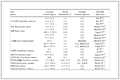
To investigate the selectivity of the aptamers, FAM-labeled aptamers were incubated with several different human originated cell lines, including two moderately metastatic prostate cancer cell lines 9L-B and Du-145; two liver cancer cell lines SMMC-7721 and Bel-7404; one lung cancer cell line A549 and a normal liver cell line L02. As shown in Table 1, all four aptamers specifically bound to the cells lines PC-3M-1E8 and PC-3M-2B4, but exhibited no detectable recognition of others cancer cells including A549, SMMC-7721, Bel-7404, 9L-B, Du-145 and L02. These results indicated that our selected aptamers could selectively recognize PC-3M cells. More importantly, these aptamers could recognize both PC-3M-1E8 and PC-3M-2B4 cell line, indicating that the molecular targets of these aptamers may be potential PC-3M cell line-specific markers. Moreover, the target of these aptamers was preliminarily identified to be membrane proteins (Fig. S3 in Supporting information). Therefore, these aptamers hold great promise for promoting PCa biomarker identification.
|
Table 1 Binding specificity study of aptamers Xq-1, Xq-2, Xq-4 and Xq-5 to different cell linesa. |

2.4. Sequence optimization of aptamer Xq-2
Proper truncation of intact aptamer sequence could benefit their future application because shorter ssDNA have better tissue penetration ability and cheaper synthesizing cost [31-33]. According to secondary structure predicted by Mfold software [34], aptamer Xq-2 has a complex stem-loop structure with two hairpins on one big loop (Fig. 3A). Several strategies were applied to optimize aptamer Xq-2, including removing the fixed primer regions, removing the exterior loop nucleotides in the predicted secondary structure or retaining the small hairpin structures. As a result, truncated sequences Xq-2-C2 (40 nt), Xq-2-C1 (51 nt), Xq-2-C3 (23 nt) and Xq-2-C4 (17 nt) were obtained (listed in Table S2 and Fig. 3B). The flow cytometric results presented in Fig. 3C and 3E showed that a single hairpin alone only showed a weak binging to the target cells, while by maintaining the major structure Xq-2-C1 retained very high affinity, implying that the integrated structure in Xq-2-C1 is responsible for the target binding. The Kd of Xq-2-C1 toward PC-3M-1E8 and PC-3M-2B4 cells was comparable to the original sequence, 5.29 nmol/L and 10.44 nmol/L, respectively (Fig. S5 in Supporting information). Consequently, we speculate that the binding abilities of aptamer to target cells is associated with the loop structure. Aptamers can be stably coated on target cells when all of the three loops were preserved, while binding capacity of aptamer weakened with the decrease of loop numbers.

|
Download:
|
| Fig. 3. Sequence optimization of the aptamer Xq-2. (A) The structure of the aptamer Xq-2 simulated by the Mfold software, consisting of a stem-loop structure (Loop3, blue region) with two hairpins on the big loop (Loop1, green region; Loop2, dark green region). (B) The structures of Xq-2-C1, Xq-2-C2, Xq-2-C3, Xq-2-C4 aptamers simulated by the Mfold after cut by four optimization strategies (Xq-2-C1, Loop1, Loop2 and Loop3 reserved; Xq-2-C2, primers cut; Xq-2-C3, Loop1 reserved; Xq-2-C4, Loop2 reserved) respectively. Flow cytometric assay for the binding of the FAM-labeled truncated sequences Xq-2-C1, Xq-2-C2, Xq-2-C3, and Xq-2-C1 with PC-3M-1E8 cells (C) and PC-3M-2B4 cells (E). (D)Confocal images of PC-3M-1E8 cells stained with FAM labelled aptamer Xq-2-C1 or random sequence. Scale bar = 50 mm. | |
2.5. Imaging of prostate cancer clinical tissues sections
To investigate the feasibility of obtained aptamer for clinical diagnosis, Xq-2-C1 was designed to image the clinical samples of prostate cancer by using laser confocal fluorescence microscopy. To test the recognition ability of Xq-2-C1 for clinical sections, 48-core tissue arrays with 40 prostate cancer cases and 8 normal cases were imaged with Cy5-labeled aptamer and Cy5-labeled control DNA since the Cy5 fluorescent dye could effectively prevent the development of fluorescence quenching so that tissue imaging performed [35]. Obviously, Cy5-labeled Xq-2-C1 incubated with prostate cancer tissues showed strong fluorescence signal (Fig. 4A-L), but displayed little fluoresce signal with normal tissues (Fig. 4Q-S). Meanwhile, prostate cancer tissues and normal prostate tissues incubated with random sequence showed negligible fluorescence signal (Fig. 4M-P, T). The binding ratio of Xq-2-C1 to prostate cancer tissues was 85%, while the binding ratio of library to prostate cancer tissues was 9% (Table 2), indicating that Xq-2-C1 possessed the ability to effectively recognize the prostate cancer tissues. These results clearly demonstrated that the truncated aptamer Xq-2-C1 could be potentially applied as an effective molecular agent for recognition of prostates cancer tissues and possess great significance for prostates cancer diagnosis and treatment.

|
Download:
|
| Fig. 4. Fluorescence images of prostates cancer tissues (A-L) and normal prostate tissues (Q-S) using Cy5-labeled aptamer Xq-2-C1 (250nmol/L). Fluorescence images of prostates cancer tissues (M-P) and normal prostate tissues (T) stained with Cy5-labeled random sequence (250 nmol/L). The fluorescence signal was detected by a 40 × objective (fluorescence channel: EX 633 nm, EM 660 nm long-pass). Scale bar = 100 mm. | |
|
|
Table 2 Tissue imaging results with Xq-2-C1. |


3. Conclusion
In summary, a panel of aptamers were successfully obtained by cell-SELEX that show high specific binding ability to prostate cancer cell lines PC-3M. Moreover, the Kd values of these newly developed aptamers are in the low nanomolar range, especially Xq-2 with very low Kd value as 2nmol/L. Moreover, a 51 nt truncated sequence Xq-2-C1 was generated by secondary structural analysis and maintained excellent target recognition capability. Furthermore, tissue imaging results showed that Xq-2-C1 displayed an 85% detection rate against prostate cancer tissues, suggesting that the Xq-2-C1 possesses great potential for the clinical diagnosis and clinical treatment of prostate cancer.
4. Experimental 4.1. Cell lines and cell cultureThe human prostate cancer cell line PC-3M-1E8, human prostate cancer cell line PC-3M-2B4, liver cancer cell line SMMC-7721 and Bel-7404 were purchased from the Shanghai Institute of Cell Biology of the Chinese Academy of Science. Prostate cancer cell line Du-145 and 9L-B were obtained from the cell bank of Xiangya Hospital (Changsha, China). Lung cancer cell line A549 and normal liver cell line L02 were purchased from American Type Culture Collection. All cells were cultured in Roswell Park Memorial Institute 1640 (RPMI 1640; Hyclone), containing 10% fetal bovine serum (FBS; GIBCO), 100 IU/mL penicillin-streptomycin (Cellgro), and maintained in an incubator at 37 ℃ in a humid atmosphere with 5% CO2.
4.2. SELEX library and primersThe initial library and primers used in this work were synthesized by Sangon Biotech (Shanghai). The library had a randomized region of 40 nucleotides (N40) flanked by two constant regions of 20 nt primer hybridization site (5'-AGA AGG AAG GAG AGC GAC AC (N40) TATCAGTGGTCGGTCGTCAT-3'). Forward primer labeled with FAM (5'-FAM-AGA AGG AAG GAG AGC GAC AC-3') and biotinylated reverse primer (5'-Biotin-ATGACGACCGACCACTGATA-3') were used in PCR (polymerase chain reaction).
4.3. SELEX proceduresThe highly metastatic human prostate carcinoma cell line PC-3M-1E8 was used as the target cells and low metastatic human prostate carcinoma cell line PC-3M-2B4 was served as the control cells in this selection process. In 900 mL of binding buffer (1 mg/mL, BSA and 0.1 mg/mL yeast tRNA in washing buffer), ssDNA library (10 nmol) was dissolved thoroughly and used for the initial library [22, 36]. After denaturing at 95 ℃ for 10 min and immediately cooling on ice for 10 min, the initial library was incubated with 1 ×10⁶ PC-3M-1E8 cells for 1 h on ice in a rotary shaker. And then the cells were washed three times using washing buffer (WB, 4.5 g/L glucose and 5 mmol/L MgCl2 in PBS) to remove the unbound sequences. Before selection, 2 mL binding buffer and 0.25 pmol random DNA sequence were pre-incubated with PC-3M-1E8 cells to reduce the nonspecific adsorption of the cells. After washing, the bound DNAs were eluted by heating at 95 ℃ for 10 min in 500 mL sterile water, and then were amplified by PCR. After isolation by streptavidin-coated sepharose beads and treating with 0.2 mol/L NaOH, the enriched FAM-labelled ssDNA pool was collected so that it was used for the next round selection. Starting from the fifth round, the DNA library was incubated with negative cells PC-3M-2B4 (1 ×10⁶ cells) on ice for 1 h as a counter selection to remove nonspecific sequences. For selecting high affinity and specificity aptamers, the positive incubation time was shortened (from 60 to 30 min) and the washing time was extended gradually (from 30 to 60 s) as the number of selection rounds increased. Meanwhile, the negative incubation time was gradually increased (from 30 to 60 min). After 12 rounds of enrichment, the obtained ssDNA pool was sent to Sangon Biotech (Shanghai) for cloning and sequencing.
4.4. Flow cytometric analysis of enrichment poolsTo monitor the enrichment, 500 nmol/L FAM-labeled ssDNA pools were incubated with 2 ×10⁵ target or negative cells on ice for 30 min, respectively. After washing three times with 500 mL of WB, cells were then resuspended in 200 mL of binging buffer. The fluorescence intensity was recorded using the flow cytometer (FACScalibur, BD Bioscience) by counting 10 000 events, and the FAM-labeled unselected ssDNA library or random sequences were used as the negative control.
4.5. Cloning and DNA sequencing of enriched poolsWhen the binding capacity of ssDNA pools with target cells PC-3M-1E8 or negative cells PC-3M-2B4 was noticeably stronger than that of the initial pool, the enrichment process was completed. The resulting pool from the 12th round was PCR amplified, cloned, and sequenced (Shanghai Sangon). After sequence analysis using Clustal X [37], the sequences were divided into five families based on the homologous similarity of sequences. Four representative sequences from selected pools were chosen and chemically synthesized (Shanghai Sangon) for further study.
4.6. Selectivity of aptamersThe target cell line PC-3M-1E8, negative cell line PC-3M-2B4, and other cell lines including liver cancer cell line SMMC-7721 and Bel-7404, Prostate cancer cell line Du-145 and gL-B, lung cancer cell line A549 and normal liver cell line L02 were incubated with the selected aptamers to evaluate the binding selectivity using flow cytometry.
4.7. Binding analysisPC-3M-1E8 cells or PC-3M-2B4 cells (1×10⁶) were incubated with a series of concentrations of FAM-labeled aptamers in 200 mL of binding buffer on ice for 30 min. And the FAM-labeled random sequences were used as a negative control. After three times of washing with 500 mL of WB, cells were resuspended in 200 mL of binding buffer and analyzed by flow cytometry. The mean fluorescence intensity was recorded and the Kd value (equilibrium dissociation constant) was calculated according to the dependence of fluorescence intensity of the cell-aptamer interaction with aptamer concentration using the equation Y = Bmax X/(Kd + X)(where Y is the bound fraction, the Bmax is the saturated binding and the X is the concentration of ligand) with SigmaPlot software (Jandel Scientific, UK).
4.8. Imaging of tissue sectionsThe tissue microarray, 48-core tissue arrays with 44 prostate cancer cases and 4 normal cases, were purchased from US Biomax (Xi'an AiLiNa Biotechnology Co., Ltd. China). As described in the literature [16, 38], all the tissue sections were deparaffinized in xylene to remove paraffin (10 min x 2) and then rehydrated through an ethanol dilution series (100%, 95%, 85%, 70%) for 5 min. After washing with PBS buffer (pH 8.0), the hydrated tissue sections were heated in citrate buffer (0.01 mol/L, pH 6.0) at 95 ℃ for 15 min to retrieve antigens. Subsequently, the prepared tissue sections were blocked with 1 mmol/L random sequences for 20 min and then incubated with 250 nmol/L Cy5-labeled Xq-2-C1 or random sequences for 30 min on ice in dark. Laser scanning confocal microscopy (Olympus, Japan) was used for imaging (fluorescence channel: EX 633 nm, EM 660 nm long-pass).
AcknowledgmentsThis work was supported by the National Natural Science Foundation of China (Nos. 21175035, 21275043, 21190040), the National Basic Research Program (No. 2011CB911002), the Hunan Province Science and Technology Project of China (No. 2013FJ4042).
Appendix A. Supplementary dataSupplementary data associated with this article can be found, in the online version, at http://dx.doi.org/10.1016/j.cclet.2017.01.002.
| [1] | J. Ferlay, H.R. Shin, F. Bray, et al., Estimates of worldwide burden of cancer in 2008:GLOBOCAN 2008. Int. J. Cancer 127(2010)2893–2917. DOI:10.1002/ijc.v127:12 |
| [2] | H.B. Carter, P.C. Albertsen, M.J. Barry, et al., Early detection of prostate cancer:AUA guideline. J. Urol. 190(2013)419–426. DOI:10.1016/j.juro.2013.04.119 |
| [3] | A.L. Walsh, S.W. Considine, A.Z. Thomas, T.H. Lynch, R.P. Manecksha. Digital rectal examination in primary care is important for early detection of prostate cancer:a retrospective cohort analysis study. Brit. J. Gen. Pract. 64(2014)e783–e787. DOI:10.3399/bjgp14X682861 |
| [4] | H.A. Vargas, J. Grimm, O.F. Donati, E. Sala, H. Hricak. Molecular imaging of prostate cancer:translating molecular biology approaches into the clinical realm. Eur. Radiol. 25(2015)1294–1302. DOI:10.1007/s00330-014-3539-5 |
| [5] | P.V. Glybochko, E.G. Zezerov, A.I. Glukhov, et al., Telomerase as a tumor marker in diagnosis of prostatic intraepithelial neoplasia and prostate cancer. Prostate 74(2014)1043–1051. DOI:10.1002/pros.v74.10 |
| [6] | B. Ahn, H. Lee, Y. Kim, J. Kim. Robotic system with sweeping palpation and needle biopsy for prostate cancer diagnosis. Int. J. Med. Robot. Comput. Assist. Surg. 10(2014)356–367. DOI:10.1002/rcs.v10.3 |
| [7] | C. Börgermann, H. Loertzer, P. Hammerer, et al., Probleme, zielsetzung und inhalt der früherkennung beim prostatakarzinom. Urologe 49(2010)181–189. DOI:10.1007/s00120-010-2234-7 |
| [8] | J. Cuzick, M.A. Thorat, G. Andriole, et al., Prevention and early detection of prostate cancer. Lancet Oncol. 15(2014)e484–e492. DOI:10.1016/S1470-2045(14)70211-6 |
| [9] | C. Tuerk, L. Gold. Systematic evolution of ligands by exponential enrichment:RNA ligands to bacteriophage T4 DNA polymerase. Science 249(1990)505–510. DOI:10.1126/science.2200121 |
| [10] | B.J. Hicke, C. Marion, Y.F. Chang, et al., Tenascin-C aptamers areg enerated using tumor cells and purified protein. J. Biol. Chem. 276(2001)48644–48654. DOI:10.1074/jbc.M104651200 |
| [11] | D.A. Daniels, H. Chen, B.J. Hicke, K.M. Swiderek, L. Gold. A tenascin-C aptamer identified by tumor cell SELEX:systematic evolution of ligands by exponential enrichment. Proc. Natl. Acad. Sci. U. S. A. 100(2003)15416–15421. DOI:10.1073/pnas.2136683100 |
| [12] | Z.W. Tang, D.H. Shangguan, K.M. Wang, et al., Selection of aptamers for molecular recognition and characterization of cancer cells. Anal. Chem. 79(2007)4900–4907. DOI:10.1021/ac070189y |
| [13] | K. Sefah, Z.W. Tang, D.H. Shangguan, et al., Molecular recognition of acute myeloid leukemia using aptamers. Leukemia 23(2009)235–244. DOI:10.1038/leu.2008.335 |
| [14] | H.W. Chen, C.D. Medley, K. Sefah, et al., Molecular recognition of small-cell lung cancer cells using aptamers. ChemMedChem 3(2008)991–1001. DOI:10.1002/(ISSN)1860-7187 |
| [15] | T. Kunii, S.I. Ogura, M. Mie, E. Kobatake. Selection of DNA aptamers recognizing small cell lung cancer using living cell-SELEX. Analyst 136(2011)1310–1312. DOI:10.1039/c0an00962h |
| [16] | Z.L. Zhao, L. Xu, X.L. Shi, et al., Recognition of subtype non-small cell lung cancer by DNA aptamers selected from living cells. Analyst 134(2009)1808–1814. DOI:10.1039/b904476k |
| [17] | K. Sefah, L. Meng, D. Lopez-Colon, et al., DNA aptamers as molecular probes for colorectal cancer study. PLoS One 5(2010)e14269. DOI:10.1371/journal.pone.0014269 |
| [18] | D.H. Shangguan, L. Meng, Z.C. Cao, et al., Identification of liver cancer-specific aptamers using whole live cells. Anal. Chem. 80(2008)721–728. DOI:10.1021/ac701962v |
| [19] | F.B. Wang, Y. Rong, M. Fang, et al., Recognition, capture of metastatic hepatocellular carcinoma cells using aptamer-conjugated quantum dots and magnetic particles. Biomaterials 34(2013)3816–3827. DOI:10.1016/j.biomaterials.2013.02.018 |
| [20] | L.Y. Hung, C.H. Wang, K.F. Hsu, C.Y. Chou, G.B. Lee. An on-chip Cell-SELEX process for automatic selection of high-affinity aptamers specific to different histologically classified ovarian cancer cells. Lab Chip 14(2014)4017–4028. DOI:10.1039/C4LC00587B |
| [21] | Y.Y. Wang, Y. Luo, T. Bing, et al., DNA aptamer evolved by cell-SELEX for recognition of prostate cancer. PLoS One 9(2014)e100243. DOI:10.1371/journal.pone.0100243 |
| [22] | Y.Y. Tan, Q.P. Guo, Q. Xie, et al., Single-walled carbon nanotubes (SWCNTs)-assisted cell-systematic evolution of ligands by exponential enrichment (CellSELEX) for improving screening efficiency. Anal. Chem. 86(2014)9466–9472. DOI:10.1021/ac502166b |
| [23] | X.J. Zhang, J. Zhang, Y.Y. Ma, et al., A cell-based single-stranded DNA aptamer specifically targets gastric cancer. Int. J. Biochem. Cell Biol. 46(2014)1–8. DOI:10.1016/j.biocel.2013.10.006 |
| [24] | H.Y. Cao, A.H. Yuan, W. Chen, X.S. Shi, Y. Miao. A DNA aptamerwith high affinity and specificity for molecular recognition and targeting therapy of gastric cancer. BMC Cancer 14(2014)699. DOI:10.1186/1471-2407-14-699 |
| [25] | F. Ding, S. Guo, M. Xie, et al., Diagnostic applications of gastric carcinoma cell aptamers in vitro and in vivo. Talanta 134(2015)30–36. DOI:10.1016/j.talanta.2014.09.036 |
| [26] | J.H. Zhou, J.J. Rossi. Cell-specific aptamer-mediated targeted drug delivery. Oligonucleotides 21(2011)1–10. DOI:10.1089/oli.2010.0264 |
| [27] | S. Jeong, S.R. Han, Y.J. Lee, S.W. Lee. Selection of RNA aptamers specific to active prostate-specific antigen. Biotechnol. Lett. 32(2010)379–385. DOI:10.1007/s10529-009-0168-1 |
| [28] | D.K. Yang, L.C. Chen, M.Y. Lee, C.H. Hsu, C.S. Chen. Selection of aptamers for fluorescent detection of alpha-methylacyl-CoA racemase by single-bead SELEX. Biosens. Bioelectron. 62(2014)106–112. DOI:10.1016/j.bios.2014.06.027 |
| [29] | A. Cibiel, N.N. Quang, K. Gombert, et al., From ugly duckling to swan:unexpected identification from cell-SELEX of an anti-annexin A2 aptamer targeting tumors. PLoS One 9(2014)e87002. DOI:10.1371/journal.pone.0087002 |
| [30] | L. Cerchia, F. Ducongé, C. Pestourie, et al., Neutralizing aptamers from wholecell SELEX inhibit the RET receptor tyrosine kinase. PLoS Biol. 3(2005)e123. DOI:10.1371/journal.pbio.0030123 |
| [31] | T. Bing, X.J. Yang, H.C. Mei, Z.H. Cao, D.H. Shangguan. Conservative secondary structure motif of streptavidin-binding aptamers generated by different laboratories. Bioorg. Med. Chem. 18(2010)1798–1805. DOI:10.1016/j.bmc.2010.01.054 |
| [32] | L.C. Bock, L.C. Griffin, J.A. Latham, E.H. Vermaas, J.J. Toole. Selection of singlestranded DNA molecules that bind and inhibit human thrombin. Nature 355(1992)564–566. DOI:10.1038/355564a0 |
| [33] | D.H. Shangguan, Z.W. Tang, P. Mallikaratchy, Z.Y. Xiao, W.H. Tan. Optimization and modifications of aptamers selected from live cancer cell lines. ChemBioChem 8(2007)603–606. DOI:10.1002/(ISSN)1439-7633 |
| [34] | M. Zuker. Mfold web server for nucleic acid folding and hybridization prediction. Nucleic Acids Res. 31(2003)3406–3415. DOI:10.1093/nar/gkg595 |
| [35] | B.G. Moreira, Y. You, M.A. Behlke, R. Owczarzy. Effects of fluorescent dyes quenchers, and dangling ends on DNA duplex stability. Biochem. Biophys. Res. Commun. 327(2005)473–484. DOI:10.1016/j.bbrc.2004.12.035 |
| [36] | J. Wan, L. Ye, X.H. Yang, et al., Cell-SELEX based selection and optimization of DNA aptamers for specific recognition of human cholangiocarcinoma QBC-939 cells. Analyst 140(2015)5992–5997. DOI:10.1039/C5AN01055A |
| [37] | J.D. Thompson, T.J. Gibson, F. Plewniak, F. Jeanmougin, D.G. Higgins. The CLUSTAL_X windows interface:flexible strategies for multiple sequence alignment aided by quality analysis tools. Nucleic Acids Res. 25(1997)4876–4882. DOI:10.1093/nar/25.24.4876 |
| [38] | X.Q. Wu, Z.L. Zhao, H.R. Bai, et al., DNA aptamer selected against pancreatic ductal adenocarcinoma for in vivo imaging and clinical tissue recognition. Theranostics 5(2015)985–994. DOI:10.7150/thno.11938 |