 2016, Vol. 27


b Jiangsu Carephar Pharmaceutical Co., Ltd., Nanjing 210014, China ;
c School of Pharmaceutical, Nanjing Technology University, Nanjing 210009, China ;
d State Key Laboratory of Materials-Oriented Chemical Engineering, Nanjing Technology University, Nanjing 211816, China
Ether groups are common structures in a variety of pharma- ceuticallyand agriculturally important molecules [1-5], functional materials, and oxygenated fuels [6-11]. Additionally, they also play an important role in protecting hydroxyl groups in organic synthesis. Accordingly, various methods concerning the preparation of ethers have been developed, such as Williamson ether synthesis [12], direct nucleophilic substitution, and Ullman-type coupling of alkoxides with aryl halides [13-16]. Over the past several years, ether bond construction has been mainly dominated by Wliiiamson ether synthesis due to its high generality and practicability. Nevertheless, these systems inevitably require either highly reactive aryl halides, an excess of the alkoxides, or harsh conditions.
During the course of our research on platelet activating factor receptor antagonists, IC50 values revealed that dimethylami- noethyl ginkgolide B was a potentially attractive antagonist [17]. However, the etherification of ginkgolide B with dimethy- laminoethyl chloride hydrochloride (DECH) proceeded in low yields. Side reactions, such as hydrolysis of esters, resulting in lower selectivity [18]. Thus, it is highly desirable to develop more efficient catalytic systems targeted at high selectivity for the etherification of ginkgolide B.
The microreactor system approach has become a novel and promising technology in the fields of organic chemistry [19], analytic chemistry, and biotechnology during the past several years [20, 21]. Compared with traditional methods, increased heat exchange and mass transfer in miniaturized systems, as well as relatively high surface and interfacial areas, MFS offer high efficiency and repeatability, better selectivity, and flexible production [22]. In addition, strict control of reaction conditions is easy to achieve due to the laminar flow of streams in microfluidics. These features make the microreactor suitable for its wide applications in catalytic reactions, such as coupling reactions and gas-liquid transformations [23, 24].
A novel continuous flow process has been investigated for the first time for the heteropoly acid-catalyzed three component aza Diels-Alder reaction [25], and significant progress concerning etherification has been made by our group. Recent studies in our group have focused on optimization of reaction conditions and extending the scope. Herein, we reported in full the results of this investigation in the micro-flow system (Fig. 1).

|
Download:
|
| Figure 1. Process flow diagram for etherification reaction | |
2. Experimental
All organic compounds used were commercially available. The quantitative analysis was performed on a liquid chromatograph system (Agilent 1290).
2.1. Typical reaction using conventional method [17]Ginkgolide B (1 equiv.), dimethylaminoethyl chloride hydrochloride (3 equiv.), and a catalytic amount of potassium iodide and acid-binding agents were mixed in acetonitrile for 2 h at 100 ℃ under vigorous stirring (Scheme 1). The resulting solution was concentrated under vacuum after filtration. Pure dimethylaminoethyl Ginkgolide B was obtained by column chromatography on silica gel (MeOH/CH2Cl2 = 1:50).

|
Download:
|
| Scheme. 1. Synthesis of dimethylaminoethyl ginkgolide B | |
2.2. Typical procedure in MFS
The experimental equipment used in this study was a Vapourtec R4/R2+ flow reactor. Stock A: Ginkgolide B (4.4 g), acetonitrile (100 mL). Stock B: DECH (2.15 g), potassium iodide (0.332 g), acetonitrile (90 mL), water (10 mL). Initially, two flows were pumped into micromixer LH 25. Upon mixing together, the mixture entered the packed bed microreactor filled with acidbinding agents. The total volume of the packed bed microreactor was 24.5 mL. However, the remaining volume was 4.5 mL when the microreactor was filled with calcium carbonate (2.5 g). The volumetric flow rate of stock A/B was 0.75 mL/min. That is to say, the residence time in the microreactor was 3 min. Upon completion at a set temperature for the appropriate residence time, the obtained organic layer was concentrated under vacuum and further purified by column chromatography on silica gel (MeOH/CH2Cl2= 1:50).
Dimethylaminoethyl ginkgolide B: 1H NMR (DMSO-d6, 300 MHz): δ 7.12 (s, 1H), 6.32 (s, 1H), 6.12 (s, 1H), 5.31 (d, 1H, J = 3.6 Hz), 5.12 (s, 1H), 4.54 (d, 1H, J = 7.5 Hz), 4.35-4.41 (m, 1H), 4.07 (d, 1H, J = 7.2 Hz), 3.55-3.59 (m, 1H), 2.81-2.88 (m, 1H), 2.572.64 (m, 1H), 2.32 (d, 1H, J =12.6 Hz), 2.18 (s, 6H), 2.11-2.12 (m, 1H), 1.83-1.94 (m, 1H), 1.71-1.77 (m, 1H), 1.11 (d, 3H, J = 6.9 Hz), 1.04 (m, 9H). 13C NMR (DMSO-d6, 300 MHz): δ 176.44, 173.02, 170.18, 109.59, 98.40, 92.78, 82.00, 78.62, 74.36, 74.00, 72.19, 67.52, 64.11, 57.44, 48.64, 43.71, 41.62, 40.09, 39.81, 39.53, 39.25, 38.98, 36.57, 31.75, 28.58. HRMS calcd. for C24H33NO10 496.2177 [M+H], found 496.2196.
Aminoethyl ginkgolide B: 1H NMR(DMSO-d6, 300 MHz): δ 6.11 (m, 1H), 5.31 (m, 1H), 5.08 (m, 1H), 4.51 (d, 1H, J = 7.5 Hz), 4.26 (m, 1H), 4.11 (d, 1H, J = 7.2 Hz), 3.51 (m, 2H), 2.84-2.87 (m, 2H), 2.76 (m, 1H), 2.50 (m, 1H), 2.07-2.11 (m, 1h), 1.86-2.07 (m, 1h), 1.75 (m, 1H), 1.10 (d, 3H, J = 7.2 Hz), 1.02 (m, 9H).
Methylaminoethyl ginkgolide B: 1H NMR (DMSO-d6, 300 MHz): δ 6.81-7.07 (m, 1H), 6.33 (s, 1H), 6.11 (s, 1H), 5.31 (d, 1H, J = 3.96 Hz), 5.09 (s, 1H), 4.53 (d, 1H, J = 7.47 Hz), 4.33-4.36 (m, 1H), 4.09 (d, 1H, J = 7.47 Hz), 3.55-3.57 (m, 1H), 2.83-2.87 (m, 1H), 2.68 (d, 1H, J= 12.33 Hz), 2.56-2.61 (m, 1H), 2.19-2.27 (m, 3H), 2.11-2.14 (m, 1H), 1.89 (m, 1H), 1.71-1.75 (m, 1H), 1.09-1.11 (m, 3H), 0.90-1.09 (m, 9H).
Hydroxyethyl ginkgolide B: 1H NMR (DMSO-d6, 300 MHz): δ 6.44 (s, 1H), 6.14 (s, 1H), 5.14 (s, 1H), 5.25-5.31 (m, 2H), 5.14 (s, 1H), 4.60 (d, 1H, J =7.5 Hz), 4.36 (m, 1H), 4.02-4.10 (m, 1H), 3.60 (m, 2H), 3.50-3.60 (m, 1H), 2.83-2.86 (m, 1H), 2.13-2.16 (m, 1H), 1.76-1.99 (m, 1H), 1.72-1.90 (m, 1H), 1.10-1.20 (m, 3H), 1.03 (m, 9H).
Dimethylaminoethyl ginkgolide C: 1H NMR(CDCl3, 300 MHz): δ 5.94 (s, 1H), 5.33 (d, 1H, J = 4.3 Hz), 4.75 (s, 1H), 4.55-4.63 (m, 2H), 4.17-4.22 (m, 2h), 3.54-3.57 (m, 2H), 3.00 (q, 1H, J = 7.0 Hz), 2.682.77 (m, 2H), 2.35 (d, 1H, J =12.81 Hz), 2.27 (s, 6H), 1.69 (d, 1H, J =12.3 Hz), 1.25-1.29 (m, 3H), 1.16 (s, 9H).
Dimethylaminoethyl ginkgolide K: 1H NMR (DMSO-d6, 300 MHz): δ 5.93 (s, 1H), 5.57 (d, 1H, J = 3.9 Hz), 4.90 (dd, 1H, J = 4.0, 2.1 Hz), 4.72 (s, 1H), 4.63 (dt, 1H, J = 3.1, 10.7 Hz), 4.03 (d, 1H, J = 7.9 Hz), 3.53-3.55 (m, 1H), 2.70-2.74 (m, 1H), 2.34-2.38 (m, 1H), 2.30 (s, 6H), 2.26 (m, 1H), 2.07 (d, 3H, J = 2.1 Hz), 1.97-2.02 (m, 2H), 1.26 (m, 1H), 1.09 (s, 9H).
3. Results and discussion 3.1. Optimization of reaction conditionsThe flow rate was varied to give a residence time from 1 min to 8 min, and the temperature inside the microreactor was adjusted by external heating cycle to give a temperature range between 65 and 105 ℃. In addition, a back pressure valve was added in the process to prevent solvent evaporation. Etherification of ginkgolide B with DECH was selected as a model reaction for the optimization of reaction conditions. Due to the three hydroxyl groups in the complicated structure, the isolated products were evaluated by NMR. The detailed information is displayed in the Supporting information.
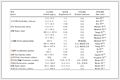
Initially, a screening of bases in the preliminary experiment revealed that inorganic base showed a better catalytic efficiency compared with organic bases, allowing for better yield and operability (Table 1, entries 1-5). Replacement of inorganic bases with organic bases, which were also common bases, shut off the reaction. Three common bases, such as sodium carbonate, potassium carbonate, and cesium carbonate resulted in a yield of 15.9%-17.5% when 2.5 equiv. of these three bases were filled in the pack-bed microreactor. On the contrary, the best yield was obtained when calcium carbonate was used as a base. In general, cesium carbonate was a more frequently used and efficient base. However, only a yield of 16.8% was obtained in this study. Typically, etherification processes in batch are conducted in anhydrous acetonitrile. Therefore, bases are insoluble in typical reactions. However, water played a vital role in the etherification reaction to make potassium iodide soluble in the acetonitrile. Accordingly, water in the solvent complicated the etherification process. On one hand, water in the flow system decreased the content of bases in the packed bed agents. On the other hand, increased alkalinity in the flow caused by the dissolution of bases accelerated the side reactions, to the extent that etherification catalyzed by organic bases led to no product. Therefore, calcium carbonate was selected in this study. Next, we turned our attention to the dosage of bases. Calcium carbonate (2.5 equiv.) afforded ethers in a yield of 59.2%. However, increasing dosage did not offer any advantage (Table 1, entry 7). More bases resulted in less ether, which might due to enhanced hydrolysis of esters. Meanwhile, a decrease in dosage also reduced the formation of ethers (Table 1, entry 6).
|
Table 1 The optimization of reaction conditions in MFS |

To maximize the yield, we subsequently focused on the further optimization of reaction conditions. At first, the residence time optimization was conducted. Interestingly, decreased residence time offered a remarkable improvement in yield (Table 1, entry 8). On the contrary, extended residence time afforded ethers in a decreased yield (Table 1, entry 9). A smaller average velocity caused by longer reaction time for fixed-volume microreactor led to worse mass transfer. Encouraged by the inspiring results provided by reaction parameter optimization, the effect of temperature on the yield was also evaluated. As expected, an increase in temperature resulted in large improvement in yield (Table 1, entry 10). Nevertheless, a decrease in yield was observed when the temperature was further increased to 95 8C (Table 1, entry 11). This was mainly because that heating promoted the hydrolysis of ester groups in ginkgolide B. Meanwhile, the optimization of the molar ratio revealed that changes in the molar ratio of ginkgolide B to potassium iodide had no evident effect on the yield. A constant yield was detected (Table 1, entries 14 and 15). On the contrary, a decrease in the molar ratio of Ginkgolide B to DECH provided ethers in a yield of 90.3%, while, more DECH gave a yield of 91.2% (Table 1, entries 12 and 13).
3.2. The study of side effectsGenerally, strict control of reaction conditions is necessary for the modification of natural products due to sensitive groups in their complex structures. ginkgolide B, which was the most effective platelet activating factor antagonist, has become the focus of many research groups in the past several years. However, various hydroxyl groups and ester groups in the structure of ginkgolide B have limited its wide investigation in molecular modification, resulting in less efficient antagonists. In batch processes, hydrolysis of ester groups was observed, leading to low yield in the etherification. However, little hydrolysis of ester groups was detected in MFS (Fig. 2). The detailed illustration is as follows.

|
Download:
|
| Figure 2. Comparison of selectivity in MFS and batch | |
Curve a in Fig. 2 represents the high-performance liquid chromatography of hydrolysis products, while curve d represents the high-performance liquid chromatography of pure dimethyla- minoethyl ginkgolide B. Nearly 30% hydrolysis product existed in the reaction mixture when the reaction was performed in a flask (Fig. 2, curve b), while, dimethylaminoethyl ginkgolide B dominated the main product when the etherification process was carried out in MFS (Fig. 2, curve c). This may be due to extended reaction time in batch promoting the hydrolysis process, similar to a prolonged residence time resulting in lower yield in MFS. Meanwhile, the liquid backmixing degree was lower, preventing the resulting ethers from forming hydrolysis products (Scheme 1).
3.3. Scope of the etherification reaction in MFSNext, with the optimized conditions in hand, the scope of the substrate was also explored. Various extracts from Ginkgo biloba were submitted to the reaction with different halides. As shown in Scheme 2, this etherification process in MFS worked well for the other three halides. Meanwhile, the etherification reaction between chloroethanol and ginkgolide B proceeded smoothly, providing the corresponding product in 76.3% yield. Moreover, some other extracts from Ginkgo biloba, apart from ginkgolide B, were also evaluated. The etherification reaction of ginkgolide C and K afforded resulted in products in a yield of 65.3% and 54.7%, respectively.

|
Download:
|
| Scheme. 2. Etherification of various extracts from Ginkgol bilaba with different halides in MFS | |
The anti-platelet activating factor activities of the synthesized compounds in MFS were evaluated on rabbit platelet aggregation induced by platelet activating factor, with ginkgolide B as the reference. The bioassay data shown in Table 2 suggested that dimethylaminoethyl ginkgolide B had the optimal significant activities as platelet activating factor antagonists (Table 2, entry 1). Terminal amino groups in the derivatives resulted in a higher inhibition efficiency. On the contrary, terminal hydroxyl groups led to worse results. Meanwhile, the introduction of methyl groups enhanced the inhibition efficiency (Table 2, entries 1 and 2). Besides, the inhibition efficiency was promoted by more methyl groups (Table 2, entries 1-3). Additional derivatives synthesized by reacting other ginkgolides from Ginkgol bilaba with DECH were also evaluated. However, lower inhibition efficiency was observed compared with dimethylaminoethyl ginkgolide B.
|
|
Table 2 In vitro biological evaluation of ginkgolide B derivatives |


4. Conclusion
In conclusion, ether derivatives of ginkgolides were successfully prepared by reacting corresponding ginkgolides with halides under flow conditions. Compared with traditional methods, higher yield and few side effects were obtained. Meanwhile, this process exhibited a broad substrate scope, which demonstrated that this common process had good potential for common etherification reaction in organic synthesis.
AcknowledgmentsThis research was financially supported by the National Key Basic Research Program of China (973 Program, Nos. 2012CB725204 and 2012CB721104); the National Natural Science Foundation of China (Nos. U1463201, 81302632, 21522604 and 21402240); the youth in Jiangsu Province Natural Science Fund (No. BK20130913); National Science and Technology Major Projects for "Major New Drugs Innovation and Development" (No. 2013ZX09103001-004).
Appendix A. Supplementary dataSupplementary data associated with this article can be found, in the online version, at http://dx.doi.org/10.1016/jxclet.2016.03. 040.
| [1] | (a) R.S. Ward, Lignans, neolignans, and related compounds, Nat. Prod. Rep. 12(1995) 1-28; (b) W.X. Gu, X.B. Jing, X.F. Pan, A.C.S. Chan, T.K. Yang, First asymmetric synthesis of chiral 1,4-benzodioxane lignans, Tetrahedron Lett. 41(2000) 6079-6082. |
| [2] | Y. Matsumoto, W. Uchida, H. Nakahara, et al. Novel potassium channel activators. Ⅲ. Synthesis and pharmacological evaluation of 3,4-dihydro-2H-1, 4-benzoxazine derivatives:modification at the 2 position. Chem. Pharm. Bull. 48 (2000) 428–432. DOI:10.1248/cpb.48.428 |
| [3] | H.D. Xu, K. Xu, Q. Zheng, et al. Step-economy etherification of acylated alcohols. Tetrahedron Lett. 55 (2014) 6836–6838. DOI:10.1016/j.tetlet.2014.10.077 |
| [4] | S. Ogawa, M. Kanto. Synthesis of valiolamine and some precursors for bioactive carbaglycosylamines from ()-vibo-quercitol produced by biogenesis of myoinositol. J. Nat. Prod. 70 (2007) 493–497. DOI:10.1021/np068069t |
| [5] | S.D. Roughley, A.M. Jordan. The medicinal chemist's toolbox:an analysis of reactions used in the pursuit of drug candidates. J. Med. Chem. 54 (2011) 3451–3479. DOI:10.1021/jm200187y |
| [6] | J. Manickam, S. Ramakrishnan. Recent developments in polyether synthesis. Macromol. Rapid Commun. 22 (2001) 1463–1473. DOI:10.1002/1521-3927(20011201)22:18<1463::AID-MARC1463>3.0.CO;2-F |
| [7] | N. Rahmat, A.Z. Abdullah, A.R. Mohamed. Recent progress on innovative and potential technologies for glycerol transformation into fuel additives:a critical review. Renew. Sust. Energ. Rev. 14 (2010) 987–1000. DOI:10.1016/j.rser.2009.11.010 |
| [8] | J.A. Melero, G. Vicente, G. Morales, M. Paniagua, J. Bustamante. Oxygenated compounds derived from glycerol for biodiesel formulation:influence on EN 14214 quality parameters. Fuel 89 (2010) 2011–2018. DOI:10.1016/j.fuel.2010.03.042 |
| [9] | J.A. Melero, V. Gemma, P. Marta, M. Gabriel, M. Patricia. Etherification of biodieselderived glycerol with ethanol for fuel formulation over sulfonic modified catalysts. Bioresour. Technol. 103 (2012) 142–151. DOI:10.1016/j.biortech.2011.09.105 |
| [10] | Z. Yuan, S. Xia, P. Chen, Z. Hou, X. Zheng. Etherification of biodiesel-based glycerol with bioethanol over tungstophosphoric acid to synthesize glyceryl ethers. Energy Fuels 25 (2011) 3186–3191. DOI:10.1021/ef200366q |
| [11] | M. Ayoub, M.S. Khayoon, A.Z. Abdullah. Synthesis of oxygenated fuel additives via the solventless etherification of glycerol. Bioresour. Technol. 112 (2012) 308–312. DOI:10.1016/j.biortech.2012.02.103 |
| [12] | H. Feuer, J. Hooz, in:S. Patai (Ed.), Chemistry of the Ether Linkage, Wiley Interscience, New York, 1967, p. 445. |
| [13] | C. Paradisi, in:B.M. Trost, I. Fleming (Eds.), Comprehensive Organic Synthesis, vol. 4, Pergamon Press, Oxford, 1991, p. 423. |
| [14] | J. Lindley. Copper assisted nucleophilic substitution of aryl halogen. Tetrahedron 40 (1984) 1433–1456. DOI:10.1016/S0040-4020(01)91791-0 |
| [15] | (a) P.J. Fagan, E. Hauptman, R. Shapiro, A. Casalnuovo, Using intelligent/random library screening to design focused libraries for the optimization of homogeneous catalysts:Ullmann ether formation, J. Am. Chem. Soc. 122(2000) 5043-5051; (b) M.A. Keegstra, T.H.A. Peters, L. Brandsma, Copper (I) halide catalysed synthesis of alkyl aryl and alkyl heteroaryl ethers, Tetrahedron 48(1992) 3633-3652; (c) R.B. Bates, K.D. Janda, High-yield benzyne synthesis of diaryl ethers, J. Org. Chem. 47(1982) 4374-4376. |
| [16] | (a) J. Zhu, B.A. Price, S.X. Zhao, P.M. Skonezny, Copper(I)-catalyzed intramolecular cyclization reaction of 2-(20-chlorophenyl)ethanol to give 2,3-dihydrobenzofuran, Tetrahedron Lett. 41(2000) 4011-4014;(b) H.L. Aalten, G.V. Koten, D.M. Grove, et al., The copper catalysed reaction of sodium methoxide with aryl bromides. A mechanistic study leading to a facile synthesis of anisole derivatives, Tetrahedron 45(1989) 5565-5578; (c) C.E. Castro, R. Havlin, V.K. Honwad, A.M. Malte, S.W. Moje, Copper(I) substitutions. Scope and mechanism of cuprous acetylide substitutions, J. Am. Chem. Soc. 91(1969) 6464-6470. |
| [17] | C.J. Guo, Y. Ren, Y.L. Qin, Q. Zhang. The synthesis and biological evaluation of 10-O-dialkylaminoethyl Ginkgolide B as platelet-activating factor antagonist. J. Asian Nat. Prod. Res. 10 (2008) 989–992. DOI:10.1080/10286020802240376 |
| [18] | W. Liu, P. Li, F. Feng, L. Mao. Isolation and structure characterization of related impurities in 10-O-(N,N-dimethylaminoethyl)-Ginkgolide B methanesulfonate (XQ-1H) bulk drug and quantitation by a validated RP-LC. J. Pharm. Biomed. 52 (2010) 603–608. DOI:10.1016/j.jpba.2010.01.019 |
| [19] | (a) S.V. Ley, D.E. Fitzpatrick, R.M. Myers, C. Battilocchio, R.J. Ingham, Machineassisted organic synthesis, Angew. Chem. Int. Ed. 54(2015) 10122-10136; (b) S. Newton, C.F. Carter, C.M. Pearson, et al., Accelerating spirocyclic polyketide synthesis using flow chemistry, Angew. Chem. Int. Ed. 53(2014) 4915-4920; (c) J.C. Pastre, D.L. Browne, S.V. Ley, Flow chemistry syntheses of natural products, Chem. Soc. Rev. 42(2013) 8849-8869; (d) H.P.L. Gemoets, Y. Su, M. Shang, et al., Liquid phase oxidation chemistry in continuous-flow microreactors, Chem. Soc. Rev. 45(2015) 83-117; (e) A. Nagaki, D. Ichinari, J. Yoshida, Three-component coupling based on flash chemistry. Carbolithiation of benzyne with functionalized aryllithiums followed by reactions with electrophiles, J. Am. Chem. Soc. 136(2014) 12245-12248. |
| [20] | (a) J.W. Schoonen, V. van Duinen, A. Oedit, et al., Continuous-flow microelectroextraction for enrichment of low abundant compounds, Anal. Chem. 86(2014) 8048-8056; (b) X. Lu, X. Xuan, Continuous microfluidic particle separation via elasto-inertial pinched flow fractionation, Anal. Chem. 87(2015) 6389-6396; (c) C. Phurimsak, M.D. Tarn, S.A. Peyman, J. Greenman, N. Pamme, On-chip determination of C-reactive protein using magnetic particles in continuous flow, Anal. Chem. 86(2014) 10552-10559; (d) H. Zhao, Z. Chen, Screening of neuraminidase inhibitors from traditional Chinese medicines by integrating capillary electrophoresis with immobilized enzyme microreactor, J. Chromatogr. A 1340(2014) 139-145; (e) I. Jamshed, An enzyme immobilized microassay in capillary electrophoresis for characterization and inhibition studies of alkaline phosphatases, Anal. Biochem. 414(2011) 226-231. |
| [21] | (a) S. Illner, C. Hofmann, P. Lçb, U. Kragl, A Falling-film microreactor for enzymatic oxidation of glucose, ChemCatChem 6(2014) 1748-1754; (b) S. Matsuura, M. Chiba, E. Tomon, T. Tsunoda, Synthesis of amino acid using a flow-type microreactor containing enzyme-mesoporous silica microsphere composites, RSC Adv. 4(2014) 9021-9030; (c) A. Yuya, Y. Hiroshi, M. Masaya, M. Hideaki, Enzyme-immobilized microfluidic process reactors, Molecules 16(2011) 6041; (d) A.J. Tušek, M. Tišma, V. Bregovi, et al., Enhancement of phenolic compounds oxidation using laccase from trametes versicolor in a microreactor, Biotechnol. Bioprocess Eng. 18(2013) 686-696. |
| [22] | (a) W. He, Z. Fang, K. Zhang, et al., Continuous synthesis of a co-doped TiO2 photocatalyst and its enhanced visible light catalytic activity using a photocatalysis microreactor, RSC Adv. 5(2015) 54853-54860; (b) W. He, Z. Fang, D. Ji, et al., Epoxidation of soybean oil by continuous microflow system with continuous separation, Org. Process Res. Dev. 17(2013) 1137-1141. |
| [23] | J.S. Poh, D.N. Tran, C. Battilocchio, J.M. Hawkins, S.V. Ley. A versatile roomtemperature route to di- and tri-substituted allenes using flow-generated diazo compounds. Angew. Chem. Int. Ed. 54 (2015) 7920–7923. DOI:10.1002/anie.201501538 |
| [24] | M. Brzozowski, M. O'Brien, S.V. Ley, A. Polyzos. Flow chemistry:intelligent processing of gas-liquid transformations using a tube-in-tube reactor. Acc. Chem. Res. 48 (2015) 349–362. DOI:10.1021/ar500359m |
| [25] | W. He, Z. Fang, Z. Yang, D. Ji, K. Guo. Heteropoly acid-catalyzed three-component aza Diels-Alder reaction in a continuous micro-flow system. RSC Adv. 5 (2015) 58798–58803. DOI:10.1039/C5RA08264A |