 2016, Vol. 27


b Division of Theoretical Chemistry and Biology, School of Biotechnology, KTH Royal Institute of Technology, SE-10691 Stockholm, Sweden ;
c Key Laboratory of Synthetic Chemistry of Natural Substances, Shanghai Institute of Organic Chemistry, Chinese Academy of Sciences, Shanghai 200032, China
In the past two decades,dye-sensitized solar cells (DSSCs) have been extensively investigated as an alternative to traditional solar cells based on silicon [1]. To date,the power conversion efficiency (PCE) has reached over than 11% with ruthenium (Ru)-based dye [2]. However the Ru-based dyes have some disadvantages,such as the high cost,usage of a noble metal,and difficulties in synthesis and purification,which limits wide application. Recently,efficiency of DSSCs reached 13%,reported by Michael Grätzel [3]. Organic dyes have several advantages,such as high absorption coefficient, versatility of the functional group for tuning the electronic and optical properties,the usage of non-toxic and low cost metals,and relative facile synthetic route and processing. Most of the organic dyes used in DSSCs consist of a donor,bridge,and acceptor unit. The most widely used acceptor is cyanoacetic acid due to the cyano group adjacent to the carboxyl featuring strong electron-withdrawing ability,which not only enhances the spectral response, but also facilitates the electron injection from anchor to the conduction band of TiO2 [4]. Triphenylamine generally serves as the donor because the non-planar structure prevents aggregation which would tamper with the electron transfer process [5]. Many attempts have been made to modify the triphenylamine unit. Although the three benzene rings benefit the stabilization of the cation,the delocalization of lone pair electron of N atom to the benzene ring impairs the electron donating capacity,limiting light harvesting. Recently,the indoline unit has attracted significant attention due to the strong electron-donor ability stemming from the restriction of electron delocalization from N to the benzene ring. Besides the donor and acceptor,the bridge also plays important role in transferring the electron from donor to acceptor and extending the spectral absorption. Although good planarity ensures effective electron transfer,this will lead to dye aggregation. One plausible improvement is the introduction of a long alkyl chain,which not only increases the solubilitybut alsodisruptsdyeaggregation. Inthis work,4,8-bis(hexyloxy)benzo[1,2-b:4,5-b']dithiophene (BT) is utilized as the bridge unit for its good planarity and superior charge transfer and cation stabilization [6]. Recently,Tian reported dyes with high efficiency and stability via incorporating the 2,1,3- benzothiadiazole (BTD) into the bridge [7].Hereinwe investigate the role of BT and BDT units in the absorption response and photovoltaic performance of dye-sensitized solar cells.
2. Experimental 2.1. MaterialsOptically transparent FTO conducting glass (fluorine doped SnO2,transmission >90% in the visible,sheet resistance 15 V square-1) was obtained from the Geao Science and Educational Co.,Ltd. of China and cleaned by a standard procedure. Methoxypropionitrile (MPN) was purchased from Aldrich. Tetra-nbutylammonium hexafluorophosphate (TBAPF6),4-tert-butylpyridine (4-TBP),and lithium iodide were bought from Fluka,and iodine,99.999%,was purchased from Alfa Aesar. Tetrahydrofuran (THF) was pre-dried over 4
NMR spectra were obtained on Brü cker AM 400 spectrometer. The absorption spectra of the dyes in solution were measured with a Varian Cary 500 spectrophotometer. MS were recorded on ESI mass spectroscopy. The cyclic voltammograms of dyes were obtained with a Versastat II electrochemical workstation (Princeton applied research) using a normal three-electrode cell with a Pt working electrode,a Pt wire counter electrode,and a regular calomel reference electrode in saturated KCl solution. The current- density voltage (J-V) characteristics of the DSSCs were measured by recording J-V curves using a Keithley 2400 source meter under the illumination of an AM 1.5 G simulated solar light (Newport- 91160 equipped with a 300WXe lamp and an AM 1.5 G filter). The incident light intensity was calibrated to 100mWcm-2 with a standard silicon solar cell (Newport 91150V). Action spectra of the incident monochromatic photon-to-electron conversion efficiency (IPCE) for the solar cells were obtained with a Newport-74125 system (Newport Instruments). The intensity of monochromatic light was measured with a Si detector (Newport-71640).
2.3. Fabrication of DSSCsThin TiO2 films (12 mm) consisting of a transparent layer (Ti- Nanoxide T/SP) and a 4 mm scattering layer (Ti-Nanoxide 300) were coated on a well-cleaned FTO conducting glass using a screen printing technique,followed by calcination at 500 °C under air in a muffle furnace for 30 min. After cooling to room temperature,the obtained films were immersed in 0.05 mol L-1 aqueous TiCl4 solution for 30 min at 75 °C,then washed with redistilled water and anhydrous ethanol consecutively,then annealed at 450 °C for 30 min. After the obtained films were cooled to room temperature, they were immersed into the dye solution (0.1 mol L-1 in the required solvents) for 12 h to load the dye. The working electrodes were rinsed with chloroform and anhydrous ethanol in preparation for the characterization tests. Approximately 100 nm of Pt was deposited onto the conductive surface of the counter electrodes, and two holes (0.8 mm diameter) were drilled. A sandwich type solar cell was assembled with the working and Pt-counter electrodes and sealed with a hot-melt gasket of 25 mm thickness. The electrolyte was injected into the cell from the holes and the fabrication of the solar cells was finally finished by sealing the holes using a UV-melt gum. The composition of the electrolytes was 0.1 mol L-1 lithium iodide,0.6 mol L-1 1,2-dimethyl-3-propylimidazolium iodide (DMPII),0.05 mol L-1 I2,and 0.5 mol L-1 4-tertbutylpyridine (4-TBP) in acetonitrile.
2.4. Structure of four dyes(E)-3-(4-(7-(4,8-Bis(hexyloxy)-6-(4-(p-tolyl)-1,2,3,3a,4,8b-hexahydrocyclopenta[ b]indol-7-yl)benzo[1,2-b:4,5-b0]dithiophen-2-yl) benzo[c][1, 2, 5]thiadiazol-4-yl)phenyl)-2-cyanoacrylic acid (INCA 1): Starting material (450 mg,0.71mmol) was dissolved in 25 mL freshly distilled THF and then cooled down to -78 °C for 10min. Then n-BuLi (0.33 mL,0.77mmol,1.1 equiv.)was added dropwise to the solution. After stirring at 30 min at the same temperature, isopropyl borate (0.18 mL,0.77mmol) was slowly injected into the reaction solution.After stirring for an additional 2 h,the solutionwas warmedto roomtemperature andthemixturewas stirred overnight. The crude mixturewas used without further purification. In a 25mL round-bottom flask was added the crude compound,4-(7-bromobenzo[ c][1, 2, 5]thiadiazol-4-yl)benzaldehyde (225mg,0.71mmol), a catalytic amount of Pd(dffp)Cl2,K2CO3 (138 mg,1mmol),and a solution of THF (15 mL) and H2O (5mL). The mixture was refluxed overnight under nitrogen atmosphere. After the reaction completed, CH2Cl2 (20 mL) was added and the organic layer was separated, then the aqueous solution was washed with CH2Cl2 two times. All of the organic solution was collected. Removing the solvent afforded crude product 3,which was used without further purification. In a 10 mL round-bottom flask was added crude compound 3 (250 mg,034 mmol),cyanoacetic acid (114.68 mg, 1.35 mmol,4 eqiv.),and triethylamine (5 drops). The mixture was refluxed overnight. After the reaction completed,CH2Cl2 (20 mL) was added and the organic layer was separated,then the aqueous solution was washed with CH2Cl2 two times. All of the organic solutionwas collected. After removing the solvent,the residue was purified by chromatography to afford the desired compound (INCA 1),(108 mg) 39.7%. 1H NMR (400 MHz,(DMSO-d6): δ 8.74 (s,1H), 8.57 (s,1H) 8.27 (d,3H,J = 7.7 Hz),8.08 (d,3H,J = 8.5 Hz),7.65 (d, 2H,J = 14.5 Hz),7.44 (d,1H,J = 8.4 Hz),7.22 (t,4H,J = 6.4 Hz),6.86 (d,1H,J = 8.5 Hz),4.92 (s,1H),4.34 (dt,4H,J = 12.1,6.1 Hz),3.87 (s, 1H),2.30 (s,3H),1.93-1.80 (m,7H),1.63-1.52 (m,6H),1.45-1.35 (m,9H),0.92 (s,6H) (Scheme 1).

|
Download:
|
| Scheme 1. Structure of four dyes. | |
(E)-2-Cyano-3-(5-(4-(hexyloxy)-8-(pentyloxy)-6-(4-(p-tolyl)- 1,2,3,3a,4,8b-hexahydrocyclopenta[b]indol-7-yl)benzo[1,2-b:4,5- b0]dithiophen-2-yl)thiophen-2-yl)acrylic acid (INCA 2): The synthetic route of INCA 2 resembles the INCA 1. 1H NMR (400 MHz, (DMSO-d6): δ 8.33 (s,1H),7.80 (m,3H),7.62 (d,1H,J = 11.9 Hz), 7.45 (d,1H,J = 7.7 Hz),7.32 (d,1H,J = 7.3 Hz),7.21 (q,4H, J = 8.5 Hz),6.80 (d,1H,J = 8.4 Hz),4.93 (s,1H),4.31 (dd,4H,J = 13.8, 6.7 Hz),3.85 (s,1H),2.30 (s,3H),1.93-1.80 (m,7H),1.62-1.51 (m, 6H),1.44-1.35 (m,9H),0.90 (s,6H).
(E)-3-(5-(7-(4,8-bis(hexyloxy)-6-(4-(p-tolyl)-1,2,3,3a,4,8b-hexahydrocyclopenta[ b]indol-7-yl)benzo[1,2-b:4,5-b']dithiophen-2-yl) benzo[c][1, 2, 5]thiadiazol-4-yl)thiophen-2-yl)-2-cyanoacrylic acid (INCA 3): The synthetic route of INCA 3 resembles the INCA 1. 1H NMR (400MHz,(DMSO-d6): δ 8.82 (s,1H),8.24 (d,1H,J = 3.9 Hz), 8.05 (d,1H,J = 7.6 Hz),7.98 (d,1H,J = 8.0 Hz),7.66 (d,1H,J = 8.0 Hz), 7.49 (d,2H,J = 9.5 Hz),7.44 (d,1H,J = 8.8 Hz),7.20 (d,4H,J = 3.7Hz), 6.99 (d,1H,J = 7.4 Hz),6.91 (d,1H,J = 9.1 Hz,),4.86 (s,1H),4.38 (dt,4H,J = 28.2,6.5 Hz),3.90 (s,1H),2.36 (s,3H),1.95-1.78 (m,7H), 1.63-1.52 (m,6H),1.47-1.32 (m,9H),0.93 (m,6H).
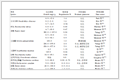
3. Results and discussion 3.1. Optoelectronic propertiesThe UV-vis absorption spectra in the CH2Cl2 solution are shown in Fig. 1 and the data is summarized in Table 1. The maximum absorption band of INCA 1-3 peaks at 454,479,510, and 554 nm,respectively. This band can be ascribed to the intramolecular charge transfer from donor to acceptor under irradiation [8]. INCA 3 shows a red-shift of 40 nm which can be assigned to the reduced delocalization of the electron and the small dihedral angle caused by the thiophene unit. The corresponding molar extinction coefficients are 0.32 × 105,0.23× 105, 0.23 × 10⁵,and 0.24 × 10⁵ L mol-1 cm-1,respectively. The absorption bands located at 372,380,385,and 389 nm can be assigned to the p-p* absorption band. The corresponding molar extinction coefficients are 0.37 × 105,0.49 × 105,0.27 × 105,and 0.47 × 10⁵ L mol-1 cm-1,respectively. Obviously,both the incorporation of the BDT unit and substitution of the benzene with the thiophene can induce the red-shift of the absorption spectra. After the introduction of the BDT unit,the absorption band around 400 nm is intensified and extended toward the near-infrared zone. Theoretical calculations show that the HOMO mainly localizes at the donor and BT units,and the LUMO mainly localizes in the anchoring group. In INCA 1 and INCA 3,LUMO partially extends to the BDT unit,which may facilitate the photo-induced charge transfer from the donor to acceptor,followed by the subsequent electron injection to the conduction band of TiO2 (Tables 2 and 3).

|
Download:
|
| Figure 1. UV–vis absorption spectral of four dyes in CH2Cl2 solution. | |
|
Table 1 Optical and electrochemical properties data of dyes. |

|
|
Table 2 Contour plots of frontier molecular orbitals. |

|
|
Table 3 Computed excitation energy, oscillator strength and molecular orbital compositions for the lowest excited states of the sensitizer dyes. |

Cyclic voltammetry was carried out to determine the redox properties of the four dyes (Fig. S1 in Supporting information). Dye was dissolved in solution containing 0.1 mol L-1 tetrabutylammonium hexauorophosphate as the supporting electrolyte. We used the Pt as the counter electrode and a saturated calomel electrode (SCE) as the reference electrode. The SCE reference electrode was calibrated using a ferrocene/ferrocenium (Fc/Fc+) redox couple as an external standard. As shown in Table 1,the HOMO of the four dyes are 1.03,0.98,1.01,and 0.88 V versus the standard hydrogen electrode,respectively,in which they are more positive than that of electrolyte mediator,indicating the oxidized dye could be regenerated effectively by I-1/I3-. E0-0 is estimated from the 10% intensity of the UV-vis absorption of the dyes. These values are estimated at 2.21,1.93,2.01,and 1.69 V,respectively. The decrease of the bandgap is consistent with the incorporation of an extra donor unit and red-shift of absorption spectra. The LUMO is estimated to -1.08,-1.05,-1.01,and -0.81 V versus NHE, respectively,indicating an adequate driving force for electron injection from the excited dye into the conduction band.
3.2. Photovoltaic propertiesThe photocurrent density-voltage curves of the cells are measured under an irradiance of 100mWcm-2,simulated AM 1.5 sunlight. CDCA (100 × 10-3 mol L-1) was used as a coadsorption additive to prepare the devices which is expected to disrupt the aggregation of the dye when the dye is anchored on the TiO2 film. The dye coated on the TiO2 film is used as the working electrode. The platinized FTO glass is used as the counter electrode and 0.1 mol L-1 lithium iodide,0.6 mol L-1 1,2-dimethyl-3-propylimidazolium iodide (DMPII),0.05 mol L-1 I2,0.5 mol L-1 4- tertbutylpyridine (4-TBP) in acetonitrile is used as the redox electrolyte. Light reflection and absorption by the FTO glass was not taken into account in our calculations. As shown in Fig. 2 and Table 4,the short-circuit photocurrents (Jsc) for INCA and INCA 1-3 are 11.82,13.20,6.22,and 9.93 mA cm-2,respectively. The opencircuit voltages (Voc) for the four dyes are 0.68,0.61,0.58,and 0.57 V,respectively. The fill factors of the four dyes are 66%,67%, 68%,and 68%,and the corresponding efficiencies are 5.35%,5.45%,2.45%,3.87%,respectively. Interestingly,the dye adopting the benzene as a spacer instead of the thiophene displays a better efficiency. After incorporating the BDT unit,INCA 1 and INCA 3 displays better efficiency relative to the parent INCA and INCA 2. Compared with the INCA,the increase in Jsc of INCA 1 contributes to the slight enhancement of efficiency. INCA 2 and INCA 3 show a relatively low Jsc which are not proportionate with their absorption spectra. Thus,we conducted the monochromatic incident photonto- electron conversion efficiency (IPCE) test. INCA shows overall IPCE of 71% over the main absorption band. The IPCEs of INCA 1-3 are 66%,31%,and 31%,respectively. The dyes containing benzene as the bridge unit display better IPCEs than those with the thiophene unit. Considering the good planarity of the molecule,we speculate the low Jsc and low IPCE originates from the recombination caused by aggregation. To verify this hypothesis,we conducted theoretic computation to calculate the dihedral angles of dyes. As shown in Table 5,the four dyes show almost identical a angles. The β angles for INCA 1-3 are also similar. The b angle of INCA is significantly higher than INCA 2,which may account for the above-mentioned improvement of efficiency. The γ angles are 34.0° and 5.2° for INCA 1 and INCA 3,respectively. The trend of dihedral angles is in accordance with the efficiency,indicating that disruption of planarity affects efficiency (Fig. 3).

|
Download:
|
| Figure 2. I–V curve of device based on four dyes. | |
|
|
Table 4 The performance of DSSCs based on INCA[3TD$DIF] series. |

|
|
Table 5 Optimized dihedral angles. |


|
Download:
|
| Figure 3. IPCE curve of device based on four dyes. | |

Because the Voc positively correlates with the accumulation of electrons in the conduction band of TiO2,the reduction of electron- hole recombination could improve the Voc [9]. To further explore the relation between the charge transfer process and the relatively high open voltages of INCA and INCA 1 which are ascribed to the relatively low electron-hole recombination caused by the disruption of dye aggregation,we performed electrochemical impedance spectroscopy tests. The larger semicircle at lower frequencies corresponds to the charge transfer processes at the interface between TiO2 and the electrolyte mediator,while the smaller semicircle at higher frequencies reflects the charge transfer processes at the Pt-electrolyte interface. The Nyquist plot is shown in Fig. 4. The radius of the large semicircle decreases in the order of INCA 3 < INCA 2 < INCA 1 < INCA,indicating that electron-hole recombination resistance increases in the order of INCA > INCA 1 > INCA 2 > INCA 3 which is consistent with the variation of the Voc. The large difference in recombination between INCA and INCA 1 accounts for the large difference of voltage (60mv). Slight differences in the recombination resistance between INCA 1-3 explain the slight differences in the voltage.

|
Download:
|
| Figure 4. Nyquist plot of device based on two dyes under the dark condition. | |

Besides the back electron-hole recombination,which decreases the Jsc,the amount of the dye absorbed on the TiO2 film may directly affect the Jsc. We measured the amount of dye loaded on the film via desorbing the dye with 0.1 mol L-1 NaOH solution and measuring the absorption of the solution. The calculated the amounts of dye loading were 3.08 × 10⁻⁸ (mol cm-2) and 2.52 × 10⁻⁸ (mol cm-2) for INCA 1 and INCA 3,respectively. This trend is also consistent with the discrepancy of Jsc between INCA 1 and INCA 3 (Fig. 5).

|
Download:
|
| Figure 5. Absorption of two dyes in the desorption solution. | |

4. Conclusion
In summary,BT bridge unit and BDT auxiliary were tested as bridge units for the dyes in DSSCs.We found that benzene serves as a better bridge spacer than thiophene,which can be assigned to the large dihedral angle between the two adjacent aromatic rings. This large dihedral angle contributes to the disruption of dye aggregation and improved efficiency. INCA based DSSCs showed overall conversion efficiency of 5.36% with Voc = 680 mV, Jsc = 11.82 mA cm-2,and a fill factor (FF) = 0.66 under standard illumination conditions. INCA 1 based DSSCs showed a comparable conversion efficiency of 5.45%,with Voc = 610 mV, Jsc = 13.20 mA cm-2,and a fill factor (FF) = 0.67.
Appendix A. Supplementary dataSupplementary data associated with this article can be found,in the online version,at http://dx.doi.org/10.1016/j.cclet.2016.04.010.
| [1] | B. O'Regan, M. Gratzel. A low-cost, high-efficiency solar cell based on dye-sensitized colloidal TiO2 films. Nature 353 (1991) 737–740. |
| [2] | Q.L. Yu, Y.H. Wang, Z.H. Yi, et al. , High-efficiency dye-sensitized solar cells: the influence of lithium ions on exciton dissociation, charge recombination, and surface states. ACS Nano 4 (2010) 6032–6038. |
| [3] | S. Mathew, A. Yella, P. Gao, et al. , Dye-sensitized solar cells with, 13% efficiency achieved through the molecular engineering of porphyrin sensitizers. Nat. Chem. 6 (2014) 242–247. |
| [4] |
(a) C.J. Qin, A. Islam, L.Y. Han, Incorporating a stable fluorenone unit into D-A-π-A organic dyes for dye-sensitized solar cells, J. Mater. Chem. 22 (2012) 19236-19243; (b) H.N. Tian, I. Bora, X. Jiang, et al., Modifying organic phenoxazine dyes for efficient dye-sensitized solar cells, J. Mater. Chem. 21 (2011) 12462-12472; (c) W.J. Wu, J.B. Yang, J.L. Hua, et al., Efficient and stable dye-sensitized solar cells based on phenothiazine sensitizers with thiophene units, J. Mater. Chem. 20 (2010) 1772-1779; (d) W.D. Zeng, Y.M. Cao, Y. Bai, et al., Efficient dye-sensitized solar cells with an organic photosensitizer featuring orderly conjugated ethylenedioxythiophene and dithienosilole blocks, Chem. Mater. 22 (2010) 1915-1925; (e) A. Yella, C.L. Mai, S.M. Zakeeruddin, et al., Molecular engineering of push-pull porphyrin dyes for highly efficient dye-sensitized solar cells: the role of benzene spacers, Angew. Chem. Int. Ed. 53 (2014) 2973-2977; (f) F. Wu, J.L. Liu, L.T.L. Lee, et al., Dye-sensitized solar cells based on functionalized truxene structure, Chin. Chem. Lett. 26 (2015) 955-962; (g) Y. Xu, L.S. Qiang, Y.L. Yang, et al., Enhanced performance of ruthenium dyesensitized solar cell by employing an organic co-adsorbent of N,N'-bis((pyridin-2-yl)(methyl) methylene)-o-phenylenediamine, Chin. Chem. Lett. 27 (2016) 127-134. |
| [5] |
(a) T. Privalov, G. Boschloo, A. Hagfeldt, P.H. Svensson, L. Kloo, A study of the interactions between I-/I3- redox mediators and organometallic sensitizing dyes in solar cells, J. Phys. Chem. C 113 (2009) 783-790; (b) S.M. Feldt, E.A. Gibson, E. Gabrielsson, et al., Design of organic dyes and cobalt polypyridine redox mediators for high-efficiency dye-sensitized solar cells, J. Am. Chem. Soc. 132 (2010) 16714-16724; (c) J.B. Yang, P. Ganesan, J. Teuscher, et al., Influence of the donor size in D-π-A organic dyes for dye-sensitized solar cells, J. Am. Chem. Soc. 136 (2014) 5722-5730; (d) Z.Y. Yao, M. Zhang, H. Wu, et al., Donor/acceptor indenoperylene dye for highly efficient organic dye-sensitized solar cells, J. Am. Chem. Soc. 137 (2015) 3799-3802; (e) N.J. Zhou, K. Prabakaran, B. Lee, et al., Metal-free tetrathienoacene sensitizers for high-performance dye-sensitized solar cells, J. Am. Chem. Soc. 137 (2015) 4414-4423; (f) J.-H. Yum, E. Baranoff, F. Kessler, et al., A cobalt complex redox shuttle for dyesensitized solar cells with high open-circuit potentials, Nat. Commun. 3 (2012) 631; (g) A.W. Sun, J.W. Lauher, N.S. Goroff, Preparation of poly(diiododiacetylene), an ordered conjugated polymer of carbon and iodine, Science 312 (2006) 1030-1034. |
| [6] | L.J. Huo, J.H. Hou, H.Y. Chen, et al. Bandgap and molecular level control of the lowbandgap polymers based on, 3,6-dithiophen-2-yl-2,5-dihydropyrrolo[3,4-c]pyrrole-1,4-dione toward highly efficient polymer solar cells. Macromolecules 42 (2009) 6564–6571. |
| [7] | W.H. Zhu, Y.Z. Wu, S.T. Wang, et al. , Organic D-A-π-A solar cell sensitizers with improved stability and spectral response. Adv. Funct. Mater. 21 (2011) 756–763. |
| [8] | K.P. Guo, K.Y. Yan, X.Q. Lu, et al. , Dithiafulvenyl unit as a new donor for highefficiency dye-sensitized solar cells: synthesis and demonstration of a family of metal-free organic sensitizers. Org. Lett. 14 (2012) 2214–2217. |
| [9] |
(a) J. Bisquert, F. Fabregat-Santiago, I. Mora-Seró, G. Garcia-Belmonte, S. Giménez, Electron lifetime in dye-sensitized solar cells: theory and interpretation of measurements, J. Phys. Chem. C. 113 (2009) 17278-17290; (b) A. Fillinger, B.A. Parkinson, The adsorption behavior of a ruthenium-based sensitizing dye to nanocrystalline TiO2 coverage effects on the external and internal sensitization quantum yields, J. Electrochem. Soc. 146 (1999) 4559-4564. |