 2016, Vol. 27


Proguanil,(1-(p-chlorophenyl)-5-isopropylbiguanidehydrochloride) (C11H17C12N5,MW290.19),is a prophylactic antimalarial [1, 2] with the structure given in Fig. 1.

|
Download:
|
| Figure 1. Structure of proguanil hydrochloride | |
It has been used for malarial prophylaxis in children with sickle cell disease living in malaria-endemic areas for many years [3]. Proguanil is usually taken in combination with another antimalarial drug,such as Atonil [4]. The active metabolite of the proguanil is cycloguanil,which binds to the dihydrofolatereductase (DHFR) enzyme of the parasite and inhibits the folic acid metabolism. The mechanism for the cyclisation of the proguanil to cycloguanil has been recently explored by Bharatam [5]. Due to the pharmacological effect and importance of proguanil,it was quantified by several methods such as high performance liquid chromatography in Tablet dosage form and in biological fluid [6, 7],however,these methods are expensive and not suitable for routine work. Thus,there is a critical need for the development of selective and inexpensive analytical tool for the determination of this drug. Analytical methods based on potentiometric ion-selective electrodes (ISEs) are suitable alternative for this purpose. They have the longest history and probably the largest number of applications [8]. The most important advantages of this technique are high speed,which is good for routine analysis,portability of the device,on-line monitoring,low cost,and wide application concentration range [9-13]. Also,ISEs were found effective in analysis of pharmaceutical formulations [7, 9, 14-17] for their attractive properties mentioned before in addition to simplicity of construction,high selectivity,short response time,applicability to colored and turbid solutions and possible interfacing with automated and computerized systems [17]. PVC membrane electrodes are one of the subdivisions of potentiometric sensors. Although they are widely used,they do not have adequate mechanical stability for long-term usage. In contrast,carbon paste electrodes (CPEs) are another category of potentiometric sensors that are mechanically strong. In addition,CPEs have attracted attention more than membrane electrodes because of their advantages such as renewability by changing the electrode surface,low Ohmic resistance and the absence of the internal solutions [18, 19]. Recently,for improvement of the CPEs response,pastes can be modified by different modifiers such as carbon nano-tubes (CNTs) [20-23] to form MCPE,or with PVC gel to form SPE. CNTs have interesting physicochemical properties,as the ordered structure with a high aspect ratio,high electrical and thermal conductivity,ultra-light weight,high mechanical strength and high surface area [24, 25]. The combination of these characteristics makes CNTs unique materials with the potential for various applications. SPEs have the advantages of both the PVC and CPEs. The most important advantages of the coated wire electrodes (CWEs) are the absence of the filling solution and no need for long time soaking before first measurement. There is only one published method for proguanil hydrochloride (PrCl) determination using electrochemical methods [26]. Although the reported method showed a lower detection limit,it suffered from the very small concentration range of application and also the use of more sophisticated method,voltammetry. Here,five kinds of potentiometric sensor were introduced,namely PVC membrane electrode,CPE,MCPE using MWCNTs,CWEs and SPEs,prepared by embedding the ion-pair proguanilium-phosphotungstate(Pr-PT) in the different matrices. The electrodes are used for the determination of proguanil hydrochloride in pure samples,Tablets and spiked serum and urine samples.
2. Experimental 2.1. ReagentsAll chemicals were of analytical grade and were used without any further purification. Stock solutions were prepared with doubly distilled water. High-molecular weight poly(vinyl-chloride) (PVC),phosphotungestic acid (PTA),dioctyl phthalate (DOP),tricresyl phosphate (TCP),tetrahydrofuran (THF),graphite and multi-walled carbon nanotubes (MWCNTs) were purchased from Sigma-Aldrich. Acetone,glucose,maltose,lactose,glycein,L-alanine,sucrose,sodium hydroxide,hydrochloric acid,and chloride salts of sodium,ammonium,ferric,aluminum and potassium were purchased from ADWIC (Cairo,Egypt). Proguanil hydrochloride as a pure sample and its pharmaceutical formulation (Atonil 100 mg coated Tablet) were obtained from October pharma for pharmaceutical preparation (6th of October city,Giza,Egypt).
2.2. Preparation of solutions and ion-exchangersStock solutions (10-2 mol L-1) of PrCl and PTA were prepared by dissolving accurately weighed amount of these materials in distilled water. Lower concentration solutions were prepared by appropriate dilution of the stock solutions. The ion-pair Pr-PT was prepared by mixing 150 mL of 10-2 mol L-1 PrCl with 50 mL of 10-2 mol L-1 of PTA. The resulting yellowish white precipitate was then filtered,washed with water and dried at room temperature and ground to fine powders. The composition was assisted by elemental analysis and potentiometric titration.
For sampling of tablets (Atonil1 ®),five tablets were accurately weighed and powdered in a mortar; the required amount from the tablet powder was dissolved in about 30 mL of distilled water,filtered in a 100 mL measuring flask and the volume was completed with distilled water. The content of the measuring flask was subjected to potentiometric determination and standard additions method. Different amount of PrCl and 1 mL of plasma or 5 mL of urine of a healthy person were transferred to a 25 mL measuring flask and completed to the mark with water [14]; then these solutions were subjected to the potentiometric determination and standard additions method.
2.3. Preparation of the electrodes 2.3.1. PVC membrane electrodeMembranes ofdifferentcompositionswere preparedasdescribed elsewhere [27]. Briefly,the required amount of PVC,plasticizer and the ion-pair of total weight of 0.30 g were dissolved in a 5.0 cm (diameter) Petri dish containing 5 mLof THF. To obtain homogenous and uniformthickness,themembranewas left to dry freely in air (no less than 24 h). The membrane was divided into four parts,and one part was taken and glued to the polished end of a rubbery tube using a PVC/THF slurry andthe tubewas left for 10 minand then filledwith the inner solution,which contained 10-3 mol L-1 of PrCl and 10-1 mol L-1 of NaCl. The sensor was finally conditioned for 0.5 h by soaking in a 10-3 mol L-1 PrCl solution.
2.3.2. CPEs and MCPEIn case of CPE [19],The required amount of the plasticizer and ion-pair was weighed and mixed using an agate pestle in an agate mortar for complete homogenization then graphite (and MWCNTs for MCPE) was added and mixing continued for about 10 min until the paste was homogeneous. A Teflon holder (12.0 cm,length) with a hole at one end (7.0 mm diameter,3.5 mm deep) for the carbon paste filling served as the electrode body. Electrical contact is made through a stainless steel rod through the center of the holder. This rod can move up and down by screw movement to press the paste down when renewal of the electrode surface is needed. The paste is then packed into the hole of the electrode body. The carbon paste was smoothed onto a paper until it had a shiny appearance. A fresh electrode surface could be obtained by squeezing out a small amount of paste and removing the excess against a conventional paper then polishing the electrode on a smooth paper to obtain a shiny appearance. Electrode can be used directly for potentiometric measurements without soaking.
2.3.3. SPESPEs (5 mm × 35 mm) were printed using homemade carbon ink [28]. This ink is prepared by mixing 0.04 g of Pr-PT,0.5 g of graphite powder,0.31 g of TCP,0.9 g of PVC (8% in cyclohexanone- acetone mixture 1:1) until complete homogeneity and the ink was printed on a PVC substrate (insulator),leaving a rectangular part (5 mm × 5 mm) at both ends of the electrode for working area and electrical contact. The prepared SPEs were used in potentiometric measurements without preconditioning.
2.3.4. CWEA pure stainless steel rod of 12.0 cm length that has 7.0 mm at one end for the coating and 0.5 cm at the other end for connection. The coating solutions were prepared by dissolving various amount of PVC,TCP and the ion-exchanger in a minimum amount of THF. The stainless steel rod was coated by quickly dipping it into the coating solutions several times and allowing the film adhering the wire to dryness in about 3 minutes [8]. The process was repeated until a plastic membrane was formed. Then the prepared electrode was soaked for 0.5 h in a 10-3 mol L-1 PrCl solution.
2.4. EMF measurementsThe potentiometric measurements were carried out using a JENWAY 3310 pH-meter,where pH measurements were carried out using a Jenway pH-conductivity meter 4310. A saturated calomel electrode (SCE) (Hanna-Italy) was used as the external reference electrode. The electrochemical system may be represented as follows:
SCE=sample=workingelectrode
where the working electrode may be the PVC,CPE,MCPE,CWE or SPE. The working and the reference electrodes were immersed in a 25 mL solution and the EMF values were recorded at room temperature (25 ± 1 ℃),then the solution was replaced by a more concentrated one. The calibration curve was obtained by plotting the EMF values versus the logarithmic value of the drug concentration (log [Pr]).
2.5. Potentiometric determination of proguanil hydrochlorideIn direct potentiometric determination [27],calibration graph was made by immersing the electrodes in conjunction with SCE in a 50 mL beaker containing standard drug solutions of known concentration (10-2 -10-5 mol L-1). The potential readings were recorded for the drug starting from low to high concentrations. The unknown drug concentration can be determined using PVC,CPEs and MCPEs.
The standard additions technique was applied [29] by adding certain known volumes of 0.01 mol L-1 pure drug solution to 25 mL aliquot samples (1.0 × 10⁻³ mol L-1 and 1.0 × 10⁻⁴ mol L-1) of pure,pharmaceutical,spiked serum and urine solutions using PVC,CPEs and MCPEs. The change in mV reading was recorded for each increment and used to calculate the concentration of the drug in sample solution,using Eq. (1):
| ${{C}_{X}}={{C}_{S}}\left( \frac{{{V}_{S}}}{{{V}_{S}}+{{V}_{X}}} \right){{\left[ {{10}^{n\left( \Delta E/S \right)}}-\left( \frac{{{V}_{S}}}{{{V}_{S}}+{{V}_{X}}} \right) \right]}^{-1}}$ | (1) |
where,Cx and Vx are the concentration and volume of solution to be determined,Vs and Cs are the volume and concentration of the standard solution added to the sample under test,respectively,DE is the change in potential caused by the addition,and S is the slope of the calibration graph.
In case of potentiometric titration,10-3 mol L-1 of PTA was titrated against 10-2 mol L-1 of PrCl in pure,pharmaceutical,spiked serum and urine solutions using PVC,CPEs and MCPEs. The end points were determined from the conventional S-shaped and the first derivative plots.
3. Results and discussionThe performance characteristics of a given ion selective electrode (ISE) based on ion-pair depend to a large extent on the nature and amount of the ion-pair and its lipophilicity,the properties of the plasticizer,any additives used and the graphite/ plasticizer or PVC/plasticizer ratio [30]. Thus,the influences of the composition,nature and amount of plasticizer on the potential response of the proposed sensor were tested.
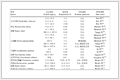
3.1. Composition of the electrodesThe operating characteristics of ion selective electrodes can be significantly modified by changing the relative proportions of the electrode membrane components where each component plays a special role in the electrode function and response. The main components of PVC membrane electrodes (sensors 1-7,Table 1) are plasticizer/PVC ratio and ion-pair. The plasticizer/PVC ratio may be one [27],or usually two [30]. Films with such a high amount of plasticizer have optimum physical properties and ensure relatively high mobility of their constituents [30].
|
Table 1 Composition and slope of calibration curve for Pr-PTA. |

For various reasons,it also has an influence on the selectivity behavior,detection limit,response,and life time. In our experiments,two plasticizers were used,DOP and TCP,where the latter exhibited the best performance due to the higher dielectric constant that facilitates the ion mobility and the ion-exchange process on both membrane interfaces. When the amount of ion pair was increased from 10% (sensor 3) to 12% (sensor 6) but the plasticizer/PVC ratio was maintained around 2,the response is improved to the Nernstian slope.
In case of CPEs (sensors 8-13,Table 1),the un-modified CPE and MCPEs prepared using TCP as a plasticizer showed the best response characteristics. Increasing the amount of the ion-pair from 12% (sensor 8) to 15% (sensor 9) with keeping the plasticizer/ graphite ratio at 1 gave the Nernstian response and the detection limit was improved with half an order of magnitude. Increasing the amount of plasticizer may enhance the performance characteristics,but,we kept the plasticizer/graphite ratio at 1 to avoid any mechanical problems within the electrode. Modifying the paste by adding MWCNTs with higher amount of ion-pair (sensor 13) and keeping the plasticizer/graphite ratio at 1,resulted in a lower detection limit.
In case of CWEs (sensors 14,15,Table 1),a stainless steel rod was coated. A plasticizer/PVC ratio of 1 showed the best slope. Here we choose only TCP based on the previous results of the PVC sensors.
In case of SPE (sensor 16),only one composition was prepared using TCP,and it showed near-Nernstian slope in wide concentration range.
In conclusion,the sensors of the best slopes in each type,sensors 6,9,13,15 and 16 (Fig. 2) were studied in the further studies.

|
Download:
|
| Figure 2. Calibration curves of (PVCEs, CPEs, MCPEs, CWEs and SPEs) | |
3.2. Effect of pH
One of the most important factors in the functioning of ionselective electrodes is the medium acidity expressed as pH value. The effect of pH on the electrode potential of 1.0 × 10⁻³ mol L-1 PrCl solutions at 25 ℃ was studied in the pH range of 2.0-12.0. The pH was adjusted by adding small volumes of (0.1,1 mol L-1 HCl or NaOH) to the test solution and the variation in potential was recorded.
Fig. 3 shows that,the potential response for sensors 6,9,13,15 and 16 are almost constant over pH ranges of (4.0-9.5,4.5-9.5,2.5-8.5,3-8.5 and 4-9.5),respectively,which can be taken as the working pH range for the respective electrodes.

|
Download:
|
| Figure 3. Effect of pH on the performance of sensors 6, 9, 13, 15 and 16 | |
The change in the potential at low pH values may be due to the response to protons at this low pH values,where the decreasing in the potential at the high pH values can be attributed to the anionic response to hydroxide anion [27]. So,in the neutral region,we can work safely without the need for any buffer.
3.3. Selectivity coefficient determinationThe separate solution method (SSM) and the matched potential method (MPM) [31] were employed to determine the selectivity coefficients of the potentiometric sensors towards different species. Eq. (2) was employed in SSM.
| $K_{drug.{{J}^{z+}}}^{pot}=\frac{{{E}_{2}}-{{E}_{1}}}{S}+\log \left[ \text{drug} \right]-\log {{\left[ {{J}^{z+}} \right]}^{1/z}}$ | (2) |
where E1 is the potential for the drug,E2 for the interfering ion J,with charge Z and slope S of the calibration graph.
According to the MPM,the activity of (PrCl) was increased from a1 = 1.0 × 10⁻⁴ mol L-1 (reference solution) using 1.0 × 10⁻² mol L-1 of PrCl to get a?2 of PrCl and the changes in potential (DE) corresponding to this increase were measured. Next,a solution of 1.0 × 10⁻² mol L-1 of the interfering ion was added to a new 1.0 × 10⁻⁴ mol L-1 reference solution until the same potential change (DE) was attained. The selectivity coefficient,for each interfering ion was calculated using Eq. (3):
| $K_{{{J}^{z+}}}^{pot}=\frac{{{{\hat{a}}}_{2}}-{{a}_{1}}}{{{a}_{J}}}$ | (3) |
where aJ is the activity of the interferent after the addition of the reference solution.
The data in the Table 2 shows the high selectivity of the different sensors for proguanil over other lipophilic species. Interference shown only by the ferric ion may be due to the ability of the drug to form inorganic complex,as shown by chloroquine phosphate [32],which is structurally and functionally similar to proguanil. The use of the stainless steel rod as substrate instead of graphite,copper or carbon rods for the coated wire showed no difference except the stability of the response.
|
|
Table 2 The log of the selectivity coefficients for the different species using SSM and MPM |

3.4. Response,life times and reversibility
Response time is the required time for the electrode to achieve values within 90% of the final equilibrium potential,after successive immersions in a series of drug solution,from 1 × 10⁻⁵ mol L-1 to 1.0 × 10⁻² mol L-1 [33-37]. The proposed sensors have very short response time of 5,10,7 and 10 s for SPE,PVC,CPE and CWE,respectively. The potential readings stay constant within ±1 mV,for at least 7 and 5 min for SPEs and PVCs,respectively. Typical potential-time plot for the response characteristics of SPE,as an example,is shown in Fig. 4.

|
Download:
|
| Figure 4. Response time of (A) SPE potentiometric sensors as an example | |
The life time of the different sensors,shown in Table 3,demonstrates that the PVC sensor has a long shelve time of about one month,which may be due to the slow dissolution of the ionpair from the PVC network. We stopped working when the response slope and the detection limit deteriorated to low values (Table 3). The shortest life time of the SPE may be due to the fact that larger area of the electrode contacts the measurement solutions,which causes larger amount of dissolution and so shorter life time [38].
|
|
Table 3 The life times of the different optimized sensors |

The reversibility of the electrode was evaluated by alternatively immersion of the electrode in two different solutions (1 × 10⁻³ mol L-1and 1 × 10⁻² mol L-1) of PrCl. It can be seen from Fig. 5 that the electrode exhibited satisfactory reversibility.

|
Download:
|
| Figure 5. Reversibility of PVC electrode (10-2 (higher value) and 10-3 mol L-1(lower value)). | |
3.5. Analytical applications
In order to assess the practical utility of the proposed sensors,we employed sub-optimum conditions. Proguanil hydrochloride was measured in biological fluids (spiked serum and urine samples),pharmaceutical preparations (Atonil1 Tablets). Each sample was analyzed using these sensors by the standard addition and the calibration methods. The mean recovery in standard addition method ranged from(92.4 to 105.1),(94.4 to103.3) and (95.3 to105) for PVC,CPE and MCPE,respectively,as shown in Table 4. In case of directpotentiometric determinationthemeanrecovery rangedfrom (93.0 to 109.0),(93.4 to 109.0) and (91.0 to 109.0) for PVC,CPE and MCPE,respectively,as shown in Table 5.
|
|
Table 4 Recovery values for the different sensors using standard additions method |

|
|
Table 5 Recovery values for the different sensors using direct potentiometry |

The reported method showed many advantages over the reported chromatographic and voltammetric methods [26] such as the simpler instrumentation,no need for buffer and the low cost of the potentiometric tool. Also,some important improvements are listed in Table 6.
|
|
Table 6 comparison of the proposed sensors with that reported by the literature lower time of measurement |


4. Conclusion
Different potentiometric sensors (PVC,CPE,MCPE,CWE and SPE),were prepared and their response was optimized by improving the sensor composition. All sensors have potentiometric pH-independent response in the region (4.5-8.5),and so there is no need for buffer solution. All sensors exhibited very good selectivity for all interfering ions with the exception of ferric ion,fast response time and so can be used in routine work and no need for the sophisticated instruments. The different sensors showed good response time with reliable reversibility and could be utilized for the determination of the drug in real spiked physiological fluids with reliable recovery values.
| [1] | H.C. Carrington, A.F. Crowther, D.G. Davey, A.A. Levi, F.L. Rose. A metabolite of paludrine with high antimalarial activity. Nature 168 (1951) 1080. |
| [2] | A.F. Crowther, A .A. A.F. Crowther, A.A. Levi, Proguanil -the isolation of a metabolite with high antimalarial activity, Br. J. Pharmacol. Chemother 8 (1953) 93–97. |
| [3] | W HO, WHO Model List of Essential Medicines, World Health Organization, Geneva. 2013. . |
| [4] | C.J. Sutherland, M. Laundy, N. Price, et al. Mutations in the Plasmodium falciparum cytochrome b gene are associated with delayed parasite recrudescence in malaria patients treated with atovaquone-Proguanill. Malar. J. 7 (2008) 240. |
| [5] | M. Arfeen, D.S. Patel, S. Abbat, N. Taxak, P.V. Bharatam. Importance of cytochromes in cyclization reactions: quantum chemical study on a model reaction of proguanil to cycloguanil. J. Comput. Chem. 35 (2014) 2047–2055. |
| [6] | V.S. Veer, M.A. Badgujar, K.V. Mangaonkar. Simultaneous determination of atonil and proguanil hydrochloride in tablet dosage form by high performance liquid chromatography. RJPBCS 3 (2012) 377–383. |
| [7] | J.A. Kelly, K.A. Fletcher. High-performance liquid chromatographic method for the determination of proguanil and cycloguanil in biological fluids. J. Chromatogr. B 381 (1986) 464–471. |
| [8] | E.M. Hussien, F.M. Abdel-Gawad, Y.M. Issa. Ion-selective electrodes for determination of fluoxetine in capsules and in biological fluids. Biochem. Eng. J. 53 (2011) 210–215. |
| [9] | H.M. Abu Shawish, S.M. Saadeh, A.R. Al-Dalou, N. Abu Ghalwa, A.A. Abou Assi. Optimization of tramadol-PVC membrane electrodes using miscellaneous plasticizers and ion-pair complexes. Mater. Sci. Eng. C 31 (2011) 300–306. |
| [10] | V.K. Gupta, A.K. Jain, P. Kumar. PVC-based membranes of N,N'-dibenzyl-1,4,10,13-tetraoxa-7,16-diazacyclooctadecane as Pb(Ⅱ)-selective sensor. Sens. Actuators B: Chem. 120 (2006) 259–265. |
| [11] | V.K. Gupta, A.K. Singh, M. Al Khayat, B. Gupta. Neutral carriers based polymeric membrane electrodes for selective determination of mercury(Ⅱ). Anal. Chim. Acta 590 (2007) 81–90. |
| [12] | A. Malon, A. Radu, W. Qin, et al. Improving the detection limit of anion-selective electrodes: an iodide-selective membrane with a nanomolar detection limit. Anal. Chem. 75 (2003) 3865–3871. |
| [13] | V.K. Gupta, S. Chandra, H. Lang. A highly selective mercury electrode based on a diamine donor ligand. Talanta 66 (2005) 575–580. |
| [14] | H. Ibrahim, Y.M. Issa, H.M. Abu-Shawish. Potentiometric flow injection analysis of dicyclomine hydrochloride in serum, urine and milk. Anal. Chim. Acta 532 (2005) 79–88. |
| [15] | H. Ibrahim, Y.M. Issa, H.M. Abu-Shawish. Potentiometric flow injection analysis of mebeverine hydrochloride in serum and urine. J. Pharm. Biomed. Anal. 36 (2005) 1053–1061. |
| [16] | H.M. Abu-Shawish. Potentiometric response of modified carbon paste electrode based on mixed ion-exchangers. Electroanalysis 20 (2008) 491–497. |
| [17] | A.O. Santini, H.R. Pezza, J.E. de Oliveira, L. Pezza. Development of a potentiometric flufenamate ISE and its application to pharmaceutical and clinical analyses. J. Braz. Chem. Soc. 19 (2008) 162–168. |
| [18] | M. Javanbakht, A. Badiei, M.R. Ganjali, et al. Use of organofunctionalized nanoporous silica gel to improve the lifetime of carbon paste electrode for determination of copper(Ⅱ) ions. Anal. Chim. Acta 601 (2007) 172–182. |
| [19] | F. Faridbod, M.R. Ganjali, B. Larijani, M. Hosseini, P. Norouzi. Ho3+ carbon paste sensor based on multi-walled carbon nanotubes: applied for determination of holmium content in biological and environmental samples. Mater. Sci. Eng. C 30 (2010) 555–560. |
| [20] | S. Chitravathi, B.E. Kumaraswamy, E. Niranjana, et al. Electrochemical studies of sodium levothyroxine at surfactant modified carbon paste electrode. Int. J. Electrochem. Sci. 4 (2009) 223–237. |
| [21] | B.N. Chandrashekar, B.E.K. Swamy, K.R.V. Mahesh, U. Chandra, B.S. Sherigara. Electrochemical studies of bromothymol blue at surfactant modified carbon paste electrode by using cyclic voltammetry. Int. J. Electrochem. Sci. 4 (2009) 471–480. |
| [22] | O. Gilbert, B.E.K. Swamy, U. Chandra, B.S. Sherigara. Electrocatalytic oxidation of dopamine and ascorbic acid at poly (Eriochrome Black-T) modified carbon paste electrode. Int. J. Electrochem. Sci. 4 (2009) 582–591. |
| [23] | J.B. Raoof, M.S. Hejazi, R. Ojani, E. Hamidi-Asl. A comparative study of carbon nanotube paste electrode for development of indicator-free DNA sensors using DPV and EIS: human interleukin-2 oligonucleotide as a model. Int. J. Electrochem. Sci. 4 (2009) 1436–1451. |
| [24] | P.M. Ajayan. Nanotubes from carbon. Chem. Rev. 99 (1999) 1787–1800. |
| [25] | A. Chou, T. Böcking, N.K. Singh, J.J. Gooding. Demonstration of the importance of oxygenated species at the ends of carbon nanotubes for their favourable electrochemical properties. Chem. Commun. 7 (2005) 842–844. |
| [26] | S. Smarzewska, S. Skrzypek, W. Ciesielski. Voltammetric determination of proguanil in malarone and spiked urine with a renewable silver amalgam film electrode. Electroanalysis 24 (2012) 1966–1972. |
| [27] | M.S. Rizk, F.M. Abdel-Haleem. Plastic membrane electrodes for the determination of flavoxate hydrochloride and cyclopentolate hydrochloride. Electrochim. Acta 55 (2010) 5592–5597. |
| [28] | E. Khaled, H.N.A. Hassan, A. Girgis, R. Metelka. Construction of novel simple phosphate screen-printed and carbon paste ion-selective electrodes. Talanta 77 (2008) 737–743. |
| [29] | G. Guilbault, R.A. Drust, M.S. Frant, et al. Recommendations for nomenclature of ion-selective electrodes. Pure Appl. Chem. 48 (1976) 127–132. |
| [30] | E. Bakker, P. Bühlmann, E. Pretsch. Carrier-based ion-selective electrodes and bulk optodes., 1. General characteristics. Chem. Rev. 97 (1997) 3083–3132. |
| [31] | Y. Umezawa, P. Bühlmann, K. Umezawa, K. Tohda, S. Amemiya. Potentiometric selectivity coefficients of ion-selective electrodes part I. Inorganic cations. Pure Appl. Chem. 72 (2000) 1851–2082. |
| [32] | J.F. Adediji, E.T. Olayinka, M.A. Adebayo, O. Babatunde. Antimalarial mixed ligand metal complexes: synthesis, physicochemical and biological activities, Int. J. Phys. Sci. 4 (2009) 529–534. |
| [33] | V.K. Gupta, R. Mangla, S. Agarwal. Pb(Ⅱ) selective potentiometric sensor based on, 4-tert-butylcalix [4] arene in PVC matrix. Electroanalysis 14 (2002) 112–1132. |
| [34] | A.K. Jain, V.K. Gupta, L.P. Singh, P. Srivastava, J.R. Raisoni. Anion recognition through novel C-thiophenecalix. Talanta 65 (2005) 716–721. |
| [35] | V.K. Gupta, R.N. Goyal, R.A. Sharma. Novel PVC membrane based alizarin sensor and its application; determination of vanadium, zirconium and molybdenum. Int. J. Electrochem. Sci. 4 (2009) 156–172. |
| [36] | H.A. Zamani, G. Rajabzadeh, M.R. Ganjali. A new ytterbium(Ⅲ) PVC membrane electrode based on, 6-methy-4-{[1-(1H-pyrrol-2-yl) methylidene] amino}-3-thioxo-3,4dihydro-1,2,4-triazin-5(2H)-one. Talanta 72 (2007) 1093–1099. |
| [37] | E. Linder, Y. Umezawa. Performance evaluation criteria for preparation and measurement of macro-and micro fabricated ion-selective electrodes. Pure Appl. Chem. 80 (2008) 85–104. |
| [38] | F.M. Abdel-Haleem, O.R. Shehab. Comparative study of carbon paste, screen printed, and PVC potentiometric sensors based on copper-sulphamethazine Schiff base complex for determination of iodide-experimental and theoretical approaches, Electroanalysis, 2015, 27:. . |