 2016, Vol. 27


Fructose is an important dietary source of carbohydrates, and is a simple sugar found in many fruits. In equal amount, it is sweeter than glucose or sucrose and is therefore commonly used as a bulk sweetener. An increase in high fructose consumption results in obesity and metabolic disorders. Owing to its unique metabolic properties, fructose promotes adverse metabolic changes, including glucose intolerance, hyperlipidemia, hypertension, and hyperuricemia [1-5]. It is obvious that fructose is poorly absorbed from the digestive tract when it is consumed alone. Absorption improves when fructose is consumed in combination with glucose and amino acids [6]. Conventional methods such as high performance liquid chromatography [7], fluorometry [8], chemiluminescence [9] and electrochemical analysis [10] have been used to measure fructose. However, these analytical methods demand bulky and expensive equipments, and complicated sample treatment, which limit their applications for rapid and on-field analysis. D-Fructose dehydrogenase (FDH) is used as a biosensor to detect the presence of D-fructose. The enzymes usually suffer from several disadvantages. For example, they are instable and susceptible to denaturation and inactivation under inappropriate experimental conditions such as high temperature and very acidic/ basic pH and their action is easily blocked by chemicals [11-13]. The costly enzyme makes the procedure for fructose determination too expensive to perform.
Several studies are still being carried out to obtain faster and more selective methods of fructose analysis. To this end, we see considerable research interest in developing colorimetric methods based on synthetic ligands as the fructose-recognition moieties. The effectiveness of boronic acids as receptors and ligands in chemosensors for saccharides is more evident in the related publications. The strength of boronic acid binding to saccharides is determined by the orientation and relative position of the hydroxy groups, thus boronic acids can differentiate structurally similar saccharide molecules. It is now known that monoboronic acids exhibit inherent fructose selectivity among monosaccharides and have greater binding affinity for fructose at neutral pH [14]. The generally observed binding affinity of phenylboronic acids with monosaccharides follows the order of fructose > galactose > mannose > glucose [15, 16]. The fructose sensor using boronic acids as a recognition ligand based on photonic crystals, microcantilevers, gold electrodes and surfaceenhanced Raman scattering have been developed [17-20]. In a study recently published, a colorimetric sensor based on AuNPs for the detection of fructose by modification of AuNPs by 3- aminophenyl boronic acid (APB) and L-glutamic acid-(2, 2, 2) - trichloroethyl ester (GTE) moieties is presented [21]. However, the sophisticated instrumentation, relatively complex sample pretreatment procedures, long detection time and high limit of detection involved in these methods limited their practical applications.
Gold nanoparticles (AuNPs)-based colorimetric sensingmethods provided an alternative for fructose detecting. Due to the unique chemical and physical properties, AuNPs have been used for developing the colorimetric sensors, which can be easily monitored by the naked eye or an ultraviolet-visible (UV-vis) spectrophotometer [22, 23]. In colorimetric methods based on Au NPs, the modification is the critical step. The analyte-specific ligand is applied as a modifier. The coordination between the ligand and the analyte induces the aggregation and thus color change of AuNPs, which provides the basis for qualitative and quantitative analysis of the analyte. In comparison, a modification- free AuNPs assay is not only cost-effective, but also avoids complicated surface modifications and tedious separation processes.
Herein, a facile, highly sensitive colorimetric strategy for fructose detection is proposed based on the anti-aggregation of AuNPs through the competition reaction between the selfdehydration condensation of the aggregation agent 4-mercaptophenylboronic acid (MPBA) and the esterification of MPBA with fructose. With the addition of fructose, MPBA would prefer reacting with fructose to form stable boronic ester via boronic acid-diol binding. An increase in the concentration of fructose decreases the amount of free MPBA thiol group, resulting in less AuNPs aggregation and the solution color change from blue to red. Due to the extraordinarily high extinction coefficient of AuNPs and the specific affinity of MPBA for fructose, the proposed assay method shows excellent sensitivity and selectivity. The antiaggregation effect of fructose on AuNPs was seen by the naked eye and monitored by UV-vis spectra.
2. Experimental 2.1. Chemicals and materialsAll chemicals used in the experiments were of analytical grade and were used without further purifications. Tetrachloroauric(Ⅲ) acid trihydrate, trisodium citrate dihydrate, methanol, 4-mercaptophenyl boronic acid (MPBA) and fructose were obtained from Merck (Darmstadt, Germany).
2.2. ApparatusAbsorption spectra were recorded on an Agilent 8453 UVvisible Spectrophotometer. The size and monodispersity of Au NPs were determined by TEM using transmission electron microscope (Philips EM 208) .
2.3. Synthesis of gold nanoparticlesThe Au seeds were synthesized according to the Frens method. Briefly, an aqueous solution of 100 mL of 1 μmol/L HAuCl4 was heated to boiling with stirring; then 10 mL of 1% (wt/v) aqueous sodium citrate was added all at once. The color of the mixed solution changed from yellow to wine red in several minutes, indicating the formation of Au NPs. The boiling and stirring were continued for 15 min. The seed solution was cooled to the room temperature and was stored in a dark bottle at 4 ℃.
Colorimetric assay of fructose based on anti-aggregation of AuNPs: 1 mL of fructose with different concentrations was added to a tube containing MPBA (final concentration was 1.34 μmol/L). The reaction was incubated at room temperature for 10 min and then the fructose-MPBA solution was mixed with the AuNPs solution (2 mL). The absorption spectrum was recorded.
3. Results and discussion 3.1. Sensing mechanism of fructose based on anti-aggregation of AuNPsFig. 1 illustrates the method for the colorimetric detection of fructose based on anti-aggregation on AuNPs. The AuNPs in aqueous solution remain dispersed and the solution appears ruby red because the AuNPs are stabilized against aggregation due to the negative capping agent’s electrostatic repulsion [24]. Meanwhile, the aggregation agent, MPBA, has strong binding affinity for AuNPs due to the specific Au-S interaction, which is responsible for the significant aggregation of AuNPs and a visible color change of AuNPs from wine red to blue due to the inter-particle crosslinking. With addition of fructose, while the boronic acid moiety preferentially reacts with cis-2, 3-ribose diol of fructose to form stable borate ester via boronic acid-diol binding dependent on the pH, preventing the AuNPs from aggregation via MPBA. Accordingly, with the increase of fructose concentration, the color changes from blue to purple, and finally to wine-red, which corresponds to AuNPs changing from an aggregation to a dispersion state.

|
Download:
|
| Figure 1. Schematic illustration of the analytical process for detecting fructose based on the anti-aggregation of unmodified Au NPs. | |
3.2. Feasibility of fructose detection
The feasibility of using this assay for the colorimetric visualization of fructose is displayed in Fig. 2. The as-prepared AuNPs showed a distinctive wine-red color with the adsorption peak at 519 nm. These AuNPs were very stable owing to the electrostatic repulsion invoked by citrate ligands adsorbed on the particle surfaces. Upon the addition of MPBA into the AuNPs solution, a new strong absorbance peak appeared at 640 nm and the solution color clearly changed from ruby red to blue, indicating the aggregation of the AuNPs. The anti-aggregation effect of fructose on AuNPs is further supported by TEM investigation. The TEM image of AuNPs (Fig. 3a) containing MPBA in the presence of fructose revealed uniform monodisperse particles (Fig. 3b), while obvious aggregation of AuNPs occurred in the absence of fructose (Fig. 3c).

|
Download:
|
| Figure 2. UV–vis absorption spectra of (a) Au NPs, (b) in the presence of fructose (1 μmol/L) and MPBA (1.34 μmol/L), (c) in the presence of MPBA (1.34 μmol/L). | |

|
Download:
|
| Figure 3. TEM images of (a) AuNPs, (b) Au NPs in the presence of fructose and MPBA, and (c) Au NPs in the presence of MPBA. | |
3.3. Optimization of assay conditions
It is necessary to examine the optimum conditions for a sensor with better performance. Significant parameters including solution pH, the concentration of MPBA and incubation time are optimized.
3.3.1. Effect of the pHThe boronic acid-diol interaction is highly pH-dependent. It is therefore necessary to consider pH, when designing boronic acidbased saccharide sensors. As shown in Fig. 4, in the pH range from 3 to 11, there is an enhancement in the response; however, a sharp decrease is observed at pH > 7. The decrease at high pH might be attributed to the instability of MPBA under extremely basic conditions. The boronic moiety in MPBA undergoes B-C bond cleavage in alkaline solutions, which may account for the sharp decrease of response [25]. Accordingly, the detection of fructose was carried out in solutions of pH 7.0.

|
Download:
|
| Figure 4. Effect of pH on the absorbance ratio (A519/A640) of AuNPs. | |
3.3.2. Optimizing the aggregation agent concentration (MPBA)
This study is based on the anti-aggregation of AuNPs in the presence of fructose. Because the aggregation agents bind with fructose, aggregation agents do not interact with AuNPs. The equilibriumof the sensing systemis affected by the concentration of the aggregation agent. The band ratio values at 519 nm and 640 nm under different aggregation agent concentrations were obtained, and the results are plotted in Fig. 5. When the concentration of the aggregation agent is higher than 2.68 μmol/L, the presence of fructose no longer interfered with the aggregation of the AuNPs, because the aggregation agent remains excess. As the concentration of MPBA was reduced, the presence of fructose suppressed the aggregation of the AuNPs and the results showed the most significant difference between the systems with fructose and those without fructose was the concentration of the aggregation agent at 1.34 μmol/L.

|
Download:
|
| Figure 5. Influence of the concentration of MPBA on the absorbance ratio (A519/A640) of AuNPs. | |
3.3.3. Effect of the incubation time
Different incubation time was examined to identify the optimized incubation time. The results indicated that AuNPs aggregated right after mixing with MPBA (aggregation agent). On the other hand, the aggregation of AuNPs was suppressed and the spectral change is not detectable in the presence of fructose and no signs of aggregation were observed after 10 min of incubation (Fig. 6). Therefore, each measurement was performed after 10 min of incubation.

|
Download:
|
| Figure 6. Effect of time on the absorbance ratio (A519/A640) of AuNPs. | |
3.4. Sensitivity
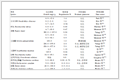
Under optimum conditions, we evaluated the sensitivity of the proposed sensor to fructose. Upon addition of increasing concentration of fructose, AuNPs became more and more stable. The absorption peak at 519 nm increased while that at 640 nm decreased (Fig. 7). The solution color changed gradually from blue to red. The calibration curve for the absorbance ratios of A519/A640 against fructose concentration was linear in the range of 0.032-0.96 μmol/L (r = 0.996) . The detection limit of fructose was 0.01 μmol/L (3δ). The proposed method is very sensitive and simple without any prior modification of AuNPs, sophisticated instruments, complex detection steps and time consuming procedure. When compared to other sensors that also utilized the boronic acid-diol binding to detect fructose, our results showed better sensitivity and linear detection range (Table 1).
|
Table 1 Comparison of some analytical characteristics of the proposed methods with those of previously reported. |


|
Download:
|
| Figure 7. (a) UV–vis spectra of AuNPs solution containing various concentration of fructose; the inset photographic image show the corresponding colorimetric response. (b) Linear dependence of A519/A640 on the fructose concentration. | |
3.5. Selectivity
The selectivity of the colorimetric sensor for fructose was evaluated by monitoring the A519/A640 response in the presence of other sugars, including glucose, mannose, galactose, lactose and saccharose. The binding kinetics of simple sugars to phenylboronic acid has been investigated in solution phase [14]. The very high association constant of fructose to phenylboronic acid could be used for the selective detection of fructose in the presence of other simple sugars. The selective detection of fructose over other simple sugars using MPBA was demonstrated in solutions with 1 μmol/L fructose, mannose, glucose, galactose, lactose and saccharose, respectively. The selectivity of the system is dependent on the sugar and fructose shows highest affinity, which is consistent with the results (Fig. 8). Obviously, the selectivity of the proposed sensor is satisfactory toward fructose in experimental condition.

|
Download:
|
| Figure 8. Difference in the response of each sugar solution; the sugar solutions are fructose, galactose, mannose, lactose, saccharose, and glucose, respectively. | |
3.6. Application of the proposed method
To examine the feasibility of the sensing method proposed in this study for the detection of real samples, human plasma samples were spiked with different concentrations of fructose. The recovery values were close to 100%, indicating that the proposed method was helpful for colorimetric fructose determination. The good recoveries indicated that our system was capable of the detection of fructose in real samples (Table 2).
|
|
Table 2 Fructose determination in human plasma. |


4. Conclusion
A novel, simple, and highly sensitive colorimetric sensing platform for fructose was successfully developed based on the anti-aggregation of AuNPs without modification through the competition reaction of boronic acid-diol binding between MPBA and fructose against the self-dehydration condensation of MPBA. A visible color change of AuNPs from blue to red was observed with increasing the concentration of fructose in the presence of MPBA. The method that we developed shows several advantages for the detection of fructose. First, this sensor exhibited excellent selectivity for fructose over other sugars according to the high specific affinity of fructose for MPBA. Second, the method is very sensitive and simple and no modifications of AuNPs are needed. Third, the obvious color change induced by fructose can be easily detected by naked eyes, and no complicated and expensive instruments are required. These advantages made this method quite promising for rapid detection of fructose in aqueous solutions and plasma samples.
| [1] | C.M.M.R. Barros, R.Q. Lessa, M.P. Grechi, et al. , Substitution of drinking water by fructose solution induces hyperinsulinemia and hyperglycemia in hamsters. Clinics 62 (2007) 327–334. |
| [2] | G.A. Bray, S.J. Nielsen, B.M. Popkin. Consumption of high-fructose corn syrup in beverages may play a role in the epidemic of obesity. Am. J. Clin. Nutr. 79 (2004) 537–543. |
| [3] | M. Heinig, R.J. Johnson. Role of uric acid in hypertension, renal disease, and metabolic syndrome. Clevel. Clin. J. Med. 73 (2006) 1059–1064. |
| [4] | T. Nakagawa, K.R. Tuttle, R.A. Short, R.J. Johnson, Hypothesis: fructose-induced hyperuricemia as a causal mechanism for the epidemic of the metabolic syndrome, Nat. Clin. Pract. Nephrol. 1 (2005) 80-86. |
| [5] | T. Nakagawa, H. Hu, S. Zharikov, et al. , A causal role for uric acid in fructose-induced metabolic syndrome. Am. J. Physiol. Renal Physiol. 290 (2006) . |
| [6] | J.H. Hoekstra, J.H. van den Aker. Facilitating effect of amino acids on fructose and sorbitol absorption in children. J. Pediatr. Gastroenterol. Nutr. 23 (1996) 118–124. |
| [7] | C.M. Ma, Z. Sun, C.B. Chen, L.L. Zhang, S.H. Zhu, Simultaneous separation and determination of fructose, sorbitol, glucose and sucrose in fruits by HPLC-ELSD, Food Chem. 145 (2014) 784-788. |
| [8] | G.P. Luis, M. Granda, M. Granda, R. Badía, M.E. Díaz-García. Selective fluorescent chemosensor for fructose. Analyst 123 (1998) 155–158. |
| [9] | N.P. Evmiridis, N.K. Thanasoulias, A.G. Vlessidis. Determination of glucose and fructose in mixtures by a kinetic method with chemiluminescence detection. Anal. Chim. Acta 398 (1999) 191–203. |
| [10] | U.B. Trivedi, D. Lakshminarayana, I.L. Kothari, P.B. Patel, C .J. Panchal. Amperometric fructose biosensor based on fructose dehydrogenase enzyme. Sens. Actuators B: Chem. 136 (2009) 45–51. |
| [11] | D.L. Nelson, M.C. Cox, Lehninger: Principles of Biochemistry, 4th ed., W.H. Freeman & Co. Ltd., New York, 2005. |
| [12] | E. Antebi, D. Fishlock, Biotechnology: Strategies for Life, MIT Press, Cambridge Massachusetts and London. , 1985. . |
| [13] | Z. Towalski, H. Rothman. Enzyme technology, in: S. Jacobsson, A. Jamison, H. Rothman (Eds.), The Biotechnological Challenge, Cambridge University Press, Cambridge, UK. (1986) . |
| [14] | G. Springsteen, B.H. Wang. A detailed examination of boronic acid-diol complexation. Tetrahedron 58 (2002) 5291–5300. |
| [15] | A.P. Davis, R.S. Wareham. Carbohydrate recognition through noncovalent interactions: a challenge for biomimetic and supramolecular chemistry. Angew. Chem. Int. Ed. Engl. 38 (1999) 2978–2996. |
| [16] | J.P. Lorand, J.O. Edwards. Polyol complexes and structure of the benzeneboronate ion. J. Org. Chem. 24 (1959) 769–774. |
| [17] | S. Takahashi, J.I. Anzai. Phenylboronic acid monolayer-modified electrodes sensitive to sugars. Langmuir 21 (2005) 5102–5107. |
| [18] | G.A. Baker, R. Desikan, T. Thundat. Label-free sugar detection using phenylboronic acid-functionalized piezoresistive microcantilevers. Anal. Chem. 80 (2008) 4860–4865. |
| [19] | O.B. Ayyub, M.B. Ibrahim, R.M. Briber, P. Kofinas. Self-assembled block copolymer photonic crystal for selective fructose detection. Biosens. Bioelectron. 46 (2013) 124–129. |
| [20] | F. Sun, T. Bai, L. Zhang, et al. , Sensitive and fast detection of fructose in complex media via symmetry breaking and signal amplification using surface-enhanced Raman spectroscopy. Anal. Chem. 86 (2014) 2387–2394. |
| [21] | V. Raj, A.N. Vijayan, K. Joseph. Naked eye detection of infertility using fructose blue -a novel gold nanoparticle based fructose sensor. Biosens. Bioelectron. 54 (2014) 171–174. |
| [22] | H. Wang, D.W. Brandl, P. Nordlander, N.J. Halas. Plasmonic nanostructures: artificial molecules. Acc. Chem. Res. 40 (2007) 53–62. |
| [23] | M. Hu, J. Chen, Z.Y. Li, et al. , Gold nanostructures: engineering their plasmonic properties for biomedical applications. Chem. Soc. Rev. 35 (2006) 1084–1094. |
| [24] | K.C. Grabar, R.G. Freeman, M.B. Hommer, M.J. Natan. Preparation and characterization of Au colloid monolayers. Anal. Chem. 67 (1995) 735–743. |
| [25] | H.X. Chen, M. Lee, J. Lee, et al. , Formation and characterization of self-assembled phenylboronic acid derivative monolayers toward developing monosaccharide sensing-interface. Sensors 7 (2007) 1480–1495. |