 2016, Vol. 27


b Medicinal Chemistry Department, Ahvaz Jundishapur University of Medical Sciences, Ahvaz, Iran
Lidocaine (LH) is chemically designated as acetamide, 2- (diethylamino)-N-(2, 6-dimethylphenyl) and is the common name of an important member of a category of drugs extensively used as local anesthetics. This drug is also widely used as anti-arrhythmic agent. Analysis of pharmaceutical preparations is one of the most important and attractive branches in analytical chemistry. Different methods have been proposed for the determination of LH in the literature. To date chromatographic methods such as high performance liquid chromatography (HPLC) [1-8], gas chromatography [9-12] and electrophoresis [13-16] are most frequently employed for LH determination due to their high sensitivity and excellent selectivity. Spectrophotometric assay [17, 18] and the indirect atomic absorption spectrometric determination have also been studied [19]. Most of these methods suffer from limitations. They are expensive, time consuming or need extensive pretreatment steps and using toxic solvent and reagents.
Electrochemical techniques are useful alternative methods, having important advantages including simplicity, reliability, sensitivity and selectivity. These techniques are more often used in pharmaceutical preparations and biomedical analysis. Little published data are available for electrochemical determination of LH and related compounds [20-24]. Investigation of direct oxidation of LH in order to find a fast, sensitive and reliable electrochemical method for determination of this compound in pharmaceuticals, as well as for the development of lidocaine voltammetric detectors coupled to flow techniques or chromatographic measurements is important. Recently, many studies have been focused on the application of nano-materials in fabrication and modification of different conventional electrodes to improve their sensitivity and selectivity [20, 25, 26]. Undoubtedly, carbon paste electrodes represent the most convenient working electrode for modification by mixing with a suitable modifier [26, 27].
Application of chemometrics in the optimization of analytical parameters has some advantages including: reduction in the number of experiments, lower reagent consumption and considerably less laboratory work. Thus they are faster and more cost effective than classical univariate approaches. These methods enable us to study several parameters simultaneously. In addition they can develop mathematical models that interpret the relevance and statistical significance of different factors in an analytical method [28]. Nowadays, response surface methodology (RSM) with a Box-Behnken design (BBD) is widely used for the optimization of analytical factors through a relatively small number of experiments [29-34]. Experimental design methodology has been extensively used in optimization of parameters in analytical chemistry. But, a few reports are available regarding their applications in electrochemical optimization [35, 36]. In this work, a laboratory constructed CuO nanoparticle carbon paste electrode (CNCPE) has been introduced for voltammetric determination of LH in pharmaceutical preparations. In addition, RSM with Box-Behnken design and traditional ‘‘one factor at a time’’ optimization protocols were used to identify chemical and instrumental parameters affecting the electrochemical response and their reliability were compared.
2. Experimental 2.1. ChemicalsAll common chemicals such as HCl, NaOH and KNO3 were of analytical grade and obtained from Merck (Darmstadt, Hesse, from Fluka (Milwaukee, USA). Copper oxide nanoparticle powder (40- 80 nm) was obtained from Inframat Advanced Material (Farmington, CT, USA).
LH stock solution (0.01 mol L-1) was prepared by dissolving 0.2886 g of LH in distilled water and diluting to the mark in a 100 mL volumetric flask. Working solutions were prepared by appropriate dilution of the stock solution. Doubled distilled water was used throughout this study.
2.2. ApparatusFor voltammetric measurements, a Metrohm (AUTOLAB, model PGSTAT302N) electrochemical device was employed. A threeelectrode arrangement was applied throughout. CuO nanoparticles modified carbon paste electrode as a working electrode and a platinum wire as an auxiliary electrode together with an Ag/AgCl reference electrode were used. Adjustment of pH was carried out using a pH-meter (JENWAY model 3320 - UK).
2.3. Fabrication of CNCPECNCPE was prepared by mixing graphite powder with paraffin oil and an appropriate amount of CuO nanoparticles for 15 min as cited elsewhere [26]. The paste was then packed into an insulin syringe and a copper wire was put in contact with it for its external electric contact. The electrode surface was rubbed on waxed paper to obtain a smooth electrode surface.
2.4. Voltammetric determination of LHIn order to investigate the oxidation mechanism of LH at CNCPE, cyclic voltammetry (CV) was used. Square wave voltammography (SWV) was chosen as electrochemical tool to determine LH due to its sensitivity and speed. Preliminary CV experiments showed a well-defined irreversible peak related to oxidation of LH. Likewise, the general procedure adopted for obtaining cyclic and square wave voltammograms of LH was as follows: an appropriate amounts of standard LH solution and 5 mL of KNO3 (1 mol L-1) were added to a 25 mL volumetric flask and diluted to the mark with distilled water. This solution was transferred into the electrochemical cell. The cyclic voltammograms were recorded from +0.5 to +1.4 V at scan rate of 0.10 V s-1. Square wave voltammograms were recorded by scanning the potential in the range of +0.5 to +1.5 V with a scan rate of 0.125 V s-1. In order to regenerate a new and fresh surface on CNCPE, the tip of the electrode was polished on waxed paper.
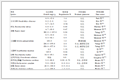
2.5. Experimental designA three-level, three-factor Box-Behnken experimental design was used to determine optimum levels for pH (8-12) , scan rate (0.2-0.3 V s-1) and percent of CuO nanoparticles (5%-20%) in CNCPE as important parameters affecting the performance of the method. The three selected levels of the variables for the BBD are shown in Table 1. The peak current of the SWV was taken as the response of the system.
|
Table 1 Experimental range and level of independent variables. |

To design the experiments, Minitab 15 software was employed. Table 2 shows the experimental design derived from BBD along with their obtained and predicted results, including three center points. Each experiment was performed in triplicate to verify reproducibility. The results were used to calculate the 10 coefficients of the second-order polynomial equation. This equation shows the relation between the desired response and the independent variables (pH, scan rate and CuO nanoparticle percent). Considering all linear, square, and linear-by-linear interaction terms, the second-order polynomial equation can be described as:
|
|
Table 2 Box–Behnken design matrix for three variables-three levels together with observed and predicted values (concentration of LH: 0.4mmolL-1). |

| $\begin{align} & Y\text{=}{{b}_{0}}+{{b}_{1}}{{x}_{1}}+{{b}_{2}}{{x}_{2}}+{{b}_{3}}{{x}_{3}}+{{b`}_{12}}{{x}_{1}}{{x}_{2}}+{{b}_{13}}{{x}_{1}}{{x}_{3}}+ \\ & {{b}_{23}}{{x}_{2}}{{x}_{3}}+{{b}_{11}}x_{1}^{2}+{{b}_{22}}x_{2}^{2}+{{b}_{33}}x_{3}^{2} \\ \end{align}$ | (1) |
where Y is the response (peak current of LH); b0 is the offset term; b1, b2, and b3 are the linear coefficients; b11, b22, and b33 are the quadratic coefficients, and b12, b13 and b23 are the coefficients of the linear-by-linear interaction effect between independent variables x1 (pH), x2 (scan rate), and x3 (CuO nanoparticle per cent) [37]. The model suitability of fit was assessed using a coefficient of regression (R2) and analysis of variance (ANOVA).
3. Results and discussion 3.1. Electrochemical characteristics of LH on CNCPEPreliminary cyclic voltammetry studies on the electrochemical behavior of 0.4 mmol L-1 LH solution in KNO3 at pH 8 were performed on both CNCPE and non-modified carbon paste electrode (CPE), revealed that the voltammograms of LH on these two electrode surfaces differ significantly (Fig. 1a and 1b). It can be seen that CPE shows low sensitivity with respect to LH in comparison to that of CNCPE. The irreversible oxidation peak at +0.90 V might be due to the oxidation of the amine group in LH molecule. Fig. 2a and 2b illustrate square wave voltammograms of LH at CNCPE and CPE. The higher oxidation peak current of LH at CNCPE shows that this modified electrode is more sensitive than CPE. The above mentioned parameters (Table 1) were optimized by both classical and BBD methodologies in order to obtain a welldefined square wave voltammogram with maximum peak current for the determination of traces of LH.

|
Download:
|
| Figure 1. The cyclic voltammogram of LH at (a) CNCPE and (b) CPE (concentration of LH: 0.4 mmol L-1; pH = 10.0; scan rate: 0.125 V s-1; CuO%: 10). | |

|
Download:
|
| Figure 2. The SW voltammogram of LH at (a) CPE and (b) CNCPE (concentration of LH: 0.4 mmol L-1; pH = 10.0; scan rate: 0.125 V s-1; CuO%: 10). | |
3.2. Classical optimization methodology 3.2.1. Effect of pH
The effect of pH on peak current (Ip) and potential were investigated by applying different pH values ranging from 3 to 12. No oxidation peaks were found before pH 3. Fig. 3a shows two oxidation peaks at low pH. This is due to the presence of both protonated (LH) and deprotonated (L) form of lidocaene. At pH 8 and higher L form is predominant. Then, L can be accumulated on the surface of the electrode through N-Cu interaction. So, the corresponding peak current increases. As shown in Fig. 3b, in these pH ranges, LH peak current increases linearly and implies the participation of hydrogen ions in the electrochemical reaction [27]. This result revealed more favorable oxidation of LH at higher pHs. Also considering the relationships between current and rate of electrochemical reaction [38], it can be concluded that the rate of oxidation of LH increases with increasing pH and reaches its maximum value and levels off at pHs 11-12. This might be due to the fact that pka of LH is about 8 and above pH 8 the main fraction of LH molecules may be in their de-protonated form [21, 24]. However, above pH 12, the shape of LH voltammogram became undesirable and its shape degraded. The linear dependency between Ip and pH can be concluded by the regression Eq. (2) :

|
Download:
|
| Figure 3. (a) SW voltammogram and (b) plot of peak currents vs. pH (concentration of LH: 0.4 mmol L-1; scan rate: 0.25 V s-1; CuO%: 10). | |
| ${{I}_{p}}\left( \text{ }\!\!\mu\!\!\text{ A} \right)=3.960pH-9.274\left( {{r}^{2}}=0.995 \right)$ | (2) |
A study of the effect of potential sweep rate (n) on the peak current helps to identify that the oxidation of LH at CNCPE is diffusion or surface controlled. However, the plot of peak current vs. square root of scan rate (Fig. 4) exhibited linear relationship and suggests that the process is controlled by the diffusion of analyte in the interfacial reaction zone of CPE surface [27]. The linear regression equation is:

|
Download:
|
| Figure 4. The plot of peak current vs. square root of scan rate (0.4 mmol L-1; pH 11.5; CuO%: 10). | |
| ${{I}_{p}}\left( \text{ }\!\!\mu\!\!\text{ A} \right)=33.53{{\nu }^{1/2}}\left( \text{V}{{\text{s}}^{-1}} \right)+6.102\left( {{r}^{2}}=0.990 \right)$ | (3) |
Furthermore, an increase in scan rate causes peak potential shifts to more positive values; this positive shift confirms the irreversibility of the oxidation reaction [39, 40].
3.2.3. Influence of CuO-nanoparticle amount in CNCPEThe best weight ratio of C: paraffin for preparation of carbon paste, 70: 30 (w/w), has been reported elsewhere [26]. However in order to achieve the most sensitive electrode, different amounts of CuO nanoparticles were added to the paste and mixed thoroughly in a mortar to prepare a modified carbon paste. Highest peak current intensities were obtained at CuO:C:paraffin weight ratio of 20:60:30 (Fig. 5) and this composition was used in further work. Complex formation between copper ion and amines is well known. However, copper ion in the paste can attract amine group of LH. This tendency increase LH concentration at the surface of the electrode and causes shift in oxidation potential and increase in the current, consequently. At higher amounts of nanoparticles, the background intensity was increased and caused a lowering in peak current of analyte. It may be due to the existence of copper oxide in the electrode originally causing an increase in the baseline of the CNCPE. So at higher amounts of modifier the sensitivity of the modified electrode is diminished.

|
Download:
|
| Figure 5. The plot of peak current vs. CuO% in CNCPE (concentration of LH: 0.4 mmol L-1 ; pH 11.5; scan rate: 0.25 V s-1). | |
3.3. Box-Behnken optimization method 3.3.1. Statistical analysis of Box-Behnken model
Surface and counter plots of the major influencing parameters (pH, scan rate and the percentage of CuO nanoparticles in CPE) showed their impact in response Y (peak current intensity) in the experimental design. In these plots the function of two parameters was examined while the third factor is held at a constant level. ANOVA and a level of 0.05 (95% confidence) were used to determine the statistical significance of the independent variables. Minitab 15 software was used to obtain the second-order polynomial coefficients and statistical parameters and analyze the results. ANOVA results for the quadratic model for peak current of LH oxidation on CNCPE is shown in Table 3. ANOVA showed that all effects were statistically significant (P < 0.05) at 95% confidence interval except for second-order CuO% (P = 0.127) and the interaction effects of scan rate with pH and CuO% with P values of 0.269 and 0.599, respectively. Considering all linear, square, and linear-by-linear interaction terms, the second-order polynomial equation can be described as:
|
|
Table 3 ANOVA for response surface reduced quadratic model. |

| $\eqalign{ & I = 74.89 + 30.79{\rm{PH + 3}}{\rm{.89SR + 7}}{\rm{.60Cuo }}\% {\rm{ + 1}}{\rm{.328P}}{{\rm{H}}^2} \cr & - 0.04S{R^2} + 0.03{\rm{Cuo }}\% {{\rm{ }}^2} + 0.05{\rm{PH}} \times SR + 0.716{\rm{PH}} \cr & \times {\rm{Cuo }}\% {\rm{ + 0}}{\rm{.01SR}} \times {\rm{Cuo }}\% {\rm{ }} \cr} $ | (4) |
where SR is the potential scan rate.
The final mathematical model in terms of significant actual factors affecting in peak current (I) of LH, determined by Minitab 15 software is:
| $\begin{align} & I=74.89+30.79\text{PH+3}\text{.89SR+7}\text{.60Cuo }\!\!%\!\!\text{ +1}\text{.328P}{{\text{H}}^{2}} \\ & -0.04S{{R}^{2}}+0.718\text{PH}\times \text{Cuo }\!\!%\!\!\text{ } \\ \end{align}$ | (5) |
From Eq. (5) , it can be concluded that the first order main effects (pH, SR and CuO%) all had significant effect on LH peak current. The ANOVA results (Table 3) show that first-order effect of the main factors were more significant than their quadratic and interaction effect. Moreover, of all model components, the interaction effect of SR and CuO% showed the least effect on response (P = 0.599) . The adjusted R2 of 0.9821 indicates the significance and goodness of fit of the model and that only about 2% of variations could not be interpreted by the model. This high value of regression coefficient of the model showed a good correlation between experimental results and predicted responses.
3.3.2. Effect of pHThe pH values ranged from 8 to 12. Based on ANOVA analysis, initial pH had the greatest positive effect on peak current. Increasing pH raised the peak current to maximum value. Figs. S1a and S1b (see Supporting information) represent the interaction effects of pH by scan rate (frequency) and CuO%, respectively, on LH the peak current as analyzed by BBD. In each graph the third factor was kept constant. According to these figures, pH increased from 8 to 12, the LH peak current increased linearly. The BBD model predicted that the highest peak current should be at pH = 12 as the optimum value. The results of this section agree with those obtained from Section 3.2.1.
3.3.3. Effect of potential scan rateAs seen in Eq. (4) , predicted correlation coefficient of scan rate is 3.89 that show the important effect of this factor on LH peak current. Figs. S1a and S1c (see Supporting information) represent the results analyzed by BBD in interactive effects between the scan rate (frequency) and pH (CuO% being constant) and CuO% (pH value being constant). These results reveal that peak current rises as scan rate or frequency becomes higher and reaches its maximum level at 0.25 V s-1 (frequency = 50 Hz) and then falls at high scan rate (0.35 V s-1) . This found optimum value (0.25 V s-1) for potential scan rate is in good agreement with that of the result in Section 3.2.2. However, as stated in Section 3.3.1, P values show insignificant interaction effects of scan rate with pH and CuO% and Fig. 6a and c are consistent with those results.

|
Download:
|
| Figure 6. The plot of the peak current vs. concentration of LH under optimum conditions range. | |
3.3.4. Effect of CuO-nanoparticle percent in CNCPE
The correlation coefficient of 7.60 (Eq. (4) ) for this factor, indicates that the amount of CuO has important effect on the response. This also can be concluded from Figs. S1b and S1c (see Supporting information). The inherent attraction between the amine group in LH and Cu, and increased conductivity in electrode due to existence of nanoparticles could be responsible for this finding. However, as mentioned before, according to the ANOVA analysis results, only the correlation between CuO% and pH is significant. Furthermore, this significant positive correlation is confirmed by increased peak currents in higher values of both of these factors. In the light of findings from both optimization methodologies, it can be concluded that they present similar results.
3.4. Analytical performance and method validationThe analytical features such as the dynamic range of the calibration curve, LOD, LOQ, accuracy and precision were examined to establish validity of the proposed method. As illustrated in Fig. 6 under optimum conditions, peak currents of LH voltammograms show linearity in the concentration range 1-2500 mmol L-1. The regression equation for the obtained calibration graph with a correlation coefficient of 0.999, was Ip (mA) = 0.11 CLH (mmol L-1) + 17.38, where CLH is the concentration of LHand Ip is the peak current intensity. The LOD and LOQ for the determination based on three and ten times of the signal to noise (S/N)were 0.39 and 1.3 mmol L-1 (n = 10) , respectively. The precision of the method was assessed for 10 replicate SWV determinations each of 0.05, 0.5 and 1mmol L-1 of LH. Their corresponding relative standard deviations were 4.1%, 3.7% and 2.1%, respectively.
In order to check the performance of the CNCPE compare to previously reported CPE [41] for LH determination some important parameters in method validation are presented in Table 4. Wider linear rang, lower limit of detection, and higher sensitivity (about two times of CPE) is obtained for LH measurement using CNCPE.
|
|
Table 4 CPE and CNCPE figure of merit for LH determination. |

3.4.1. Application to real samples
The above proposed procedure was applied for the determination of LH in different pharmaceutical preparations. In order to test the validity of the method, as indicated in Table 5, different amounts of LH standard solutions were spiked into the LH injection and gel formulations. Then the spiked samples were subjected to the present determination method. The experiments implied that the same voltammetric behavior of the LH was observed in these pharmaceutical preparations and standard solutions. All experiments were performed in triplet and the recovery efficiencies (%) were calculated. The excellent recovery results (Table 5) indicate that the constituents in the formulations do not interfere with LH determination. The procedure described in the United States Pharmacopeia (USP) that used HPLC for the LH determination was used as an alternative method of analysis to test the reliability and accuracy of the results [42]. In order to compare the results with HPLC standard method reported in USP, the samples were analyzed by both methods. The results were consistent with those of the standard USP method (Table 5).
|
|
Table 5 Determination of LH content and recovery tests in different pharmaceutical formulations with the proposed method (n = 3). |


4. Conclusion
The methodology presented in this study was simple and economic, especially if more sophisticated techniques such as electrophoresis and chromatography are not easily available. The simple fabrication procedure of CNCPE and the short analysis time are other advantages of the proposed method. The detection limit of the proposed method is better than or comparable to some of the previously reported ones. Some reported LOD values (most of them corresponding to the chromatographic methods) are better than that of the present method, but the chromatographic methods are expensive, require extensive pre-treatment steps as well as consume large amounts of toxic solvents and have a lengthy analysis time. The peak current of present method is linear up to 4 orders of magnitude (1-2500 mmol L-1) of LH concentration. This dynamic range is wider than all reported methods.
Overall, this method is reliable and sensitive determination technique for LH in pharmaceutical preparations and similar amine and amide functionalized drugs. If the present electrode couples to techniques such as HPLC, capillary electrophoresis or flow injection analysis, it can also be applied in the detection of these drugs in biological fluids.
AcknowledgmentThe authors are thankful for the funding provided by Jundishapur University of Medical Sciences - Nanotechnology Research Center under grant No. N-11. This paper is issued from thesis of Jamalaldin Ghanavati.
Appendix A. Supplementary dataSupplementary data associated with this article can be found, in the online version, at http://dx.doi.org/10.1016/j.cclet.2016.04.017.
| [1] | E. ter Weijden, M.P.H. van den Broek, F.F.T. Ververs. Easy and fast LC-MS/MS determination of lidocaine and MEGX in plasma for therapeutic drug monitoring in neonates with seizures. . |
| [2] | M. Pendela, G. Kahsay, I. Baekelandt, A. van Schepdael, E. Adams. Simultaneous determination of lidocaine hydrochloride, hydrocortisone and nystatin in a pharmaceutical preparation by RP-LC. J. Pharm. Biomed. Anal. 56 (2011) 641–644. |
| [3] | B. Chu, D.J. Lou, P.F. Yu, S.N. Hu, S. Shen. . |
| [4] | W.W. Qin, Z. Jiao, M.K. Zhong, et al. , Simultaneous determination of procaine, lidocaine, ropivacaine, tetracaine and bupivacaine in human plasma by high-performance liquid chromatography. J. Chromatogr. B 878 (2010) 1185–1189. |
| [5] | S. Salas, B. Talero, A.M. Rabasco, M.L. González-Rodríguez. Development and validation of a reverse-phase liquid chromatographic method for the assay of lidocaine hydrochloride in alginate-Gantrez® microspheres. J. Pharm. Biomed. Anal. 47 (2008) 501–507. |
| [6] | L.L. Chen, L.C. Liao, Z. Zuo, et al. , Simultaneous determination of nikethamide and lidocaine in human blood and cerebrospinal fluid by high performance liquid chromatography. J. Pharm. Biomed. Anal. 43 (2007) 1757–1762. |
| [7] | Z.H. Zhang, Q. Zhao, S.Y. Kang, et al. , Determination of local anesthetics in human plasma by liquid-liquid-liquid microextraction coupled with high performance liquid chromatography. Chin. J. Anal. Chem. 34 (2006) 165–169. |
| [8] | M. Ma, S.Y. Kang, Q. Zhao, B. Chen, S.Z. Yao. Liquid-phase microextraction combined with high-performance liquid chromatography for the determination of local anaesthetics in human urine. J. Pharm. Biomed. Anal. 40 (2006) 128–135. |
| [9] | M. Baniceru, O. Croitoru, S.M. Popescu. Determination of some local anesthetics in human serum by gas chromatography with solid-phase extraction. J. Pharm. Biomed. Anal. 35 (2004) 593–598. |
| [10] | M. Abdel-Rehim. New trend in sample preparation: on-line microextraction in packed syringe for liquid and gas chromatography applications: I. Determination of local anaesthetics in human plasma samples using gas chromatography-mass spectrometry. J. Chromatogr. B 801 (2004) 317–321. |
| [11] | E.H.M. Koster, C. Wemes, J.B. Morsink, G .J. de Jong. Determination of lidocaine in plasma by direct solid-phase microextraction combined with gas chromatography. J. Chromatogr. B 739 (2000) 175–182. |
| [12] | T. Ohshima, T. Takayasu. Simultaneous determination of local anesthetics including ester-type anesthetics in human plasma and urine by gas chromatography-mass spectrometry with solid-phase extraction. J. Chromatogr. B 726 (1999) 185–194. |
| [13] | M. Lombardo-Agüí, C. Cruces-Blanco, A.M. García-Campaña. Capillary zone electrophoresis with diode-array detection for analysis of local anaesthetics and opium alkaloids in urine samples. J. Chromatogr. B 877 (2009) 833–836. |
| [14] | H.W. Sun, L.Q. Li, M. Su. Simultaneous determination of lidocaine, proline and Lomefloxacin in human urine by CE with electrochemiluminescence detection. Chromatographia 67 (2008) 399–405. |
| [15] | L.V. Candioti, J.C. Robles, V.E. Mantovani, H .C. Goicoechea. Multiple response optimization applied to the development of a capillary electrophoretic method for pharmaceutical analysis. Talanta 69 (2006) 140–147. |
| [16] | X.B. Yin, J.Z. Kang, L.Y. Fang, X .R. Yang, E. . |
| [17] | O.A. Donmez, A. Bozdogan, G. Kunt, Y. Div. Spectrophotometric multicomponent analysis of a mixture of chlorhexidine hydrochloride and lidocaine hydrochloride in pharmaceutical formulation using derivative spectrophotometry and partial least-squares multivariate calibration. J. Anal. Chem. 65 (2010) 30–35. |
| [18] | Ö. Aksu, A. Bozdoğan, G. Kunt. Simultaneous determination of mepyramine maleate, lidocaine hydrochloride, and dexpanthenol in pharmaceutical preparations by partial least-squares multivariate calibration. Anal. Lett. 39 (2006) 751–761. |
| [19] | C. Nerín, A. Garnica, J. Cacho. Indirect determination of lidocaine by atomic absorption spectrophotometry. Anal. Lett. 24 (1991) 1847–1859. |
| [20] | R.T. Kachoosangi, G.G. Wildgoose, R.G. Compton. Using capsaicin modified multiwalled carbon nanotube based electrodes and p-chloranil modified carbon paste electrodes for the determination of amines: application to benzocaine and lidocaine. Electroanalysis 20 (2008) 2495–2500. |
| [21] | R.T.S. Oliveira, G.R. Salazar-Banda, V.S. Ferreira, S. C. . |
| [22] | P. Norouzi, M.R. Gangali, P. Daneshgar, et al. , Development of fast Fourier transform continuous cyclic voltammetry at Au microelectrode in flowing solutions as a novel method for sub-nanomolar monitoring of lidocaine in injection and biological fluids. Anal. Chim. Acta 590 (2007) 74–80. |
| [23] | M. Giahi, M. Pournaghdy, R. Rakhshaee. A new lidocaine-selective membrane electrode based on its sulfathiazole ion-pair. J. Anal. Chem. 64 (2009) 195–200. |
| [24] | J. Taguchi, S. Ohtsuki, F. Kusu. Voltammetric determination of weak bases based on oxidation of a-tocopherol in an unbuffered solution. J. Electroanal. Chem. 557 (2003) 91–97. |
| [25] | H. Parham, N. Rahbar. Square wave voltammetric determination of methyl parathion using ZrO2-nanoparticles modified carbon paste electrode. J. Hazard. Mater. 177 (2010) 1077–1084. |
| [26] | N. Rahbar, H. Parham. Carbon paste electrode modified with CuO-nanoparticles as a probe for square wave voltammetric determination of atrazine. Jundishapur J. Nat. Pharm. Prod. 8 (2013) 118–124. |
| [27] | S.S. Fan, F. Xiao, L.Q. Liu, F.Q. Zhao, B.Z. Zeng, Sensitive voltammetric response of methylparathion on single-walled carbon nanotube paste coated electrodes using ionic liquid as binder, Sens. Actuators B: Chem. 132 (2008) 34-39. |
| [28] | C.R.T. Tarley, G. Silveira, W.N.L. dos Santos, et al. , Chemometric tools in electroanalytical chemistry: methods for optimization based on factorial design and response surface methodology. Microchem. J. 92 (2009) 58–67. |
| [29] | N. Rahbar, A. Jahangiri, S. Boumi, M.J. Khodayar. Mercury removal from aqueous solutions with chitosan-coated magnetite nanoparticles optimized using the Box-Behnken design. Jundishapur J. Nat. Pharm. Prod. 9 (2014) . |
| [30] | M.J. Chaichi, S.O. Alijanpour. Determination of vitamin C in drugs using of an optimized novel TCPO-Amplex red-gold/silver alloy nanoparticles-H2O2 chemiluminescence method by the Box-Behnken design. J. Lumin. 134 (2013) 195–200. |
| [31] | M. Mourabet, A. El Rhilassi, H. El Boujaady, et al. , Removal of fluoride from aqueous solution by adsorption on apatitic tricalcium phosphate using Box-Behnken design and desirability function. Appl. Surf. Sci. 258 (2012) 4402–4410. |
| [32] | M. Khajeh. Response surface modelling of lead pre-concentration from food samples by miniaturised homogenous liquid-liquid solvent extraction: Box-Behnken design. Food Chem. 129 (2011) 1832–1838. |
| [33] | K. Yetilmezsoy, S. Demirel, R.J. Vanderbei. Response surface modeling of Pb(II) removal from aqueous solution by Pistacia vera L.: Box-Behnken experimental design. J. Hazard. Mater. 171 (2009) 551–562. |
| [34] | M. Khajeh. Application of Box-Behnken design in the optimization of a magnetic nanoparticle procedure for zinc determination in analytical samples by inductively coupled plasma optical emission spectrometry. J. Hazard. Mater. 172 (2009) 385–389. |
| [35] | K. Zarei, M. Atabati, H. Ilkhani. Catalytic adsorptive stripping voltammetry determination of ultra trace amount of molybdenum using factorial design for optimization. Talanta 69 (2006) 816–821. |
| [36] | A.A. Ensafi, T. Khayamian, M. Atabati. Differential pulse cathodic stripping adsorption voltammetric determination of trace amounts of lead using factorial design for optimization. Talanta 59 (2003) 727–733. |
| [37] | M. Kousha, E. Daneshvar, H. Dopeikar, D. Taghavi, A. Bhatnagar. Box-Behnken design optimization of Acid Black, 1 dye biosorption by different brown macroalgae. Chem. Eng. J. 179 (2012) 158–168. |
| [38] | M. Aklilu, M. Tessema, M. Redi-Abshiro. Indirect voltammetric determination of caffeine content in coffee using, 1, 4-benzoquinone modified carbon paste electrode. . |
| [39] | S. Shahrokhian, S. Rastegar, M.K. Amini, M. Adeli. Fabrication of a modified electrode based on Fe3O4NPs/MWCNT nanocomposite: application to simultaneous determination of guanine and adenine in DNA. Bioelectrochemistry 86 (2012) 78–86. |
| [40] | A. Abbaspour, R. Mirzajani. Electrochemical monitoring of piroxicam in different pharmaceutical forms with multi-walled carbon nanotubes paste electrode. J. Pharm. Biomed. Anal. 44 (2007) 41–48. |
| [41] | N. Rahbar, Z. Ramezani, A. Babapour. Electro-oxidation mechanism and direct square-wave voltammetric determination of lidocaine with a carbon-paste electrode. Jundishapur J. Nat. Pharm. Prod. 10 (2015) . |
| [42] | E. Sheftler, United States Pharmacopeia, national formulary, New York, vol 3-1, 2011, USP 34, NF29, official monographs/Lidocaine 3307. |