


DNA biosensors are characterized by obvious advantages, including high sensitivity,avoidance of potential interferences from the sample solution turbidity,compatibility with microfabrication,and comparatively low cost,thus they have been widely employed in the biosensing field [1, 2]. Molecular self-assembly has become a popular surface derivatization procedure due to its simplicity,versatility,and establishment of a high level of order on a molecular scale [3, 4, 5]. Selfassembled monolayers (SAMs) have been used in electroanalytical chemistry for modification of the electrodes to develop sensors [6] and biosensors [7, 8].
Despite the fact that label-less approaches for the detection of DNA hybridization based on impedimetric measurements [9] represent the majority of the works reported in this area,the introduction of labels to amplify the recognition event has only recently been reported. Enzymes,such as alkaline phosphatase and horseradish peroxidase [10, 11],an electroactive tag like methylene blue [12],anthraquinone [13],liposomes [14],and redox molecules have been investigated as labels. The use of redox molecules is also particularly interesting [15, 16, 17]. Methylene Blue (MB) is an organic dye that has been extensively reported as an electrochemical reporter in biosensing applications [18]. MB binds specifically to guanine bases [19] and after hybridization,however, the current signal of the biosensor decreases since less MB can bind to dsDNA.
Thiourea,SC(NH2)2,is an organo-sulfur compound with a structure similar to the urea. Thiourea has been used for toning silver-gelatin photographic prints [20]. On the other hand, diazonium organic salts have been extensively used for the surface modification of a wide range of metal and semiconductor materials. The diazonium group of functionalized electrodes is of special interest owing to its ability to further react with phenolic, imidazole,or amino groups to form covalent diazo bonds for the achievement of different types of surface modification. For example,Radi et al. [21],reported an effective protocol for covalent immobilization of horseradish peroxidase on a gold electrode surface by a diazotization-coupling reaction.
However to our knowledge,there is no report of using diazothiourea in the construction of a DNA biosensor. Therefore,an objective of this work was the design of an effective strategy for constructing an electrochemical DNA biosensor with less expensive compounds,such as thiourea and gold nanoparticles. Firstly,Au electrode was electro-deposited with gold nano-particles which greatly increased the effective surface of the electrode. Then,the gold nano-particle modified Au electrode was self-assembled with thiourea through Au-S bonding. Diazo-thiourea was formed through diazotization on the electrode surface for the covalent immobilization of probe ssDNA and finally DNA hybridization was detected by the DPV method. 2. Experimental
Chemicals and materials: Potassium nitrate,sulfuric acid, hydrogen peroxide,mercaptohexanol,hydrogen tetrachloroaurate (HAuCl4·3H2O),[Ru(NH3)6] 3+ ,K3Fe(CN)6,and K4Fe(CN)6 were purchased from the Merck Company (Germany). Five 15-base oligonucleotides were purchased from the Aminsan Company (Tehran,Iran). The base sequences were as follows:
Probe ssDNA (S1): 5´-NH2-TTATGCCGCAATGCA-3´.
Complementary target ssDNA (S2): 5´-TGCATTGCGGCATAA-3´ .
Three-base mismatched ssDNA (S3): 5´-TGAATTACGGCTTAA-3´ .
One-base mismatched ssDNA (S4): 5´-TGCATTGAGGCATAA-3´ .
Non-complementary ssDNA (S5); 5´-AATACGGCGTTACGT-3´ .
All oligonucleotide stock solutions were prepared in phosphate buffer solution (PBS,pH 7.0).
Apparatus: Cyclic voltammetric (CV) and differential pulse voltammetric (DPV) measurements were performed with an EN50081-2 electrochemical workstation (PalmSense,Netherlands). Electrochemical impedance spectroscopy (EIS) measurements were acquired on an Autolab 302 electrochemical workstation. All electrochemical experiments were performed with a conventional three-electrode system comprising a gold working electrode (unmodified or modified),an Ag/AgCl (KCl,3.5 mol/L) reference electrode,and a platinum counter electrode (Azar Electrode,Iran). The amplitude of the alternating voltage was 10 mV. Scanning electron microscopy (SEM) was performed with a JEOL-JSM 6700F scanning electron microscope (JEOL Ltd.,Japan).
Sensor fabrication: Initially,an Au electrode was cleaned [22] and then the gold nano-particles modified Au electrode (GNM/Au) was prepared based on a previously reported procedure [24]. Next, the GNM/Au was rinsed with doubly distilled water (DDW) and dried in air before further modification. For assembly of thiourea, the GNM/Au electrode was immersed into a 5 mmol/L thiourea solution for 12 h at r.t. Then,the obtained electrode was completely cleaned with ethanol and water to remove unassembled thiol components and denoted as thiourea/GNM/Au. Following the thiourea self-assembling,the sensor surface was washed with DDW and subsequently was back-filled by dropping 50mLof a 0.01 mol/L aqueous solution of mercaptohexanol onto the electrode surface which was then incubated for 30 min at room temperature. The sensor was then thoroughly washed with DDW, leaving an organized mixed SAM of chemisorbed thiourea and MCH (this step was not shown in the brief Fig. 1). Afterwards,the thiourea/GNM/Au electrode was treated using the optimum procedure for diazotization [23]. In brief,the thiourea/GNM/Au electrode was transferred to a 0.1 mol/L HCl solution at 2-48C,and 100 mg NaNO2was slowly added to a total concentration of about 0.05 mol/L,which is a slight excess to ensure the completeness of the reaction. After 30 min incubation,the electrode was removed and immediately was rinsed with ice water and the as-prepared electrode was denoted as diazo-thiourea/GNM/Au. Finally,4mLof 1.0×10⁶ mol/L probe NH2-ssDNA (S1) was dropped onto the surface of the diazo-thiourea/GNM/Au electrode which was maintained at r.t. for 1 h. The resulting modified electrode was denoted as S1/diazo-thiourea/GNM/Au.
Hybridization of modified electrode: The S1/diazo-thiourea/ GNM/Au electrode was immersed in 0.02 mol/L PBS (pH 7.0) containing different concentrations of target (S2) or mismatch (S3 or S4) ssDNA with shaking for 30 min at 378C. After hybridization, the obtained electrodes were washed with the same PBS buffer and water to remove non-specifically bound DNA. The electrodes thus obtained were denoted as S1-S2/diazo-thiourea/GNM/Au,S1-S3/ diazo-thiourea/GNM/Au,and S1-S4/diazo-thiourea/GNM/Au,respectively.
Indicator binding: MB was accumulated onto the surface of modified electrode by immersing it in the stirred PBS buffer (0.02 mol/L,pH 7.0) containing 20mmol/L MB and 20 mmol/L NaCl for 5 min without applying any potential. Then,the electrode was rinsed with the same PBS buffer.
Voltammetric detection: The fabricated biosensor was transferred to an electrochemical cell,including 10 mL of 0.02 mol/L PBS (pH 7.0) containing 20 mmol/L of NaCl and different concentrations of DNA and the electrochemical signal of the accumulated MB on the electrode was measured by DPV. The DPV measurements were performed in the potential range from 0.0 to-0.5 V. The DPV parameters were 50 mV pulse amplitude,pulse width 50 ms,and a scan rate of 20 mV/s. The EIS measurements were performed in 1 mmol/L K3[Fe(CN)6] and 1 mmol/L K4[Fe(CN)6] containing 0.10 mol/L KCl with the frequency range from 10 5 Hz to 0.1 Hz at the formal potential of the system,Eo = 0.182 V. 3. Results and discussion
Attachment of the DNA strand,which represents the molecular recognizing layer in the genosensor,is preferred to be through one end of the DNA strand in order to facilitate accessibility of the sample DNA targets [24, 25]. In the present work,we selfassembled thiourea on a gold nano-particle modified electrode through sulfur-Au interaction,then self-assembled thiourea,was converted to its diazonium salt and a bed for covalent immobilization of NH2 labeled ssDNA was prepared. Schematic representation of the fabrication of the DNA biosensor based on the covalent immobilization of the probe S1 onto diazo-thiourea/GNM/Au electrode by diazotization-coupling reaction is presented in Fig. 1.

|
Download:
|
| Fig. 1. The steps involved in the fabrication of the probe DNA-modified electrode for detection of a target sequence. | |
To get the maximum signal response,the surface concentration of the S1DNA probe was optimized using various concentrations of S1DNA in the immobilization buffer. As shown in Fig. 2A,the peak currents of MB rapidly increased with the S1probe concentration from 1.0×10 -9 mol/L to 1.0×10⁶ mol/L and reached the maximum value at 1.0×10⁶ mol/L. When the S1concentration was higher than 1.0×10⁶ mol/L,the peak current reached a plateau that indicated full surface coverage of electrode surface has been obtained. The time of hybridization for the DNA probe with complementary target DNA was displayed in Fig. 2B. The response for the reduction of MB after hybridization with the increasing of time is decreased to 30 min,indicating that all the available immobilized probe on the electrode surface have been involved in hybridization. After 30 min,the reduction signal of MB started to increase,as the hybridization time increased. This situation proved that the hybridization time affected the MB signal directly,and therefore, for subsequent experiments,30 min was used as the optimum hybridization time.

|
Download:
|
| Fig. 2. (A) DPV signals of MB dependence to DNA probe concentration and (B) DNA hybridization time. The concentration of S2 was 5.0×10 -10 mol/L. | |
Fig. 3 shows the SEM images obtained for both bare and gold nano-particle modified Au electrodes. The SEM images of bare Au and gold nano-particle modified Au electrode (images A and B) showed that the gold nano-particles were densely packed and were uniform and mostly spherical in shape with the average diameter of 90 nm appeared on the interface.

|
Download:
|
| Fig. 3. SEM images of the bare Au electrode (A) and the gold nano-particles modified Au electrode (B). | |
The biosensor fabrication process can be monitored based on the electron transfer of ferricyanide through the modified electrodes. A pair of well-defined redox peaks were observed at the bare gold electrode with anodic (Epa) and cathodic (Epc) peak potentials of 0.16 V and 0.07 V,respectively,and a peak to peak potential separation of about 90 mV (Fig. 4a). These peaks can be related to the redox behaviors of [Fe(CN)6]4- . The electrode position of gold nano-particles increased the peak currents of the [Fe(CN)6]4- (Fig. 4b),because the gold nano-particles modification increased the effective electrode surface area and the rate of electron transfer. On the cyclic voltammogram of the thiourea/ GNM/Au (Fig. 4c),the redox peak current decreased with the increasing of the peak-to-peak separation. These results illustrated that the thiourea film has been successfully self-assembled on GNM/Au electrode. The next modification of diazonium on the electrode surface induced an increase in peak current (Fig. 4d). Such significant increase may be ascribed to the excellent conductivity of the diazonium film which accelerates the redox reaction of [Fe(CN)6]4- [26] and facilitates the diffusion of [Fe(CN)6]4- onto the electrode surface through electrostatic interaction. When S1 was immobilized on the diazo-thiourea/ GNM/Au,the redox peak current decreased (Fig. 4e),which may be attributed to the presence of negatively charged ssDNA sequence (S1) that led to the electrostatic repulsion preventing access of [Fe(CN)6]4- to the electrode surface. This indicated that S1has been immobilized on the diazo-thiourea/GNM/Au electrode. After hybridization,the current response on the S1-S2/diazo-thiourea/ GNM/Au (Fig. 4f) decreased remarkably. This can be assigned to the larger quantity of negative charges from double stranded DNA groups that repelled the transfer rates of [Fe(CN)6]4- between the electrode and the electrolyte. According to the Randles-Sevcik equation [27]:


|
Download:
|
| Fig. 4. CV of 1 mmol/L [Fe(CN)6]4- obtained in 0.02 mol/L PBS containing 0.1 mol/L KCl at a scan rate of 50 mV/s at an Au (a),Au/GNM (b),Au/GNM/thiourea (c),Au/ GNM/thiourea-diazo (d),Au/GNM/thiourea-diazo/S1 (e),and Au/GNM/thioureadiazo/S1-S2(f) | |
Complex impedance plots of 1 mmol/L [Fe(CN)6]3-/4- containing 0.1 mol/L KCl at the bare Au (a),GNM/Au (b), thiourea/GNM/Au (c),diazo-thiourea/GNM/Au (d),S1/diazothiourea/GNMG/Au (e),and S2-S1/diazo-thiourea/GNM/Au (f) electrodes are shown in Fig. 5. For the bare Au electrode (a),a small value about 900Vwas observed. This result showed that there was a little resistance against charge transfer at the bare Au electrode. After gold nano-particles modification of the Au electrode,a straight line was obtained (b),indicated the good electron transport property of the modified electrode. After the thiourea self-assembling on the GNM/Au,theRctvalue increased to 3100Ω(c) and this result indicated that the thiourea molecules were presented on the electrode surface and hindered from the electron transfer. When diazotization was performed,it was found that the diazo-thiourea/GNM/Au electrode has a remarkably lowRctabout 700Ω(d). This significant decrease in Rct can be related to the excellent conductivity of the diazo-thiourea. After probe ssDNA (S1) covalent coupling to diazo-thiourea/GNM/Au,theRctvalue increased to 3300Ω. This obvious increase,as compared with diazo-thiourea/ GNM/Au,suggested that the electron transfer process was further blocked because of the electrostatic repulsion of [Fe(CN)6]3-/4- with the negative charge of the phosphate groups at immobilized DNA probe. When the S1sequence on electrode surface was hybridized with S2,theRctvalue increased to about 4700Ω(f),showed that the hybridization event between S1and S2happened.

|
Download:
|
| Fig. 5. Nyquist plots of impedance spectra obtained in 0.02 mol/L PBS containing 1 mmol/L [Fe(CN)6]3-/4- and 0.1 mol/L KCl at a bare Au (a),GNM/Au (b),thiourea/GNM/Au (c), diazo-thiourea/GNM/Au (d),S1/diazo-thiourea/GNMG/Au (e),and S2-S1/diazo-thiourea/GNM/Au (f). The biased potential was 0.172 V. The frequency was from 10 kHz to 0.1 Hz and the amplitude was 5.0 mV. | |
Fig. 6 shows the histograms of the DPV peak current of MB for the S1/diazo-thiourea/GNM/Au electrode (a) and after its hybridization with complementary S2(e),non-complementary S5(b),one and three mismatches (c and d). The highest MB reduction signal was observed with the Ss DNA probe on the electrode alone (Fig. 6a),because accessibility of the free guanine bases in the ssDNA. As shown in Fig. 6b,there was a very slight change in signal after the S1/diazo-thiourea/GNM/Au hybridization with noncomplementary S5 sequence. This phenomenon indicated that no hybridization between ssDNA and non-complementary DNA occurred. On the other hand,an obvious decrease in the voltammetric peak was observed for the indicator after duplex formation (Fig. 6e),as the interaction between MB and guanine residues of the probe was prevented by hybrid formation on the electrode surface. After the ssDNA probe was hybridized with the one-base mismatched sequence (Fig. 6c) and the three-base mismatched sequence (Fig. 6d),the decrease in the peak current was much smaller than that obtained from the result of the complementary ssDNA sequence. Also,the one and the three-base mismatched sequences can be recognizedviathe different changes of the peak current of MB. The results demonstrated that this DNA biosensor displayed high selectivity for the detection of hybridization

|
Download:
|
| Fig. 6. Histograms of the DPV peak current of MB recorded for the probe ssDNA (a), hybridized with non-complementary (b),three base mismatched (c),one base mismatched (d),and complementary (e) DNA sequence. All measurements carried out in 0.02 mol/L PBS (pH 7.0,20 mmol/L NaCl). The concentration of all oligonucleotides was 1.0×10 -10 mol/L. DPV parameters were 25 mV pulse amplitude,pulse width 50 ms and a scan rate of 20 mV/S | |
The S2-S1/diazo-thiourea/GNM/Au electrode was regenerated to investigate its reusability. Regeneration was accomplished by rinsing the hybridized surface with hot,double distilled water (DDW) for 5 min,followed by rapid cooling in an ice bath. The reusability of the biosensor was tested by repetitive hybridization with complementary ssDNA (S2) and regeneration. After five regeneration and hybridization cycles,the electrode possessed 91% of its original current response. The RSD of five peak current observations was 4.5%. The signal attenuation seemed to be attributed to the loss of thiolated probes on the electrode surface. 3.7. Sensitivity of the developed biosensor
The responses of the proposed biosensor after the hybridization with increasing concentration levels of the target DNA and a constant value of the MB were displayed in Fig. 7. With increasing complementary DNA concentration,more hybridization occurred and hence,additional decrease in peak current was observed. Furthermore,with increasing concentration of a complementary DNA,a positive shift in DPV peak potential was observed. The shifts in the DPV peak potentials for electrochemical indicators can indicate the mode of the interaction of DNA with the indicators [28]. An electrostatic interaction of an electrochemical indicator with ssDNA or dsDNA results in a shift of the formal potential in the negative direction. In contrast,the intercalative interaction produces a positive shift of the formal potential of the intercalator [29, 30]. Thus,in this work the binding mode of MB to immobilized ssDNA or dsDNA was intercalative interaction because the formal potential shifted to positive amount upon the increasing of hybridization. The difference in the DPV peak current of MB for S1/diazo-thiourea/GNM/Au before and after hybridization with various concentrations of the complementary ssDNA,was in direct proportion to the amount of the complementary DNA concentrations in the range between 9.5 (±0.1)×10 -13 mol/L and 1.2 (±0.2)×10 -9 mol/L. The regression equation was obtained as y= 0.73 (±0.09) x+ 10.65 (±1.05),where x is the logarithm concentration of the target ssDNA in mol/L andyis DIpin mA,and the regression coefficient of the linear curve was 0.998. A detection limit of 1.2 (±0.1)×10 -13 mol/L of the complementary oligonucleotide was estimated using 3s/m (wheresis the standard deviation of the blank solution,n= 5 and m is the slope of calibration curve).
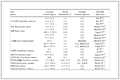
As a comparison,Table 1 shows some of the results for the present workversusthose reported in the literature for other DNA biosensors. It is evident from this table that the linear range and detection limit of proposed biosensor shows superior behavior if compared with the best previously reported DNA biosensors. These superior characteristics of the proposed DNA biosensor can be related to effects of gold nano-particles in increasing the electrode surface and using thiourea as a suitable linker between electrode surface and ssDNA that surprisingly improved the immobilization of ssDNA onto electrode surface. The surface density of the probe DNA at the electrode surface is also an important parameter. The surface coverage of the proposed biosensor in the absence/presence of the gold nano-particles was quantitatively measured by adopting the procedure described in Ref. [31]. In this procedure,the electrostatic binding of the cationic redox active [Ru(NH3)6]3+ to the anionic DNA backbone was used to quantify the amount of probe DNA on the electrode at the constant value of probe DNA concentration in the immobilization buffer by measuring the charge passed during the reduction of [Ru(NH3)6]3+ using chronocoulometry. The surface densities of probe DNA at the biosensor,in the absence/presence of gold nanoparticles,were obtained from the chronocoulometric curves of 100 mmol [Ru(NH3)6]3+ in 10 m mol/L PBS buffer of pH 7.0 (not shown). The values of the surface densities were 5.9 (±0.1)×10 12 and 3.1 (±0.1)×10 13 molecules/cm2 .
|
Table 1 Comparison of the analytical parameters with other electrochemical DNA biosensor |


|
Download:
|
| Fig. 7. (A) DPV of MB in 0.02 mol/L PBS (pH 7.0,20 mmol/L NaCl) on S1/diazo-thiourea/GNM/Au before (a) after hybridization with different concentrations of target ssDNA sequence. Concentrations of target ssDNA sequence from b to e were 1.0×10 -12/sup> ,1.0 ×10 -11 ,1.0 ×10 -10 ,and 1.0 ×10 -9 mol/L,respectively. (B) Decrease of peak current (DIp)versuslogarithm concentration of target DNA sequence. | |

As compared with the results obtained with only an Au electrode,while using Au nano-particles modified electrode (Fig. 8),the sensitivity for detection of target DNA with the amplification of the gold nano-particles increased dramatically. As we know,the most critical step while preparing a DNA biosensor is the immobilization of DNA probe on the surface of a sensing device. Because of the high surface-to-volume ratio and excellent biological compatibility,gold nano-particles can increase the sensing surface area and thus greatly increase the amount of immobilized DNA.

|
Download:
|
| Fig. 8. DPVs of MB on S1/diazo-thiourea/GNM/Au (a),S2/S1/diazo-thiourea/GNM/Au (b),S1/diazo-thiourea/Au (c),and S2/S1/diazo-thiourea/Au (d) in 0.02 mol/L PBS (pH 7.0,20 mmol/L NaCl). The concentration of S2was 5.0×10 -10 mol/L. | |

Finally,covalent attachment of probe DNA described in this work had some advantages with respect to the direct immobilization of thiolated DNA,for example,a higher sensitivity was obtained with the proposed method. Direct immobilization can produce densely packed monolayers,which could reduce the amount of the hybridized DNA [37]. This problem can be overcome with indirect self-assembly through covalent immobilization. Furthermore,the immobilized DNA through covalent immobilization grafted more tightly on the electrode surface and hence was more stable in the DNA biosensor continuous using. 4. Conclusion
In this study,an improved DNA electrochemical sensor was developed by self-assembling diazo-thiourea on a gold nanoparticles modified Au electrode. Due to gold nano-particles electrodeposition on the Au electrode,more thiourea can be self-assembled on the electrode and more ssDNA can b immobilized on the electrode surface with the covalent interaction between NH2 group of ssDNA and diazo-thiourea. The DNA electrochemical biosensor was applied to the detection of the target sequence with a dynamic concentration range from 9.5 (±0.1)×10 -13 mol/L to 1.2 (±0.2)×10 -9 mol/L and a detection limit of 1.2 (±0.1)×10 -13 mol/L (3σ/m). Also,the successful discrimination between the complementary,non-complementary,one and three-base mismatched oligonucleotides displayed good selectivity for the biosensor. The results indicated that the biosensor showed the advantages of simple preparation,high sensitivity and selectivity and a wide linear range.
| [1] | Y. Guo, J.H. Chen, G.N. Chen, A label-free electrochemical biosensor for detection of HIV related gene based on interaction between DNA and protein, Sens. Actuators B 184 (2013) 113-117. |
| [2] | M.H. Mashhadizadeh, R.P. Talemi, A novel optical DNA biosensor for detection of trace amounts of mercuric ions using gold nanoparticles introduced onto modified glass surface, Spectrochim. Acta A 132 (2014) 403-409. |
| [3] | H.B. Xu, R.F. Ye, S.Y. Yang, R. Li, X. Yang, Electrochemical DNA nano-biosensor for the detection of genotoxins in water samples, Chin. Chem. Lett. 25 (2014) 29-34. |
| [4] | T. Wen, W. Zhu, Ch. Xue, et al., Novel electrochemical sensing platform based on magnetic field-induced self-assembly of Fe3O4@polyaniline nanoparticles for clinical detection of creatinine, Biosens. Bioelectron. 56 (2014) 180-185. |
| [5] | B. Yu, H. Yuan, Y.Y. Yang, et al., Detection of dopamine using self-assembled diazoresin/single-walled carbon nanotube modified electrodes, Chin. Chem. Lett. 25 (2014) 523-528. |
| [6] | B.N. Shivananju, G.R. Prashanth, S. Asokan, M.M. Varma, Reversible and irreversible pH induced conformational changes in self-assembled weak polyelectrolyte multilayers probed using etched fiber Bragg grating sensors, Sens. Actuator B 201 (2014) 37-45. |
| [7] | R.K. Shervedani, S. Pourbeyram, Electrochemical determination of calf thymus DNA on Zr(IV) immobilized on gold-mercaptopropionic-acid self-assembled monolayer, Bioelectrochemistry 77 (2010) 100-105. |
| [8] | X.X. Jiao, J.R. Chen, X.Y. Zhang, H.Q. Luo, N.B. Li, A chronocoulometric aptasensor based on gold nanoparticles as a signal amplification strategy for detection of thrombin, Anal. Biochem. 441 (2013) 95-100. |
| [9] | F. Lisdat, D. Schä fer, The use of electrochemical impedance spectroscopy for biosensing, Anal. Bioanal. Chem. 391 (2008) 1555-1567. |
| [10] | R.J. Cui, H.P. Huang, Z.Z. Yin, D. Gao, J.J. Zhu, Horseradish peroxidase-functionalized gold nanoparticle label for amplified immunoanalysis based on gold nanoparticles/carbon nanotubes hybrids modified biosensor, Biosens. Bioelectron. 23 (2008) 1666-1673. |
| [11] | F. Li, L. Yang, M. Chen, Y. Qian, B. Tang, A novel and versatile sensing platform based on HRP-mimicking DNAzyme-catalyzed template-guided deposition of polyaniline, Biosens. Bioelectron. 41 (2013) 903-906. |
| [12] | P. Arias, N.F. Ferreyra, G.A. Rivas, S.J. Bollo, Glassy carbon electrodes modified with CNT dispersed in chitosan: analytical applications for sensing DNA-methylene blue interaction, J. Electroanal. Chem. 634 (2009) 123-126. |
| [13] | J. Balintova, R. Pohl, P. Horakova, et al., Anthraquinone as a redox label for DNA: synthesis, enzymatic incorporation, and electrochemistry of Anthraquinone-Modified nucleosides, nucleotides, and DNA, Chem. Eur. J. 17 (2011) 14063-14073. |
| [14] | M. Bally, J. Vörös, Nanoscale labels: nanoparticles and liposomes in the development of high-performance biosensors, Nanomedicine 4 (2009) 447-467. |
| [15] | Q.X. Wang, Y. Ding, L. Wang, et al., Low-background, highly sensitive DNA biosensor by using an electrically neutral cobalt(Ⅱ) complex as the redox hybridization indicator, Chem. Asian J. 8 (2013) 1455-1462. |
| [16] | Q.X. Wang, F. Gao, F. Gao, et al., A novel hybridization indicator for the lowbackground detection of short DNA fragments based on an electrically neutral cobalt(Ⅱ) complex, Biosens. Bioelectron. 32 (2012) 50-55. |
| [17] | S.Y. Niu, M. Zhao, L.Z. Hu, S.S. Zhang, Carbon nanotube-enhanced DNA biosensor for DNA hybridization detection using rutin-Mn as electrochemical indicator, Sens. Actuators B 135 (2008) 200-205. |
| [18] | H.W. Gao, X.W. Qi, Y. Chen, W. Sun, Electrochemical deoxyribonucleic acid biosensor based on the self-assembly film with nanogold decorated on ionic liquid modified carbon paste electrode, Anal. Chim. Acta 704 (2011) 133-138. |
| [19] | J.L. Wang, F. Wang, S.J. Dong, Methylene blue as an indicator for sensitive electrochemical detection of adenosine based on aptamer switch, J. Electroanal. Chem. 626 (2009) 1-5. |
| [20] | R. García-Gonzá lez, A. Costa-Garcia, M.T. Fernández-Abedul, Methylene blue covalently attached to single stranded DNA as electroactive label for potential bioassays, Sens. Actuators B 191 (2014) 784-790. |
| [21] | A.E. Radi, X. Muñoz-Berbel, M. Cortina-Puig, J.L. Marty, Novel protocol for covalent immobilization of horseradish peroxidase on gold electrode surface, Electroanalysis 21 (2009) 696-700. |
| [22] | G.L. Li, L.H. Liu, X.W. Qi, et al., Development of a sensitive electrochemical DNA sensor by 4-aminothiophenol self-assembled on electrodeposited nanogold electrode coupled with Au nanoparticles labeled reporter ssDNA, Electrochim. Acta 63 (2012) 312-317. |
| [23] | L.E. Ahangar, M.A. Mehrgardi, Nanoparticle-functionalized nucleic acids: a strategy for amplified electrochemical detection of some single-base mismatches, Electrochim. Acta 56 (2011) 2725-2729. |
| [24] | E. Farjami, L. Clima, K. Gothelf, E.E. Ferapontova,"Off-on" electrochemical hairpin- DNA-based genosensor for cancer diagnostics, Anal. Chem. 83 (2011) 1594-1602. |
| [25] | F. Lucarelli, G. Marrazza, A.F.P. Turner, M. Mascini, Carbon and gold electrodes as electrochemical transducers for DNA hybridisation sensors, Biosens. Bioelectron. 19 (2004) 515-530. |
| [26] | H. Qi, M. Li, R. Zhang, M. Dong, L. Chen, Double electrochemical covalent coupling method based on click chemistry and diazonium chemistry for the fabrication of sensitive amperometric immunosensor, Anal. Chim. Acta 792 (2013) 28-34. |
| [27] | A.J. Bard, L.R. Faulkner, Electrochemical Methods, 2nd ed., Wiley, New York, 2001. |
| [28] | Y. Jin, X. Yao, Q. Liu, J. Li, Hairpin DNA probe based electrochemical biosensor using methylene blue as hybridization indicator, Biosens. Bioelectron. 22 (2007) 1126-1130. |
| [29] | Q. Loiaza, S. Campuzano, M. Pedrero, J.M. Pingarron, Designs of enterobacteriaceae Lac Z gene DNA gold screen printed biosensors, Electroanalysis 20 (2008) 1397-1405. |
| [30] | Q.Y. Henry, J.L. Sanchez, D. Latta, C.K. O'Sullivan, Electrochemical quantification of DNA amplicons via the detection of non-hybridised guanine bases on low-density electrode arrays, Biosens. Bioelectron. 24 (2009) 2064-2070. |
| [31] | A.B. Steel, T.M. Herne, M.J. Tarlov, Electrochemical quantitation of DNA immobilized on gold, Anal. Chem. 70 (1998) 4670-4677. |
| [32] | M.H. Mashhadizadeh, R.P. Talemi, A new methodology for electrostatic immobilization of a non-labeled single strand DNA onto a self-assembled diazonium modified gold electrode and detection of its hybridization by differential pulse voltammetry, Talanta 103 (2013) 344-348. |
| [33] | F. Li, W. Chen, P.J. Dong, S.S. Zhang, A simple strategy of probe DNA immobilization by diazotization-coupling on self-assembled 4-aminothiophenol for DNA electrochemical biosensor, Biosens. Bioelectron. 24 (2009) 2160-2164. |
| [34] | F. Li, W. Chen, S.S. Zhang, Development of DNA electrochemical biosensor based on covalent immobilization of probe DNA by direct coupling of sol-gel and selfassembly technologies, Biosens. Bioelectron. 24 (2008) 781-786. |
| [35] | Y. Bo,H. Yang, Y.Hu, T. Yao, S.S. Huang, A novel electrochemicalDNA biosensor based on graphene and polyaniline nanowires, Electrochim. Acta 56 (2011) 2671-2676. |
| [36] | W. Sun, P. Qin, H. Gao, G. Li, K. Jiao, Electrochemical DNA biosensor based on chitosan/nano-V2O5/MWCNTs composite film modified carbon ionic liquid electrode and its application to the LAMP product of Yersinia enterocolitica gene sequence, Biosens. Bioelectron. 25 (2010) 1264-1270. |
| [37] | H.J. Jang, I.H. Cho, H.S. Kim, et al., Development of a chemiluminometric immunosensor array for on-site monitoring of genetically modified organisms, Sens. Actuators B 156 (2011) 599-605. |