


 , Abdollah Fallah Shojaeia, Farhad Shirinia, Seyyedeh Zoha Hejazia, Mehdi Rassab
b Department of Biology, College of Science, University of Guilan, Rasht 41335-1914, Iran
In recent years,green chemistry has attracted considerable attention of organic and medicinal chemists. One of the most important roles of green chemistry is the invention,design and application of chemical reactions that reduce or eliminate the use of hazardous solvents [1]. In comparison with organic solvents, water is non-toxic,non-corrosive,non-explosive and is readily available at low cost. These properties along with the network of hydrogen bonds,large surface tension,high polarity and high specific heat capacity make it both economical and environmentally friendly and thus suitable as a green solvent [2, 3].
Multicomponent reactions (MCRs) have emerged as a powerful synthetic tool for the preparation of biologically active compounds [4, 5] and important drugs [6, 7, 8]. These types of reactions are especially attractive due to the features such as atom economy, operational simplicity and straightforward reaction design, reduced number of workups,extraction and purification processes and hence minimize waste generation. The combination of green chemistry and MCRs represents a very efficient method from both economical and environmental perspectives since the isolation of the intermediates is skipped,the overall reaction time is significantly decreased and higher yields of products are obtained.
1,4-Dihydropyridine compounds (1,4-DHPs) are a class of nitrogen containing heterocycles that have received much attention due to their wide range of pharmaceutical and biological properties [9, 10, 11]. A number of improved methods have been reported in the literatures for the synthesis of new compounds having substituents on the C2,C3,C5,and C6 positions of the 1,4- dihydropyridine ring,with enhanced biological activities [12, 13, 14, 15, 16]. In spite of potential utility of these methods,most of them suffer from disadvantages such as forcing conditions for catalyst preparation,long reaction times,low yields,formation of several side products,high temperature and the use of toxic solvents.
To overcome these drawbacks,we decided to introduce a new catalyst for more efficient and cleaner synthesis of pyrimido[4,5-b]quinoline derivatives with a potentially extensive range of biological and pharmacological properties such as antitumor [17], antiviral [18] and antioxidant [19] activities. These compounds can be used to produce bioactive drugs such as Quinine,Chloroquine, Luotonine-A and Camptothecin [20].
The transition metal complexes are well known as powerful, simple and efficient Lewis acid catalysts for various organic transformations [21, 22]. RuCl3·xH2O salt as a homogenous environmentally friendly,mild,simple and efficient Lewis acid catalyst,has been used for various organic transformations [23,24,25,26,27,28,29,30,31]. The advantages of using RuCl3·xH2O salt are its stability at elevated temperatures,safety,mildness,non-volatility,low toxicity,reusability and biocompatibility.
In addition to the above mentioned characteristics,higher reactivity and excellent selectivity of this catalyst and along with the important role of nitrogen-containing heterocyclic compounds in medicinal chemistry also prompted us to explore the potential of RuCl3·xH2O in MCRs that could produce diversified heterocyclic products with practically important biological and pharmacological properties. 2. Experimental
IR spectra were obtained in KBr discs on a Perkin-Elmer model Spectrum One FT-IR Spectrometer. 1H NMR spectra were obtained on a Bruker DRX-400 Avance spectrometer and 13C NMR were obtained on a Bruker DRX-100 Avance spectrometer. Samples were analyzed in DMSO-d6,and chemical shift values are reported in ppm relative to tetramethylsilane (TMS) as the internal reference. Melting points were measured on an Electrothermal apparatus and were uncorrected. Elemental analyses were made by a Carlo-Erba EA1110 CNNO-S analyzer and agreed with the calculated values. Sonication was performed in an Elmasonic S 40H ultrasonic cleaning unit. All materials and solvents were purchased from Merck and used without further purification.
RuCl3·xH2O (3 mol%) was added to a mixture of aldehyde (1.0 mmol),6-amino-1,3-dimethyluracil (1.0 mmol),and cyclic 1,3-diketone (1.0 mmol) in deionized water (10 mL). The reaction mixture was heated to 85℃ and stirred magnetically for an appropriate period of time. After the completion of the reaction as indicated by TLC analysis,the mixture was cooled to room temperature. The colored solid product was collected and washed with warm ethanol to afford the pure product. For further purification,some derivatives were recrystallized from ethanol. Spectroscopic data for the selected products are as follows:
5-(2-Chloro-6-fluorophenyl)-1,3,8,8-tetramethyl-7,8,9,10-tetrahydropyrimido[ 4,5-b]quinoline 2,4,6(1H,3H,5H)trione (7a): Light yellow solid,mp 302-304℃; 1H NMR (400 MHz,DMSO-d6):δ 0.91 (s,3H),1.04-1.08 (m,3H),1.98 (d,2H,J = 16 Hz),2.21 (d,2H, J = 16.4Hz),3.05 (s,3H),3.45 (s,3H),5.42 (s,1H),7.03 (t,1H, ArH),7.122-7.154 (m,2H,ArH) 9.06 (s,NH). 13C NMR (100 MHz, DMSO-d6):δ 21.53,26.32,28.15,29.94,30.20,43.16,50.52,88.14, 113.46,115.02,122.27,126.53,127.94,135.00,146.16,147.22, 150.01,160.16,161.42,195.90. FT-IR (KBr,cm-1): ν 3290,3232, 3075,2943,2873,1701,1660,1642,1607,1495,1453,1378,1359, 1210,886,788,730,687. Anal. Calcd. for C21H21ClFN3O3: C 60.36,H 5.07,N 10.06; Found: C 60.23,H 4.90,N 9.8.
5-(3-Nitrophenyl)-1,3,8,8-tetramethyl-7,8,9,10-tetrahydropyrimido[ 4,5-b]quinolin2,4,6(1H,3H,5H)trione (8a): Yellow solid,mp 287-290℃; 1HNMR(400 MHz,DMSO-d6):δ 3.16 (m,16H),5.69 (s, 1H),7.51 (t,1H,J = 8 Hz,ArH),7.60 (d,1H,J = 8.0 Hz,ArH),7.88 (s, 1H,ArH),7.92 (d,1H,J = 8.0 Hz,ArH),10.15 (s,NH). 13C NMR (100 MHz,DMSO-d6):δ 25.81,27.72,30.11,30.53,37.55,41.90,50.41, 89.12,113.53,117.21,122.71,127.92,133.74,141.60,146.00, 147.27,148.25,150.12,160.93,195.74. FT-IR (KBr,cm-1): ν 3391, 3068,2953,1702,1668,1653,1607,1594,1525,1500,1380,1350, 1212,904,873,790,734,681. Anal. Calcd. for C21H22N4O5: C 61.45,H 5.40,N 13.65; Found: C 61.32,H 5.28,N 13.44.
5-(2-Chloro,6-fluorophenyl)-1,3-dimethyl-7,8,9,10-tetrahydropyrimido[ 4,5-b]quinoline-2,4,6-trione (2b): White solid,mp 298- 300℃; 1H NMR (400 MHz,DMSO-d6):δ 1.78 (m,1H),1.94 (m,1H), 2.17-2.34 (m,2H),2.66 (m,2H),3.05 (s,3H),3.46 (s,3H),5.44 (s, 1H),7.016 (t,1H,J = 8.8 Hz,ArH),7.123 (d,1H,J = 8.0 Hz,ArH), 7.137 (d,1H,J = 8.0 Hz,ArH),9.11 (s,NH). 13C NMR (100 MHz, DMSO-d6):δ 21.00,21.23,26.96,27.99,30.76,37.14,87.81,114.52, 116.55,126.01,128.20,128.40,136.71,145.05,145.36,150.00, 153.00,160.00,195.06. FT-IR (KBr,cm-1): ν 3555,3405,3173,2955,2872,1697,1660,1607,1606,1506,1467,1356,1205,838, 793,736,693,675. Anal. Calcd. for C19H17ClFN3O3: C 58.54,H 4.40, N 10.78; Found: C 58.40,H 4.22,N 10.55.
5-(4-Dimethylaminophenyl)-1,3-dimethyl-7,8,9,10-tetrahydropyrimido[ 4,5-b]quinoline-2,4,6(1H,3H,5H)-trione (6b): Orange solid, mp 278-280℃; 1H NMR (400 MHz,DMSO-d6):δ 1.82,1.81 (m, 1H),1.92-1.99 (m,1H),2.22-2.26 (m,2H),2.58-2.63 (m,1H), 2.73-2.75 (m,1H),3.10 (s,3H),3.34 (s,6H),3.45 (s,3H),4.82 (s, 1H),6.55 (dd,2H,J = 8.8,4.8 Hz,ArH),7.02 (dd,2H,J = 8.4,4.8 Hz, ArH),9.029 (s,NH). 13C NMR (100 MHz,DMSO-d6):δ 21.24,26.92, 28.11,30.64,32.66,37.19,40.38,91.16,112.6,113.12,128.45, 135.37,143.83,149.35,151.3,151.5,161.24,195.34. FT-IR (KBr, cm-1): ν 3436,3187,3078,2925,2885,1697,1659,1640,1608, 1517,1495,1379,1352,1199,825,754,702,661. Anal. Calcd. for C21H24N4O3: C 66.30,H 6.36,N 14.73; Found: C 66.19,H 6.20,N 14.51. 3. Results and discussion
Our literature search revealed that there are no reports on the use of RuCl3·xH2O as an efficient and effective catalyst,without any toxic solvent in the synthesis of pyrimido[4,5-b]quinoline derivatives via a three-component reaction conditions.
In this methodology,cyclic 1,3-diketones,uracil and aldehyde react in one step in the presence of Lewis acid RuCl3·xH2O in water. Uracils are important compounds in the synthesis of anti-cancer and antiviral drugs. In this study,6-amino-1,3-dimethyl uracil was used as an important partner in the synthesis of tricyclic fused ring derivatives. This agent provided C5 and C6 carbons in the products. Dimedone or 1,3-cyclohexanedione as a cyclic ketone with strong nucleophilic properties,provided C2,C3 carbons in the products.
In order to increase yield,the reaction conditions were optimized using 4-nitrobenzaldehyde,6-amino-1,3-dimethyl uracil and dimedone under different temperatures and amount of the catalyst. (Scheme 1) The results are summarized in Table 1.

|
Download:
|
| Scheme 1.Synthesis of 5-(4-nitrophenyl)-1,3,8,8-tetramethyl-7,8,9,10-tetrahydropyrimido[4,5-b]quinoline-2,4,6-trione as a model reaction. | |
|
Table 1 Screening of the amount of the catalyst and temperature in one-pot synthesis of model reaction.a |

The optimum amount of RuCl3·xH2O was evaluated. The highest yield was obtained with 3 mol% of the catalyst. A further increase in the amount of RuCl3·xH2O did not have any significant effect on product yield. In order to establish the true effectiveness of the catalyst,a reaction of 4-nitrobenzaldehyde,dimedone and 6- amino-1,3-dimethyl uracil was performed at 90℃ without any catalyst in water. It was found that only trace amount of pyrimido[4,5-b]quinoline was obtained after 120 min of heating (Table 1,entry 6).
Choice of solvent plays an important role in most of the MCRs. To compare the efficiency of the solvent,various solvents, including nonpolar solvents such as n-hexane,protic solvents, such as water,ethanol and methanol,and aprotic polar solvents, such as acetonitrile,were tested. The results,presented in Table 2,indicate that solvents affected the efficiency of the catalyst. Yields were lower in acetonitrile and n-hexane (Table 2,entries 6 and 7).
|
|
Table 2 Influence of the solvents on the synthesis of pyrimido[4,5-b]quinoline.a |

When the reaction was performed under solvent-free conditions, the yield was low (40%),probably due to the absence of powerful interactions between the starting materials. However, among various solvents,fortunately,deionized water was found to give the best result at 85℃ (Table 2,entry 3). This solvent can have substantial effects in realizing the goals of green chemistry.
A comparison between various Lewis acids,including different metal salts,showed that RuCl3·xH2O was the best catalyst (yield 95%,Table 3,entry 2) for this reaction.
|
|
Table 3 Choice of the catalyst for pyrimido[4,5-b]quinoline formation.a |

To determine the feasibility of this approach,particularly with regard to library construction,the protocol was applied to aromatic aldehydes with either electron-withdrawing groups (such as halide and nitro groups) or electron-donating groups (such as methyl and methoxy groups) (Scheme 2).

|
Download:
|
| Scheme 2.RuCl3·xH2O catalyzed synthesis of pyrimido[4,5-b]quinoline derivatives. | |
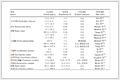
We therefore concluded that the electronic nature of the substituents of aldehydes have a significant effect on this reaction. Chloro-,flouro- and nitro-substituted aromatic aldehydes reacted well at faster rate and in higher yields,compared with corresponding methyl and methoxy substituted aldehydes. When an aliphatic aldehyde,such as acetaldehyde,was treated with cyclic ketone and 6-amino-1,3-dimethyl uracil in the presence of 3 mol% of RuCl3·xH2O,the desired product was not obtained (Table 4,entries 11 and 19). The reaction of isopropyl benzaldehyde proceeds smoothly compared to other substituted aromatic aldehydes,in which the yields were lower due to steric factors (Table 4,entries 10 and 20).
|
|
Table 4 Synthesis of pyrimido[4,5-b]quinoline derivatives using RuCl3·xH2O as the catalyst.a |

Due to the benefits,such as higher yields,faster and cleaner reaction,sand environmentally friendliness,of using ultrasonic irradiations in MCRs,we investigated the effect of ultrasonic irradiations on the synthesis of targeted compounds. After optimization of the reaction conditions using 1:1:1 ratios of reactants,2 mol% of RuCl3·xH2O as a catalyst,2 mL deionized water under ultrasonic irradiations (40 kHz,40℃),we examined the generality of the reaction. As expected in all cases,an enhancement in the reaction rate was observed (Table 4).
The reusability of the catalysts is one of the most important advantages and potentiates their commercial applications. For this purpose,in the model reaction,the crude product was separated from the reaction mixture by filtration and more than 98% of RuCl3·xH2O could be easily transferred into the aqueous phase. Then the same substrates were added to the aqueous phase and experiments were repeated three times. In each step,the separated products were characterized by their melting point and IR spectra. The results indicated in Fig. 1 show that RuCl3·xH2O could be used for four times with only a slight decrease in the catalytic activity.

|
Download:
|
| Fig. 1.Reusability of RuCl3·xH2O in the model reaction (Table 1,entry 2). Horizontalaxe is usability times of the catalyst and vertical axe is time of the reaction and yield of the product. | |
The formation of pyrimido[4,5-b]quinoline derivatives (4),can be explained by the proposed mechanism,presented in Scheme 3.
As shown,the reaction is initiated by a ruthenium salt-assisted Knoevenagel condensation to provide product A. Then product A reacted with 6-amino-1,3-dimethyl uracil (3) in a Michael-type fashion to give the corresponding product (4) [12].
Some of the synthesized pyrimido[4,5-b]quinoline derivatives were screened for antibacterial activity against four bacterial strains. The results can be seen in Table 5. In general,all the compounds exhibited good to excellent activity against all stains in comparison with standard drugs. Compounds 1a,2a,2b,4a,6b and 7a showed higher levels of antibacterial activity. Bacillus subtilis and Pseudomonas aeruginosa were more sensitive to all the compounds,in comparison to the other two species. In general, it seems that the presence of more polar groups enhances antibacterial activity.
|
|
Table 5 Antimicrobial screening data (zone of inhibition in mm) of pyrimido[4,5-b]quinoline derivatives. |


The method provides an efficient,simple and environmentally friendly procedure for the synthesis of pyrimido[4,5-b]quinoline derivatives in high yields and very short period of time. 4. Conclusion
In conclusion,a convenient one-pot procedure for the synthesis of pyrimido[4,5-b]quinoline derivatives by a three-component coupling reaction of 6-amino-1,3-dimethyluracil,aldehydes,and cyclic 1,3-diketones in the presence of a catalytic amount of RuCl3·xH2O as a reusable homogenous catalyst in the absence of any organic solvents or additives,has been developed. The main advantages of this method are (i) easy and clean work-up for the isolation of the products without any chromatographic purification, (ii) high atom economy of the reaction by avoiding the use of hazardous organic solvents,(iii) reusability of the catalyst,and (iv) short reaction time,excellent yields and environmentally benign procedures. Several compounds showed extremely high levels of antibacterial activity. The mechanisms of this activity will be further investigated. Acknowledgment
The authors are grateful to the Research Council of University of Guilan for partial support of this study.
| [1] | P.A. Grieco, Organic Synthesis inWater, Thomson Science, London, 1998, pp. 1-278. |
| [2] | (a) R. Breslow, U. Maitra, On the origin of product selectivity in aqueous Diels- Alder reactions, Tetrahedron Lett. 25 (1984) 1239-1240; (b) D.C. Rideout, R. Breslow, Hydrophobic acceleration of Diels-Alder reactions, J. Am. Chem. Soc. 102 (1980) 7816-7817. |
| [3] | S. Narayan, J. Muldoon, M.G. Finn, et al., On water: unique reactivity of organic compounds in aqueous suspension, Angew. Chem. Int. Ed. 44 (2005) 3275-3279. |
| [4] | B. Sharifzadeh, N.O. Mahmoodi, M. Mamaghani, et al., Facile regioselective synthesis of novel bioactive thiazolyl-pyrazolinederivatives via a three-component reaction and their antimicrobial activity, Bioorg. Med. Chem. Lett. 23 (2013) 548-551. |
| [5] | R. Hossein nia, M. Mamaghani, K. Tabatabaeian, F. Shirini, M. Rassa, An expeditious regioselective synthesis of novel bioactive indole-substituted chromene derivatives via one-pot three-component reaction, Bioorg. Med. Chem. Lett. 22 (2012) 5956-5960. |
| [6] | C.C.A. Cariou, G.J. Clarkson, M.J. Shipman, Rapid synthesis of 1,3,4,4'-tetrasubstituted blactams from methyleneaziridines using a 4-component reaction, Org. Chem. 73 (2008) 9762-9764. |
| [7] | B.M. Trost, Atom economy. A challenge for organic synthesis, homogeneous catalysis leads the way, Angew. Chem. Int. Ed. Engl. 34 (1995) 259-281. |
| [8] | (a) L.F. Tietze, Domino reactions in organic synthesis, Chem. Rev. 96 (1996) 115-136; (b) H. Waldmann, Domino reaction, in: Organic Synthesis Highlight II, VCH, Weinheim, 1995, pp. 193-202. |
| [9] | A.M. Triggle, E. Shefter, D.J. Triggle, Crystal structures of calcium channel antagonists: 2,6-dimethyl-3,5-dicarbomethoxy-4-[2-nitro-3-cyano-4-(dimethylamino)-, and 2,3,4,5,6-pentafluorophenyl]-1,4-dihydropyridine, J. Med. Chem. 23 (1980) 1442-1445. |
| [10] | R. Fossheim, K. Svarteng, A. Mostad, et al., Crystal structures and pharmacological activity of calcium channel antagonists: 2,6-dimethyl-3,5-dicarbomethoxy-4- (unsubstituted, 2-methyl-, 4-methyl-, 3-nitro-, 4-nitro-, and 2,4-dinitrophenyl)- 1,4-dihydropyridine, J. Med. Chem. 25 (1982) 126-131. |
| [11] | R.P. Mason, I.T. Mark, M.W. Trumbore, P.E. Masson, Antioxidant properties of calcium antagonists related to membrane biophysical interactions, Am. J. Cardiol. 84 (1999) 16-22. |
| [12] | G.K. Verma, K. Raghuvanshi, R. Kumar, M.S. Singh, An efficient one-pot threecomponent synthesis of functionalized pyrimido[4,5-b]quinolines and indeno fused pyrido[2,3-d]pyrimidines in water, Tetrahedron Lett. 53 (2012) 399-402. |
| [13] | D.Q. Shi, S.N. Ni, F. Yang, et al., An efficient synthesis of pyrimido[4,5-b]quinoline and indeno[20,10:5,6]pyrido[2,3-d]pyrimidine derivatives via multicomponent reactions in ionic liquid, J. Heterocycl. Chem. 45 (2008) 693-702. |
| [14] | N.A. Hassan, M.I. Hegab, A.I. Hashem, et al., Three-component, one-pot synthesis of pyrimido[4,5-b]-quinoline and pyrido[2,3-d]pyrimidine derivatives, J. Heterocycl. Chem. 44 (2007) 775-782. |
| [15] | F. Nemati, R. Saeedirad, Nano-Fe3O4 encapsulated-silica particles bearing sulfonic acid groups as a magnetically separable catalyst for green and efficient synthesis of functionalized pyrimido[4,5-b]quinolines and indeno fused pyrido[2,3-d]pyrimidines in water, Chin. Chem. Lett. 24 (2013) 370-372. |
| [16] | H.Y. Guo, Y. Yu, One-pot synthesis of 7-aryl-11,12-dihydrobenzo[h]pyrimido-[4,5-b]quinoline-8,10(7H,9H)-diones via three-component reaction in ionic liquid, Chin. Chem. Lett. 21 (2010) 1435-1438. |
| [17] | Y.S. Sanghhvi, S.B. Larson, S.S. Matsumoto, et al., Antitumor and antiviral activity of synthetic alpha- and beta-ribonucleosides of certain substituted pyrimido[5,4- d]pyrimidines: a new synthetic strategy for exocyclic aminonucleosides, J. Med. Chem. 32 (1989) 629-637. |
| [18] | R.B. Tenser, A. Gaydos, K.A. Hay, Inhibition of herpes simplex virus reactivation by dipyridamole, Antimicrob. Agents Chemother. 45 (2001) 3657-3659. |
| [19] | J.P. De la Cruz, T. Carrasco, G. Ortega, F. Sanchez De la Cuesta, Inhibition of ferrousinduced lipid peroxidation by pyrimido-pyrimidine derivatives in human liver membranes, Lipid 27 (1992) 192-194. |
| [20] | B.S. Holla, M. Mahalinga, M.S. Karthikeyan, P.M. Akberali, N.S. Shetty, Synthesis of some novel pyrazolo[3,4-d]pyrimidine derivatives as potential antimicrobial agents, Bioorg. Med. Chem. 14 (2006) 2040-2047. |
| [21] | H.C. Aspinall, Chiral lanthanide complexes: coordination chemistry and applications, Chem. Rev. 102 (2002) 1807-1850. |
| [22] | H. Yu, M.S. Zhang, L.R. Cui, Copper-catalyzed synthesis of 1,2-disubstituted benzimidazoles from imidoyl chlorides, Chin. Chem. Lett. 23 (2012) 573-575. |
| [23] | I. Murahashi, Ruthenium in Organic Synthesis, Wiley-VCH, New York, 2004. |
| [24] | K. Tabatabaeian, M. Mamaghani, N.O. Mahmoodi, A. Khorshidi, Efficient RuⅢcatalyzed condensation of indoles and aldehydes or ketones, Can. J. Chem. 84 (2006) 1541-1545. |
| [25] | K. Tabatabaeian, M. Mamaghani, N.O. Mahmoodi, A. Khorshidi, Ultrasonicassisted ruthenium-catalyzed oxidation of aromatic and heteroaromatic compounds, Catal. Commun. 9 (2008) 416-420. |
| [26] | K. Tabatabaeian, M. Mamaghani, N.O. Mahmoodi, A. Khorshidi, RuⅢ-catalyzed double-conjugate 1,4-addition of indoles to symmetric enones, J. Mol. Catal. A: Chem. 270 (2007) 112-116. |
| [27] | K. Tabatabaeian, M. Mamaghani, N.O. Mahmoodi, A. Khorshidi, Solvent-free, ruthenium-catalyzed, regioselective ring-opening of epoxides, an efficient route to various 3-alkylated indoles, Tetrahedron Lett. 49 (2008) 1450-1454. |
| [28] | K. Tabatabaeian, M. Mamaghani, N.O. Mahmoodi, A. Khorshidi, Ruthenium-catalyzed efficient routes to oxindole derivatives, Can. J. Chem. 87 (2009) 1213-1217. |
| [29] | K. Tabatabaeian, M. Mamaghani, N.O. Mahmoodi, A. Khorshidi, Diastereoselective ruthenium-catalyzed Michael addition of indoles to hormone steroids: an efficient route to new indole derivatives, Synth. Commun. 40 (2010) 1677-1684. |
| [30] | K. Tabatabaeian, A. Khorshidi, M. Mamaghani, A. Dadashi, M. Khoshnood Jalali, One-pot synthesis of tetrahydrobenzo[a]xanthen-11-one derivatives catalyzed by ruthenium chloride hydrate as a homogeneous catalyst, Can. J. Chem. 89 (2011) 623-627. |
| [31] | A. Khorshidi, Indole cyanation via C-H bond activation under catalysis of Ru(Ⅲ)- exchanged NaY zeolite (RuY) as a recyclable catalyst, Chin. Chem. Lett. 23 (2012) 903-906. |