


b Center of Data Mining and Biomedical Informatics, Faculty of Medical Technology, Mahidol University, Bangkok 10700, Thailand;
c Chulabhorn Research Institute, Bangkok 10210, Thailand;
d Chulabhorn Graduate Institute and Center of Excellence on Environmental Health and Toxicology (EHT), Bangkok 10210, Thailand;
e Department of Clinical Microbiology and Applied Technology, Faculty of Medical Technology, Mahidol University, Bangkok 10700, Thailand
1. Introduction
The isoquinoline structural core is present in scores of natural and synthetic products possessing many interesting pharmacological activities,including cytotoxic,antimicrobial,antimalarial and anti-HIV properties [1, 2, 3, 4]. The potent biological activities of various isoquinoline alkaloids have drawn much attention from various research groups in designing and synthesizing the pharmacophore.
One of the most powerful methodologies to synthesize the isoquinoline core is the acid-catalyzed Pictet-Spengler reaction [5, 6]. The protocol involves the cyclization of iminium ions derived from the condensation of β-arylethylamine derivatives with aldehydes (Scheme 1). Modifications of the original strategy by increasing the electrophilicity of the iminium intermediates using a sulfonyl or acyl group attached to the starting β-arylethylamines have been developed [7, 8, 9, 10, 11, 12, 13, 14, 15]. The practice of using sulfonyl,as an auxiliary group,showed superior reactivity to the use of an acyl component [15],and has received much interest owing to its promising properties,such as stability under a wide range of reaction conditions and the ease of purification [16]. It should benoted that the N-sulfonyl-1,2,3,4-tetrahydroisoquinolines could be directly converted to both 1,2,3,4-tetrahydroisoquinolines and isoquinolines (Scheme 1). The 1,2,3,4-tetrahydroisoquinolines can be readily achieved by reductive desulfonylation [14, 17, 18, 19],and isoquinolines can be practically derived through tandem β-elimination and aromatization as well [20, 21]. However,many of the Pictet-Spengler procedures suffer from disadvantages,such as the use of corrosive,sensitive and expensive catalysts,and harsh acidic conditions,in addition to the tedious preparation of catalysts and protecting carbonyls. To avoid these limitations,a novel and mild synthetic procedure has been developed for the synthesis of the isoquinoline core.

|
Download:
|
| Scheme 1.1,2,3,4-Tetrahydroisoquinolines and isoquinolines fromN-sulfonyl-1,2,3,4-tetrahydroisoquinolines. | |
Heteropolyacids (HPAs) have gained much attention as versatile catalysts in organic synthesis owing to their environmentally friendly property,high catalytic activities,commercial availability,high stability toward humidity and air,and ease of handling [22, 23, 24, 25]. They have been applied to the synthesis of many attractive products,particularly heterocyclic compounds. In general,the most common Keggin-type HPAs were mainly utilized as catalysts due to their availability and chemical stability and are normally stronger than the conventional Lewis acids (e.g.,AlCl3) and mineral acids (e.g.,H2SO4 and HCl). The acid strength of a series of Keggin-type HPAs decreases as follow: H3[PW12O40]>H4[SiW12O40]>H3[PMo12O40]>H4[SiMo12O40] [24]. Herein,we wish to report the synthesis of N-sulfonyl-1,2,3,4-tetrahydroisoquinolines by the eco-friendly Pictet-Spengler strategy using commercially available tungstophosphoric acid (H3[PW12O40]) as a catalyst.
2. ExperimentalMelting points were determined using a Griffin melting point apparatus and were uncorrected. Column chromatography was carried out using silica gel 60 (70-230 mesh ASTM). Analytical thin-layer chromatography (TLC) was performed with silica gel 60F254aluminum sheets. 1H NMR and13C NMR spectra were recorded on a Bruker AVANCE 300 NMR spectrometer (operating at 300 MHz for 1H NMR and 75 MHz for 13C NMR). FTIR were obtained using a universal attenuated total reflectance attached on a PerkinElmer Spectrum One spectrometer. Mass spectra were recorded on a Bruker Daltonics (microTOF).
2.1. General procedure for the synthesis of N-sulfonyl-1,2,3,4-tetrahydroisoquinolines (3)A mixture of N-sulfonylphenylethylamine 1 (0.5 mmol),aldehyde 2 (0.6 mmol),and H3[PW12O40]·aq (144 mg,0.05 mmol) in acetonitrile (2 mL) was stirred under refluxing for 0.5-48 h. The reaction mixture was concentrated in vacuum and purified by silica gel column chromatography to obtain N-sulfonyl-1,2,3,4-tetrahydroisoquinoline 3 .
1H NMR spectra of 1,2,3,4-tetrahydro-6,7-dimethoxy-2-[(4-methylphenyl)sulfonyl]-1-phenylisoquinoline (3a),1,2,3,4-tetrahydro-6,7-dimethoxy-2-[(4-methylphenyl)sulfonyl]-isoquinoline (3b), 1,2,3,4-tetrahydro-6,7-dimethoxy-2-[(4-methylphenyl)sulfonyl]-1-methylisoquinoline (3c),1,2,3,4-tetrahydro-6,7-dimethoxy-2-[(4-methylphenyl)sulfonyl]-1-(4-bromophenyl)-isoquinoline (3f),1,2,3, 4-tetrahydro-6,7-dimethoxy-2-[(4-methylphenyl)sulfonyl]-1-(4-nitrophenyl)-isoquinoline (3g),1,2,3,4-tetrahydro-6,7-dimethoxy-2-[(4-methylphenyl)sulfonyl]-1-(4-hydroxyphenyl)-isoquinoline (3h), 1,2,3,4-tetrahydro-6,7-dimethoxy-2-[(4-methylphenyl)sulfonyl]-1-(4-methoxyphenyl)-isoquinoline (3i),1,2,3,4-tetrahydro-6,7-dimethoxy-2-[(4-methylphenyl)sulfonyl]-1-(2-hydroxyphenyl)-isoquinoline (3j),1,2,3,4-tetrahydro-6,7-dimethoxy-2-[(4-methylphenyl)sulfonyl]-1-(4-hydroxy-3-methoxyphenyl)-isoquinoline (3k), 1,2,3,4-tetrahydro-6,7-dimethoxy-2-[(4-methylphenyl)sulfonyl]-1-(3-hydroxy-4-methoxyphenyl)-isoquinoline (3l),and 1,2,3,4-tetrahydro-2-[(4-methylphenyl)sulfonyl]-isoquinoline (3s) were consistent with those reported in the literatures [26, 27].
2.2. 1,2,3,4-Tetrahydro-6,7-dimethoxy-2-[(4-methylphenyl)sulfonyl]-1-propylisoquinoline (3d)Yield: 89%.1H NMR (300 MHz,CDCl3):δ 0.90-1.85 (m,7H, CH2CH2CH3),2.30 (s,3H,ArCH3),2.32-2.40 (m,2H,C4),3.32-3.45, 3.75-3.90 (m,2H,C3),3.74,3.84 (2s,6H,2×OCH3),4.87 (dd,1H,J= 9.3,4.3 Hz,C1),6.30,6.48 (2s,2H,C5-ArH,C8-ArH),7.08 (d,2H,J= 8.1 Hz,C3 ' -ArH2),7.55 (d,2H,J= 8.1 Hz,C2 ' -ArH2). 13 C NMR (75 MHz,CDCl3):δ 13.8,19.8,21.4,25.7,38.5,39.7,55.8,56.0,56.2, 109.7,111.4,124.6,127.0,129.1,129.3,138.1,142.9,147.4,147.7. IR (UATR,cm-1 ): 1612,1518,1322,1158,1120. TOF-MS: m/z 390.1726; Calcd. for C21H28NO4S: 390.1734.
2.3. 1,2,3,4-Tetrahydro-6,7-dimethoxy-2-[(4-methylphenyl)sulfonyl]-1-cyclohexylisoquinoline (3e)Yield: 68%. Mp: 122-124℃. 1H NMR (300 MHz,CDCl3):δ 1.00- 2.02 (m,11H,CyH),2.25 (s,3H,ArCH3),2.26-2.57 (m,2H,C4), 3.44-3.70 (m,2H,C3),3.73,3.82 (2s,6H,2×OCH3),4.49 (d,1H, J= 8.8 Hz,C1),6.27,6.45 (2s,2H,C5-ArH,C8-ArH),7.00 (d,2H, J= 8.0 Hz,C3' -ArH2),7.44 (d,2H,J= 8.0 Hz,C2' -ArH2). 13C NMR (75 MHz,CDCl3):δ 21.3,25.3,26.2,26.3,30.4,30.7,55.8,56.1,61.8, 111.4,111.5,125.2,127.1,127.5,129.1,137.4,142.7,146.5,147.9. IR (UATR,cm-1 ): 1611,1514,1336,1158,1114. TOF-MS: m/z 452.1865; Calcd. for C24H31NNaO4S: 452.1866.
2.4. 1,2,3,4-Tetrahydro-6,7-dimethoxy-2-[(4-nitrophenyl)sulfonyl]-isoquinoline (3p)Yield: 88%. Mp: 141-142℃. 1H NMR (300 MHz,CDCl3):δ 2.84 (t,2H,J= 5.8 Hz,C4),3.45 (t,2H,J= 5.8 Hz,C3),3.83 (s,6H,2×OCH3),4.28 (s,2H,C-1),6.52,6.55 (2s,2H,C5-ArH,C8-ArH),8.02 (d, 2H,J= 8.9 Hz,C2' -ArH2),8.37 (d,2H,J= 8.9 Hz,C3'-ArH2). 13 C NMR (75 MHz,CDCl3):δ 28.2,43.8,47.1,55.9,56.0,108.8,111.4,122.6, 124.3,124.7,128.7,143.1,147.9,148.1,150.1. IR (UATR,cm-1): 1610,1518,1347,1164,1117. TOF-MS:m/z401.0776; Calcd. for C17H18N2NaO6S: 401.0778.
2.5. 1,2,3,4-Tetrahydro-6,7-dimethoxy-2-[(4-nitrophenyl)sulfonyl]-1-phenylisoquinoline (3q)Yield: 68%. Mp 128-129℃. 1H NMR (300 MHz,CDCl3):δ 2.50- 2.60 (m,2H,C4),3.20-3.34,3.72-3.90 (m,2H,C3),3.73,3.79 (2s, 6H,2×OCH3),6.17 (s,1H,C1),6.40,6.43 (2s,2H,C5-ArH,C8-ArH), 7.12-7.28 (m,5H,C2' -ArH2,C3'-ArH2,C4'-ArH),7.80 (d,2H, J= 8.8 Hz,C2'' -ArH2),8.12 (d,2H,,J= 8.8 Hz,C3'' -ArH2). 13C NMR (75 MHz,CDCl3):δ 26.5,39.1,55.9,56.0,59.3,110.6,111.1,123.9, 125.1,125.3,128.1,128.5,128.8,140.7,146.8,147.8,148.5,149.6. IR (UATR,cm-1): 1609,1529,1348,1162,1117. TOF-MS: m/z 477.1091; Calcd for C23H22N2NaO6S: 477.1091.
2.6. 1,2,3,4-Tetrahydro-6,7-dimethoxy-2-[(4-nitrophenyl)sulfonyl]-1-(4-methoxyphenyl)-isoquinoline (3r)Yield: 12%. Mp: 279-2818C.1H NMR (300 MHz,CDCl3):δ 2.45- 2.65 (m,2H,C4),3.20-3.35,3.70-3.90 (m,2H,C3),3.73,3.76,3.79 (3s,9H,3×OCH3),6.13 (s,1H,C1),6.39,6.41 (2s,H,C5-ArH,C8-ArH),6.76 (d,2H,J= 8.7 Hz,C3'-ArH2),7.07 (d,2H,J= 8.7 Hz,C2'-ArH2),7.79 (d,2H,J= 8.9 Hz,C2''-ArH2),8.11 (d,2H,J= 8.9 Hz,C3'' -ArH2). 13C NMR (75 MHz,CDCl3):d26.5,38.9,55.3,55.9,56.0,58.8, 110.6,111.1,113.7,123.9,125.2,128.1,130.0,132.9,147.0,147.8, 148.5,149.6,159.4. IR (UATR,cm-1): 1608,1510,1347,1248,1162. TOF-MSm/z: 485.1382; Calcd. for C24H25N2O7S: 485.1377.
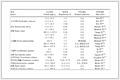
3. Results and discussionInitially,the Pictet-Spengler reaction of 4-methyl-N-(2-(3,4-dimethoxyphenyl)ethyl)-benzenesulfonamide 1a [28] with benzaldehyde using H3[PW12O40]·aq was optimized in various solvents such as water,ethanol,dichloromethane and acetonitrile as demonstrated in Table 1. The best result was obtained using acetonitrile as solvent. Increasing the amount of catalyst did not show any significant effect on the outcome of the reaction (Table 1, entry 4 vs entry 5); however,the shorter reaction time was realized by elevating the reaction temperature to furnish the anticipated 1,2,3,4-tetrahydro-6,7-dimethoxy-2-[(4-methylphenyl)sulfonyl]-1-phenylisoquinoline 3a in 86% yield within 12 h (Table 1,entry 6).
|
Table 1 Reaction ofN-sulfonylphenylethylamine1awith benzaldehyde using H3[PW12O40]·aq as a catalyst in different reaction conditions. |

The formation of the desired isoquinoline (3a) was confirmed by 1H NMR spectra which showed the absence of the NH proton, while the singlet of methine proton displayed at δ 6.19 indicated that the cyclized product 3a was formed. The structure was consistent with that reported in the literature [26].
The success of forming3aencouraged us to extend the reaction of the activated benzene sulfonamide (1a) with other aldehydes2, as summarized in Table 2. The reactions were performed under similar conditions to provide tetrahydroisoquinoline analogs3in moderate to good yields. It was clear that the reaction could be applied to both aliphatic and aromatic aldehydes. The reaction proceeded smoothly with aromatic aldehydes bearing both electron-withdrawing (Br,NO2) and electron-donating groups (OH,OCH3); however,the latter required longer reaction time to consume1a. The scope of the reaction was further studied using salisaldehyde to determine the steric effect ofortho-substituted aromatic aldehydes. The reaction gradually proceeded to afford the cyclized product with low yield (Table 2; entry 10). The less reactive 3,4,5-trimethoxy benzaldehyde (Table 2; entry 13) gave no cyclized product along with the recovery of starting material. Moreover,the reaction could not tolerate the use of heterocyclic aldehydes,such as pyridine-3-carboxaldehyde and indole-3-carboxaldehyde (Table 2; entries 14-15) even with prolonged reaction times of up to 48 h. Both methyl and nitro substituted (R2) benzene sulfonamides (1aand1b) were determined as suitable substrates for the Pictet-Spengler procedure under these reaction conditions. It was found that the methyl analogs were more reactive than the nitro counterparts (entry 1vsentry 17 and entry 9vsentry 18). When the benzene sulfonamide bearing no methoxy activating group (1c) was used as the substrate,the cyclization reaction was achieved only with paraformaldehyde (entry 19).
|
|
Table 2 Tungstophosphoric acid hydrate catalyzed reaction of N-sulfonylphenylethylamines 1 with various aldehydes 2. |


The synthesis of N-sulfonyl-1,2,3,4-tetrahydroisoquinolines promoted by silica-supported HPA catalysts has been shown; however,the reaction scope was narrow [13, 14]. The approach could be applied only toN-sulfonyl-1,2,3,4-tetrahydroisoquinolines containing no substituent at position 1 using trioxane as the carbonyl component. Mechanistically,HPA plays an essential role in this Pictet-Spengler reaction by protonation of the carbonyl oxygen of aldehyde,thus the formation of the iminium intermediate was accelerated [29].
It is worth noting that various N-sulfonyl-1,2,3,4-tetrahydroisoquinolines have been reported as potent cytotoxic agents [26], and their analogs are synthetic intermediates in the preparation of various biologically active molecules [18, 28] including a simple natural isoquinoline alkaloid,salsolidine [19].
4. ConclusionWe have presented a novel,simple and greener protocol for the synthesis ofN-substituted-1,2,3,4-tetrahydroisoquinolinesviathe modified Pictet-Spengler reaction ofN-(2-phenylethyl)-benzenesulfonamides with various aldehydes using tungstophosphoric acid hydrate as an influential catalyst. Significantly,the method offers several attractive advantages such as readily availability, non-corrosive conditions,as well as a simple experimental procedure.
AcknowledgmentsWe gratefully acknowledge the research grant from Srinakharinwirot University (B.E. 2555). This project is supported by Office of the Higher Education Commission and Mahidol University under the National Research Universities Initiative.
| [1] | K.W. Bentley, The Isoquinoline Alkaloids, Harwood Academic Publishers, Amsterdam, 1998. |
| [2] | J.D. Scott, R.M. Williams, Chemistry and biology of the tetrahydroisoquinoline antitumor antibiotics, Chem. Rev. 102 (2002) 1669-1730. |
| [3] | P. Siengalewicz, U. Rinner, J. Mulzer, Recent progress in the total synthesis of naphthyridnomycin and lemonomycin tetrahydroisoquinoline antibiotics (TAAs), Chem. Soc. Rev. 37 (2008) 2676-2690. |
| [4] | K. Iwasa, M. Moriyasu, Y. Tachibana, et al., Simple isoquinoline and benzylisoquinoline alkaloids as potential antimicrobial, antimalarial, cytotoxic, and anti-HIV agents, Bioorg. Med. Chem. 9 (2001) 2871-2884. |
| [5] | E.D. Cox, J.M. Cook, The Pictet-Spengler condensation: a new direction for an old reaction, Chem. Rev. 95 (1995) 1797-1842. |
| [6] | E.L. Larghi, M. Amongero, A.B.J. Bracca, T.S. Kaufman, The intermolecular Pictet-Spengler condensation with chiral carbonyl derivatives in the stereoselective syntheses of optically active isoquinoline and indole alkaloids, Arkivoc 12 (2005) 98-153. |
| [7] | L.K. Lukanov, A.P. Venkov, N.M. Mollov, Application of the intramolecular aamidoalkylation reaction for the synthesis of 2-arylsulfonyl-1,2,3,4-tetrahydroisoquinolines, Synthesis (1987) 204-206. |
| [8] | G.D. Cuny, Synthesis of (±)-aporphine utilizing Pictet-Spengler and intramolecular phenol ortho-arylation reactions, Tetrahedron Lett. 45 (2004) 5167-5170. |
| [9] | K. Ito, H. Tanaka, Syntheses of 1,2,3,4-tetrahydroisoquinolines from N-sulfonylphenethylamines and aldehydes, Chem. Pharm. Bull. 25 (1977) 1732-1739. |
| [10] | H.M. Wang, I.J. Kang, L.C. Chen, Ytterbium triflate-catalysed synthesis of ethyl 1,2,3,4-tetrahydroisoquinoline-1-carboxylates using ethyl chloro(phenylselanyl) acetate, Heterocycles 60 (2003) 1899-1905. |
| [11] | H. Kohno, Y. Sekine, A novel cyclization of electron deficient N-benzenesulfonylb-phenethylamines using ethyl chloro(methylthio)acetate. Synthesis of ethyl 1,2,3,4-tetrahydroisoquinoline-1-carboxylates, Heterocycles 42 (1996) 141-144. |
| [12] | C.C. Silveira, C.R. Bernardi, A.L. Braga, T.S. Kaufman, Thioorthoesters in the activated Pictet-Spengler cyclization. Synthesis of 1-thiosubstituted tetrahydroisoquinolines and carbon-carbon bond formation via sulfonyl iminium ions generated from N,S-sulfonyl acetals, Tetrahedron Lett. 44 (2003) 6137-6140. |
| [13] | G. Pasquale, D. Ruiz, J. Autino, et al., Efficient and suitable preparation of Nsulfonyl-1,2,3,4-tetrahydroisoquinolines and ring analogues using recyclable H6P2W18O62·24H2O/SiO2 catalyst, C. R. Chimie 15 (2012) 758-763. |
| [14] | G.P. Romanelli, D.M. Ruiz, J.C. Autino, H.E. Giaccio, A suitable preparation of Nsulfonyl-1,2,3,4-tetrahydroisoquinolines and their ring homologs with a reusable Preyssler heteropolyacid as catalyst, Mol. Divers. 14 (2010) 803-807. |
| [15] | H. Kohno, K. Yamada, A novel synthesis of isoquinolines containing an electronwithdrawing substituent, Heterocycles 51 (1999) 103-117. |
| [16] | T. Anknor, G. Hilmersson, Instantaneous deprotection of tosylamides and esters with SmI2/amine/water, Org. Lett. 11 (2009) 503-506. |
| [17] | H. Senboku, K. Nakahara, T. Fukuhara, S. Hara, Hg cathode-free electrochemical detosylation of N,N-disubstituted p-toluenesulfonamides: mild, efficient, and selective removal of N-tosyl group, Tetrahedron Lett. 51 (2010) 435-438. |
| [18] | J.N.W. Timothy, Alternative synthesis of septic shock candidate 3,4-dihydro-3,3-dimethylisoquinoline N-oxide (MDL 101002) utilizing an improved Pictet-Spengler reaction, J. Org. Chem. 63 (1998) 406-407. |
| [19] | V.L. Ponzo, T.S. Kaufman, The first chiral version of Jackson N-benzyl-N-tosylaminoacetal cyclization. A new enantioselective total synthesis of 1-S-(±)-salsolidine, Tetrahedron Lett. 36 (1995) 9105-9108. |
| [20] | J. Dong, X. Shi, J. Yan, et al., Efficient and practical one-pot conversions of Ntosyltetrahydroisoquinolines into isoquinolines and of N-tosyltetrahydro-b-carbolines into b-carbolines through tandem b-elimination and aromatization, Eur. J. Org. Chem. (2010) 6987-6992. |
| [21] | C.C. Silveira, C.R. Bernardi, A.L. Braga, T.S. Kaufman, Desulfonylation of N-sulfonyl tetrahydroisoquinoline derivatives by potassium fluoride on alumina under microwave irradiation: selective synthesis of 3,4-dihydroisoquinolines and isoquinoline, Synlett (2002) 907-910. |
| [22] | T. Ueda, H. Kotsuki, Heteropoly acids: green chemical catalysts in organic synthesis, Heterocycles 76 (2008) 73-97. |
| [23] | G.P. Romanelli, J.C. Autino, Recent applications of heteropolyacids and related compounds in heterocycles synthesis, Mini-Rev. Org. Chem. 6 (2009) 359-366. |
| [24] | I.V. Kozhevnikov, Heteropoly acids and related compounds as catalysts for fine chemical synthesis, Catal. Rev. Sci. Eng. 37 (1995) 311-352. |
| [25] | R. Pingaew, S. Prachayasittikul, S. Ruchirawat, V. Prachayasittikul, Synthesis and cytotoxicity of novel 2,2'-bis-and 2,2',2"-tris-indolylmethanes-based bengacarboline analogs, Arch. Pharm. Res. 35 (2012) 949-954. |
| [26] | R. Pingaew, A. Worachartcheewan, C. Nantasenamat, et al., Synthesis, cytotoxicity and QSAR study of N-tosyl-1,2,3,4-tetrahydroisoquinoline derivatives, Arch. Pharm. Res. (2013), http://dx.doi.org/10.1007/s12272-013-0111-9. |
| [27] | J.L. Jios, G.P. Romanelli, J.C. Autino, et al., Complete 1H and 13C NMR spectral assignment of N-aralkylsulfonamides, N-sulfonyl-1,2,3,4-tetrahydroisoquinolines and N-sulfonyl-2,3,4,5-tetrahydro-1H-2-benzazepines. Conformational analysis of N-[((3',4'-dichlorophenyl) methyl)sulfonyl]-3-methyl-2,3,4,5-tetrahydro-1H-2-benzazepin, Magn. Reson. Chem. 43 (2005) 1057-1062. |
| [28] | R. Pingaew, S. Prachayasittikul, S. Ruchirawat, V. Prachayasittikul, Synthesis and cytotoxicity of novel N-sulfonyl-1,2,3,4-tetrahydoisoquinoline thiosemicarbazone derivatives, Med. Chem. Res. 22 (2013) 267-277. |
| [29] | A. Javid, M.M. Heravi, F.F. Bamoharram, One-pot three-component synthesis of bacetamido carbonyl compounds catalyzed by heteropoly acids, Monatsh. Chem. 143 (2012) 831-834. |