 2026, Vol. 56


2. 青岛瑞滋海洋工程研究院有限公司, 山东 青岛 266408
凡纳滨对虾(Litopenaeus vannamei)原产于太平洋东海岸,隶属于对虾科。作为一种生长迅速、适应性强、肉质优良,且具有高经济价值的养殖品种,它已广泛应用于全球精养和半精养系统中。凡纳滨对虾已成为我国水产养殖业的重要经济种类,也是全球经济性虾类养殖的核心物种之一[1-3]。然而,近年来,随着对虾养殖业的快速发展,养殖过程中频发的病害问题引起人们高度关注,这些病害通常具有传播速度快、死亡率高的特点,给对虾养殖产业带来严重的经济损失[4-7]。与此同时,由于抗生素的过度使用引发的耐药性问题,也导致对虾细菌性病害在防治时面临着更大困难。因此,寻找能够有效维护对虾养殖健康的替代方案迫在眉睫。益生元作为免疫增强剂,近年来受到水产养殖业的广泛关注[8]。目前常用的益生元,包括β-葡聚糖、甘露寡糖以及岩藻多糖等,已经在畜牧养殖和水产养殖业中被广泛研究和应用[9]。
在常见的饲料添加剂中,β-葡聚糖因其优异的生长和免疫调节特性而备受瞩目。β-葡聚糖存在于燕麦、大麦、酵母、蘑菇和藻类等多种天然来源中,作为一种复杂多糖,其不仅是重要的生物活性化合物,还具有抗癌、抗炎及免疫调节等特性[10-12],已被广泛用作养殖动物的饲料添加剂[13-14]。不过,β-葡聚糖的结构和功能活性会因来源、生长条件及提取工艺的不同而存在显著差异。例如,分子量较高的β-葡聚糖通常表现出更强的免疫调节作用,但其具体的结构与功能关系尚未完全厘清[10]。不同来源的β-葡聚糖也展现出差异化的生物活性。研究表明,酵母来源的β-葡聚糖主要能显著促进对虾的生长、提高存活率和免疫性能[15],可增强甲壳动物体内免疫相关基因和热休克蛋白的表达[16-17],而微藻中提取的β-葡聚糖则在抗氧化和免疫调节方面表现出显著效果[18]。岩藻多糖主要来自褐藻类等海洋大型藻类,近年来因其具有抗炎和免疫调节等多种生物活性,备受关注[19-20]。研究显示,岩藻多糖作为饲料添加剂在水产养殖业中具有巨大的应用潜力,可有效提升养殖动物的免疫功能及抗病能力[21]。然而,目前针对水生动物岩藻多糖的研究主要集中于少数物种,例如斑节对虾(Penaeus monodon)、日本对虾(P. japonicus)和黄颡鱼(Pelteobagrus fulvidraco)。研究表明,物种在摄入岩藻多糖后,生长速度显著提高,免疫能力有效提升[22-24]。
如前所述,尽管很多研究表明β-葡聚糖对对虾的生长和免疫具有积极作用,但仍缺少不同来源的β-葡聚糖对凡纳滨对虾影响的比较研究。同时,研究显示岩藻多糖作为饲料添加剂对改善养殖动物生长和免疫力也具有显著效果,但关于其在凡纳滨对虾养殖中的应用研究还鲜有报道。根据这一背景,本研究对来自不同来源的β-葡聚糖和岩藻多糖在凡纳滨对虾生长表现、非特异性免疫指标以及抗病能力方面的作用进行了系统比较。研究结果将为选择适宜的饲料添加剂提供理论依据,进而优化凡纳滨对虾饲料配方。
1 材料与方法 1.1 实验动物本研究所用凡纳滨对虾幼虾购自昌邑海景洲生物科技有限公司(中国潍坊),实验地点为青岛市青岛瑞滋海洋工程研究院有限公司。在正式实验开始之前,对虾暂养于500 L的白色塑料水桶中,暂养时间为2周。暂养期间,每天定时投喂凡纳滨对虾商品饲料,并定时监测水温。同时,由于所购幼虾养殖基地海水盐度在18左右,暂养期间通过每日逐渐提高养殖桶中海水的盐度(每次升高2左右),将原始盐度从18调整至实验所需的30左右,以使对虾逐渐适应新的环境条件。暂养结束后,将对虾禁食24 h,随后挑选300尾健康状况良好、体型和体质量相近的凡纳滨对虾用于实验,并记录其初始体质量(1.26±0.02)g。实验开始时,将这些对虾随机分配至20个规格一致的水族箱中(容积45 L),每个水族箱放养15尾对虾。整个养殖实验持续42 d。
1.2 实验设计本研究设计了4个不同实验组,饲料中分别添加酿酒酵母(Saccharomyces cerevisiae)来源的β-葡聚糖(YG组)、裸藻(Euglena gracili)来源的β-葡聚糖(MG组)以及巨藻(Macrocystis pyrifera)来源的岩藻多糖(AP组),添加浓度均为0.65 g/kg[25],以未添加任何添加剂的基础饲料作为对照组(DZ组)。其中,酵母来源β-葡聚糖购自天农生物工程研究(天津)有限公司(中国天津),β-葡聚糖含量70%;裸藻来源β-葡聚糖购自建明工业(珠海)有限公司(中国珠海),β-葡聚糖含量65%;巨藻来源的岩藻多糖购自江苏益美农生物技术有限公司(中国淮安),岩藻多糖含量31%。基础饲料为凡纳滨对虾商品配合饲料,经确认未添加β-葡聚糖、岩藻多糖或其他免疫促进多糖成分。
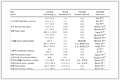
研究所用基础饲料为凡纳滨对虾商品配合饲料,购自青岛正大农业发展有限公司(中国青岛)(主要成分见表 1)。饲料制备过程如下:首先,将各添加剂分别溶解于50 mL蒸馏水中,并逐一均匀喷洒于1 kg基础饲料表面。随后,将海藻酸钠和蒸馏水按3.15 g∶100 mL比例混合,加热至完全溶解后,再按4.2 mL∶100 mL比例加入鱼油,混匀制成包膜液。将此包膜液均匀包裹于各处理组饲料表面。对照组饲料采用相同方法制备,但不添加任何多糖添加剂,仅使用海藻酸钠和鱼油制成的包膜液进行包裹。最终,将配制完成的饲料均匀揉搓,平铺晾干后存放于阴凉通风处备用。
|
表 1 商品配合饲料主要成分 Table 1 Main ingredients of commercial compound feed |
实验期间,各处理组每日定时投喂凡纳滨对虾饲料4次(11:00、15:00、19:00和24:00)。每日投喂总量根据对虾实际摄食情况调整至其体质量的4%~10%。实验过程中,定期监测养殖条件,保持水温为(25.0±0.5) ℃,盐度为29.0±1.0。此外,每日更换水族箱中的海水1次,每次更换总水量的30%~50%。投喂和换水前,使用吸管将水族箱中的残饵和粪便清除并收集至专用袋中。同时,每次喂食、换水以及收集残饵和粪便时,及时观察对虾的活跃情况并记录死亡数量。
1.4 样品采集在养殖实验结束后,对所有对虾禁食24 h。随后,对每个水族箱内的对虾分别进行称重和计数,以评估其生长性能。从每个水族箱中随机挑选10尾健康对虾,用1 mL无菌注射器从其腹部采集血液,转移至1.5 mL无菌离心管中。采集的血液样品静置于冰水混合物中,随后以3 000 r/min的转速离心10 min,分离上清液获得血清,并将血清样品储存于-80 ℃冰箱中。随后解剖对虾,采集其肝胰腺,将同一玻璃缸对虾的肝胰腺组织完全浸润于同一根含有RNA保护液的无菌离心管中,并充分剪碎混匀,12 h后放入液氮中冷冻。所有样品最终统一存放于-80 ℃冰箱中,待进一步分析。
1.5 指标测定 1.5.1 生长性能指标实验开始前记录每个水族箱对虾初始体质量。实验结束后称量每个水族箱对虾的最终体质量,并记录末数量。具体公式如下:
| $ \;\;\;\;\;\;存活率=(养殖实验结束时剩余对虾数/养殖实验\\开始时放人对虾数)\times 100 \% ;$ | (1) |
| $ \text { 特定生长率 }=\left(\ln W_{\mathrm{f}}-\ln W_{\mathrm{i}}\right) / \mathrm{t} \times 100 \% \text { ;} $ | (2) |
| $ \text { 饲料效率 }=\left(W_{\mathrm{f}}-W_{\mathrm{i}}\right) / W_{\mathrm{b}} \times 100 \% \text {; } $ | (3) |
| $ \text { 消化率 }=\left(W_{\mathrm{b}}-W_{\mathrm{m}}\right) / W_{\mathrm{b}} \times 100 \% \text { 。} $ | (4) |
式中:Wi和Wf分别表示养殖实验期间凡纳滨对虾平均初体质量和末体质量(g);t为实验周期(d);Wb表示养殖实验期间饲料投喂累积量(g);Wm表示养殖实验期间对虾产生粪便累积量(g)。
1.5.2 血清中非特异性免疫指标通过测定对虾血清中非特异性免疫相关酶的活性来反映其免疫状况。本研究使用了南京建成生物工程研究所研发的试剂盒,用于检测一系列免疫相关参数,具体包括:碱性磷酸酶(Alkaline phosphatase,AKP)、酸性磷酸酶(Acid phosphatase,ACP)、总一氧化氮合酶(Total nitric oxide synthase,T-NOS)、溶菌酶(Lysozyme,LZM)、过氧化物酶(Peroxidase,POD)、超氧化物歧化酶(Superoxide dismutase,SOD)的活性、总抗氧化能力(Total antioxidant capacity,T-AOC)和酚氧化酶(Phenono-loxidase,PO)含量[26]。所有检测步骤均严格遵循试剂盒附带的操作指南执行,以确保检测结果的精确性和可靠性,满足科研规范的要求。
1.5.3 免疫信号通路相关基因表达对采集的对虾肝胰腺组织样品进行RNA提取与基因表达分析。本研究采用Trizol法提取凡纳滨对虾肝胰腺样品中的总RNA。在检测RNA完整性的同时,利用Thermo NanoDrop 2000微量紫外分光光度计对RNA的纯度和浓度进行测定,以确保样品符合后续实验要求。随后,按照ABScript Ⅲ RT Master Mix for qPCR with gDNA Remover试剂盒的操作说明,将提取的总RNA转录为cDNA。之后,使用2X Universal SYBR Green Fast qPCR Mix试剂盒,并采用SYBR Green嵌合荧光法进行qPCR反应,采用2-ΔΔCt相对定量的方法分析各处理组对虾肝胰腺中相关免疫基因的表达水平,qPCR引物扩增效率经标准曲线验证,效率范围为90%~110%,相关系数R2>0.99。这些免疫基因包括LZM、LGBP、SOD、HSP70、proPO、Imd、Relish、Toll、TOR、eIF4E2、eIF4E1α和4E-BP [27-28]。实时定量聚合酶链式反应(Quantitative real-time PCR, qPCR)用的引物序列列于表 2[26-29]。
|
|
表 2 qPCR所用的引物序列 Table 2 Primer sequences used for qPCR |
养殖实验结束后,在各组采样后剩余对虾中,随机挑选出24尾对虾,平均放入3个玻璃缸中正常喂养3 d,用于正式的攻毒实验。其余对虾则用于预攻毒实验。本研究所用的副溶血弧菌(Vibrio parahaemolyticus)菌株,源自中国海洋大学水产学院养殖生态学实验室,分离于患病凡纳滨对虾。基于攻毒预实验数据,确定副溶血弧菌的半数致死浓度(LD50)及适宜注射剂量,利用无菌微量注射器在对虾倒数第三腹节处注射25 μL细菌悬液,注射浓度为1.5×10⁸ cfu/mL,实验结束后记录各处理组凡纳滨对虾累计死亡数量。
1.6 数据统计分析本研究用SPSS Statistics 26.0软件作为工具,对数据进行单因素方差分析。在正式分析之前,所有数据均已经通过方差齐性检验与正态分布检验。为检验显著性差异,采用Tukey’s多重比较法,并将显著性水平界定为P<0.05。统计分析的结果最终以均值伴随标准误差(Mean±S.E.M.)的格式进行展示。
2 结果 2.1 对虾生长性能饲料中添加β-葡聚糖和岩藻多糖对凡纳滨对虾生长性能的影响见表 3。与对照组相比,各处理组在存活率、饲料效率和消化率方面均表现出显著的提高(P < 0.05)。其中,β-葡聚糖添加组在存活率和饲料效率方面优于岩藻多糖添加组。在末体质量和特定生长率方面,YG组的效果最为显著,显著高于对照组(P < 0.05),而MG组和AP组在末体质量和特定生长率方面与对照组之间的差异未达到显著性水平(P>0.05)。
|
|
表 3 β-葡聚糖和岩藻多糖对凡纳滨对虾生长的影响(平均值±标准误差) Table 3 Effects of β-glucan and fucoidans on the growth of L. vannamei (Mean±S.E.M.) |
如图 1所示,相较于对照组和AP组,YG组中的对虾血清AKP活性呈现出显著提升(P < 0.05);而MG组与对照组及其他处理组之间未见显著差异(P>0.05,见图 1A)。在ACP活性方面,除AP组外,各处理组的对虾血清ACP活性均较对照组有显著增加(P < 0.05),其中YG组的ACP活性显著高于MG组(P < 0.05,见图 1B)。YG组对虾血清中T-NOS、LZM活性以及T-AOC均较对照组有显著上升(P < 0.05),相比之下,其他处理组与对照组在这些指标上的差异并不显著(P>0.05,见图 1C、1E和1G)。在PO含量方面,除AP组外,其余处理组的对虾血清PO含量均较对照组有显著升高(P < 0.05),其中MG组的PO含量最高,并显著高于YG组(P < 0.05)。此外,YG组和MG组的对虾血清POD活性均较对照组有显著增强(P < 0.05),且YG组的POD活性显著高于MG组(P < 0.05)。最后,所有处理组的对虾血清SOD活性均显著高于对照组(P < 0.05),其中AP组的SOD活性最高,且显著高于YG组和MG组(P < 0.05),而YG组和MG组之间的差异不显著(P>0.05,见图 1H)。

|
(DZ为对照组,YG、MG和AP分别表示添加酵母来源β-葡聚糖、微藻来源β-葡聚糖和岩藻多糖的处理组。图中各不同字母标记代表各组之间存在显著性差异(P < 0.05)。下图同。DZ means the control group. YG, MG and AP denote the treatment groups with the addition of yeast-derived β-glucan, microalgae-derived β-glucan and fucoidan, respectively. The different letters marked in the same figure indicate significant differences among groups (P < 0.05). The same applies to the figures below.) 图 1 饲料中添加β-葡聚糖和岩藻多糖对凡纳滨对虾血清非特异性免疫酶活指标的影响 Fig. 1 Effect of dietary supplementation with β-glucan and fucoidan on serum non-specificimmunoenzymatic activity indices of L. vannamei |
如图 2显示,与对照组相比,3个处理组中对虾肝胰腺LGBP、SOD、HSP70和proPO基因的相对表达量均显著升高(P < 0.05)。具体而言,YG组和MG组的LGBP、SOD及HSP70基因相对表达量明显高于AP组(P < 0.05);而MG组的proPO基因相对表达量显著高于其他处理组(P < 0.05)。然而,与对照组相比,AP组的LZM基因相对表达量与其他实验组之间并无显著差异(P>0.05)。

|
图 2 β-葡聚糖和岩藻多糖对凡纳滨对虾肝胰腺LZM、LGBP、SOD、HSP70和proPO基因相对表达量的影响 Fig. 2 Effects of β-glucan and fucoidans on the relative expression of LZM, LGBP, SOD, HSP70 and proPO genes in the hepatopancreas of the shrimp L. vannamei |
图 3展示了各处理组与对照组对虾肝胰腺中Imd、Relish和Toll基因的相对表达量情况。与对照组相比,3个处理组的Imd和Relish基因相对表达量均显著提升(P < 0.05)。对比不同处理组发现,G组的Imd基因相对表达量显著高于AP组(P < 0.05),而与MG组相比则无显著差异(P>0.05)。此外,就Relish和Toll基因的相对表达量而言,3个处理组之间均未观察到显著的差异(P>0.05)。

|
图 3 β-葡聚糖和岩藻多糖对凡纳滨对虾肝胰腺Imd、Relish和Toll基因相对表达量的影响 Fig. 3 Effects of β-glucan and fucoidans on the relative expression of hepatopancreaticImd, Relishand Toll genes in L. vannamei |
图 4描绘了不同处理组和对照组对虾肝胰腺中雷帕霉素靶蛋白(Mechanistic target of rapamycin, mTOR)信号通路相关基因TOR、eIF4E2、eIF4E1α和4E-BP的相对表达量的对比情况。研究结果显示,相较于对照组,YG组与MG组中这4个基因的相对表达量均呈现出显著上升的趋势(P < 0.05)。对于AP组而言,其eIF4E1α与4E-BP基因的相对表达量与对照组相比无显著差异(P>0.05),但TOR和eIF4E2基因相对表达量相较于对照组有显著提升(P < 0.05)。此外值得注意的是,MG组的TOR与4E-BP基因相对表达量在所有处理组中处于最高水平,且与其他处理组相比具有显著差异(P < 0.05)。

|
图 4 β-葡聚糖和岩藻多糖对凡纳滨对虾肝胰腺mTOR信号通路相关基因相对表达量的影响 Fig. 4 Effects of β-glucan and fucoidans on the relative expression of genes related to the hepatopancreatic mTOR signaling pathway in L. vannamei |
图 5展示了凡纳滨对虾在副溶血弧菌攻毒实验中的结果。攻毒实验期间,YG组、MG组、AP组和对照组对虾的累计死亡率分别为37.5%、45.8%、62.5%和58.3%。数据分析显示,相较于AP组和对照组,YG组与MG组对虾在接种副溶血弧菌后的累计死亡率呈现出显著降低的趋势(P < 0.05)。

|
图 5 β-葡聚糖和岩藻多糖对注射副溶血弧菌后凡纳滨对虾累计死亡率的影响 Fig. 5 Effects of β-glucan and fucoidan on the cumulative mortality of L. vannamei after V. parahaemolyticus injection |
在饲料中添加多糖类添加剂作为免疫刺激剂是提高水产养殖效率的一种常用有效策略[33]。其中,益生元是一类特定的、不易消化的食物成分,可促进健康菌群的增殖,作为重要的饲料添加剂之一,其具有显著提高虾类生长性能和存活率、改善肠道微生物群落、增强免疫力以及提升健康状况和抗病能力的潜力[34-39]。作为一种益生元,β-葡聚糖因其生长和免疫调节特性,在水产动物营养研究中得到了广泛关注[40]。关于岩藻多糖对凡纳滨对虾益生影响的研究目前相对较少,但来自不同海藻物种的岩藻多糖提取物已被证明可以提高幼年红鲷(Pagrus major)的饲料利用率,并改善尼罗罗非鱼(Oreochromis niloticus)的肠道健康和生长性能[41-42]。虽然这两类多糖在对虾养殖中均有应用[17, 43],但目前关于不同来源的β-葡聚糖与岩藻多糖对凡纳滨对虾养殖效果的比较研究尚少见报道。
本研究表明,饲料中添加适量酵母来源的β-葡聚糖可显著提高凡纳滨对虾的特定生长率、存活率、饲料效率和消化率。与此相比,尽管微藻来源的β-葡聚糖和岩藻多糖显著提高了凡纳滨对虾的存活率、饲料效率和消化率,但对对虾末体质量和特定生长率的提升作用并不显著。酵母来源的β-葡聚糖的促进生长作用效果在多种水产动物中已得到验证,例如,在鲟鱼(Acipenser persicus)幼鱼的饲料中添加不同水平的酵母来源β-葡聚糖,可显著改善其生长性能[44];在斑节对虾饲料中添加不同浓度的酵母来源β-葡聚糖,可显著提高其生长速率和存活率[45]。不过,也有部分研究表明,在饲料中添加酵母来源的β-葡聚糖对某些水产动物的生长并未产生显著的促进作用。例如,向大菱鲆(Scophthalmus maximus)饲料中添加酵母来源的β-葡聚糖并未显著改善其生长性能[46],在螯虾(Cherax tenuimanus)相关研究中也得到了类似的结果[47]。本研究中,添加裸藻来源的β-葡聚糖对对虾的促长作用相对弱于酵母来源的β-葡聚糖,这种差异是否与不同来源的β-葡聚糖存在的结构和组成差异有关,尚待进一步研究确认。研究表明,酵母来源β-葡聚糖一般由1, 3-糖苷键和1, 6-糖苷键共同构成,而裸藻来源的葡聚糖则主要为线性β-1, 3-葡聚糖[48-50]。有研究显示,微藻来源的β-葡聚糖生物活性较高,有可能使机体长期处于免疫激活状态,导致部分营养物质被优先用于免疫反应,而非生长代谢,导致未出现明显的促长效果[51]。本研究岩藻多糖的结果与Nordvi等人的研究发现相似,他们的研究发现饲料中添加0.075%或3%的岩藻多糖并未显著改善大西洋鲑(Salmo salar)的生长[52],不过,相较之下,添加1 666.67~1 757.00 mg/kg岩藻多糖(纯度≥ 98%)可有效改善鲤鱼(Cyprinus carpio)幼鱼的生长性能[53]。这种差异可能由不同养殖动物对岩藻多糖的纯度和浓度存在依赖性所致[52]。有研究表明,高剂量的岩藻多糖可能导致饲料利用率降低,并潜在地影响生长速度[41, 52],关于高剂量岩藻多糖对凡纳滨对虾生长的影响有待进一步研究证实。
3.2 β-葡聚糖与岩藻多糖对凡纳滨对虾血清非特异性免疫酶活性的影响无脊椎动物缺乏适应性免疫系统,其免疫防御主要依赖先天性免疫反应[54]。作为一种无脊椎动物,凡纳滨对虾在抵御病原体侵袭时主要依靠非特异性免疫系统,该系统由血淋巴细胞和体液因子组成,是其核心防御机制[55]。研究表明,与甲壳类动物免疫能力密切相关的血清非特异性免疫酶活性指标包括AKP、ACP、PO、LZM、SOD、POD、T-AOC以及TNOS等[56]。ACP和AKP不仅参与蛋白质和脂质代谢,还具有重要的免疫调节和抗氧化功能[57]。PO是甲壳动物免疫系统的核心成分,参与黑色素合成,有助于伤口愈合和防止感染[58]。研究显示,β-葡聚糖可以以极低的浓度特异性激活甲壳类动物的酚氧化酶原激活系统,从而增强其免疫防御能力[59]。LZM是先天免疫的重要效应分子,可通过攻击细菌细胞壁中的肽聚糖来抵御有害细菌的入侵[60]。SOD、POD以及T-AOC是机体抗氧化防御系统的重要组成部分,它们能够清除活性氧和自由基,缓解氧化应激,进而提高免疫能力[61]。此外,T-NOS催化产生的一氧化氮(NO)可激活甲壳动物免疫力,并降低病原感染率[62]。
β-葡聚糖是一种高效且有前景的免疫刺激剂,能够通过激活先天和获得性免疫功能来增强免疫系统的抗病能力[63]。研究表明,适量添加β-葡聚糖可显著提高凡纳滨对虾的血清非特异性免疫酶活性,但其效果因来源不同而有所差异。例如,Tian等研究发现,饲料中添加农杆菌属发酵的β-葡聚糖显著增强了罗氏沼虾(Macrobrachium nipponense)ACP、AKP、LZM和PO活性[64],而酵母来源的β-葡聚糖(纯度88%,浓度0.02%~0.04%)可有效提高凡纳滨对虾SOD和其他抗氧化酶的活性[17]。此外,Reis等的研究表明,酵母和微藻来源的β-葡聚糖均可显著提高金头鲷(Sparus aurata)的过氧化氢酶和SOD活性[65]。而岩藻多糖也已被证明是一种有效的免疫增强剂,能够显著增强水生动物的免疫功能和抗氧化能力[66]。例如,Li等的研究表明,岩藻多糖能够提高鲤鱼血清SOD、过氧化氢酶、POD和谷胱甘肽过氧化物酶的活性[53]。类似地,岩藻多糖能够显著增强小龙虾(Procambarus clarkii)血液中PO和SOD的活性[67]。
本研究发现,饲料中添加不同来源的β-葡聚糖对凡纳滨对虾血清酶活性的提升效果存在差异。与对照组相比,饲料中添加酵母来源β-葡聚糖显著提高了对虾血清ACP、AKP、PO、LZM、SOD、POD、T-NOS活性和T-AOC,而微藻来源β-葡聚糖则有效提高了ACP、PO、SOD和POD的活性,其中PO含量显著高于酵母来源β-葡聚糖组和岩藻多糖组,但对AKP、LZM活性及T-AOC影响则与酵母来源差异不显著。不同来源的β-葡聚糖对对虾非特异免疫指标影响的差异可能与两种β-葡聚糖分子结构不同有关。与酵母来源的β-葡聚糖相比,微藻来源的β-葡聚糖通常具有线性结构、高分子量、高纯度和高溶解度,在各种条件下表现出优异的稳定性,这种差异可能使微藻来源的β-葡聚糖能更有效地触发酚氧化酶原激活系统,从而显著提高PO含量[68]。然而,由于微藻来源的β-葡聚糖结构复杂,其作用机理尚需进一步研究。饲料中添加岩藻多糖对黄颡鱼(P. fulvidraco)的抗氧化能力具有积极影响,可通过增加抗氧化酶活性,降低体内的活性氧水平,并减少丙二醛含量,从而增强黄颡鱼的抗氧化能力[24]。此外,岩藻多糖已被证明能够增加巨噬细胞的吞噬作用以及LZM活性[69]。本研究发现,岩藻多糖可显著提高对虾SOD活性,对LZM和PO含量具有一定的促进作用,但对其他酶活性未产生显著影响,这是否受到添加剂量、纯度、添加方式以及其他实验条件等因素的影响,尚需进一步研究。
3.3 β-葡聚糖与岩藻多糖对凡纳滨对虾免疫相关基因表达水平的影响基因表达的调节是生物体维持生理活动和健康状态的重要机制。因此,分析基因表达水平对于揭示生物体的免疫功能和抗病机制具有重要意义[70]。与其他无脊椎动物一样,凡纳滨对虾缺乏适应性免疫系统,其主要依赖先天性免疫系统识别病原体或环境抗原并做出防御反应[58]。虾的先天免疫系统包括酚氧化酶原激活系统、凝血系统、吞噬作用、包膜与结节形成、抗菌肽(AMP)生成和细胞凝集等功能模块[71]。在免疫识别中,模式识别蛋白是关键因子,主要包括β-1, 3-葡聚糖结合蛋白、脂多糖结合蛋白、脂多糖和β-1, 3-葡聚糖结合蛋白以及肽聚糖结合蛋白。在凡纳滨对虾中,酚氧化酶原激活系统由细菌脂多糖、肽聚糖以及β-1, 3-葡聚糖激活。最近研究表明,其中一些模式识别蛋白能够感应藻类多糖,即岩藻多糖、海带多糖、藻酸盐和角叉菜胶,并随后激活下游免疫反应[72]。当外来病原体感染时,脂多糖和β-1, 3-葡聚糖结合蛋白通过识别抗原颗粒触发丝氨酸蛋白酶级联反应,最终激活酚氧化酶系统,增强对病原体的免疫防御[63]。此外,超氧化物歧化酶基因通过表达抗氧化因子保护细胞免受活性氧损伤[73],而热休克蛋白(Heat shock protein, HSP)则在维持蛋白质稳态方面发挥重要作用,其中HSP70是甲壳类动物中研究最广泛的分子伴侣蛋白[74]。本研究结果表明,酵母与微藻来源组凡纳滨对虾肝胰腺中免疫相关基因(proPO、LGBP、SOD、HSP70和LZM)的相对表达量均显著上调,岩藻多糖组除LZM基因表达与对照组无显著差异外,其余基因也均显著上调。在本研究中,β-葡聚糖的结果与Zhao等[75]的研究发现一致,表明饲料中添加β-葡聚糖可有效增强对虾免疫能力,从而改善健康状况。而岩藻多糖的结果与Jin等[67]的研究发现类似,表明岩藻多糖可增加免疫相关基因(proPO和NF-κB)的表达。
Toll和Imd信号通路是虾类免疫应答的主要调节途径,主要通过调控AMP基因的表达增强抗菌能力[76];Relish是NF-κB转录因子的甲壳类成员,在AMP基因激活中发挥重要作用[77]。研究表明,LGBP的激活会刺激Imd的下游信号通路,并促进虾免疫基因的表达,包括抗菌肽和抗病毒蛋白[78]。本研究发现,在凡纳滨对虾的饲料中添加β-葡聚糖与岩藻多糖均能有效提升Toll、Imd及Relish基因的表达量。其中,关于β-葡聚糖的效果与Li等[17]的研究相吻合,即在饲料中添加浓度为0.02%~0.04%的β-葡聚糖,能显著促进免疫相关基因(包括Toll、Imd及Relish)的相对表达水平。从本研究结果看,岩藻多糖可能与LGBP结合,然后连续激活下游信号通路(Imd和NF-κB),从而上调对虾免疫相关基因(Toll、Imd、Relish、proPO)的表达,具体机制尚待进一步研究。此外,mTOR信号通路是细胞代谢、生长、增殖和存活的中心调节因子[79]。其中,mTORC1是细胞生长和代谢的主要调节因子,在增强细胞生长和分裂、促进蛋白质、脂质和核苷酸的合成、抑制自噬等分解代谢途径中发挥核心作用[80]。mTORC1通过多种下游效应因子正向调控细胞生长所需的蛋白质合成,其促进蛋白质合成的机制包括翻译真核起始因子4E(eIF4E)结合蛋白1(4E-BP1)和促进p70核糖体S6激酶1(S6K1)的磷酸化[81]。而eIF4E蛋白家族由eIF4E1, eIF4E2和eIF4E3组成,其活性受4E-BP的调控[82]。本研究表明,添加β-葡聚糖和岩藻多糖后,对虾肝胰腺mTOR信号通路相关基因(TOR、4EBP、eIF4E1α和eIF4E2) 的相对表达水平均显著上调。mTOR信号通路不仅与生长密切相关,还在免疫功能方面发挥重要作用,已有研究发现mTORC1在影响免疫细胞成熟中发挥作用[83]。因此,饲料中添加β-葡聚糖与岩藻多糖对凡纳滨对虾均有显著的免疫促进作用及潜在生长益处。
3.4 β-葡聚糖与岩藻多糖对凡纳滨对虾抗病力的影响弧菌是海水养殖中最具破坏性的细菌病原体之一,可感染包括甲壳类、贝类和鱼类在内的多种水生动物[84]。凡纳滨对虾易感染的主要细菌性疾病之一就是弧菌病,这种疾病可在对虾的所有生长阶段传播,并可能导致高达100%的死亡率[85]。其中,副溶血弧菌是最普遍的致病菌。感染副溶血弧菌的对虾通常表现出肝胰腺坏死、生长停滞、厌食等症状,严重感染可快速导致大规模死亡,给养殖者造成巨大的经济损失[86]。近年来,多种益生元作为饲料添加剂,已被广泛应用于增强水生动物的免疫力和抗病能力[87]。例如,Fuandila等研究发现,在凡纳滨对虾饲料中添加0.75%的蜂蜜(其中益生元成分为:菊粉、低聚果糖和低聚半乳糖)可显著改善对虾的生长性能、免疫反应,并增强其对副溶血弧菌感染的抵抗力[88]。Tian等研究表明,饲料中添加0.2% β-葡聚糖能够通过提高虾的免疫酶活性和诱导生长及免疫相关基因表达,从而显著增强对副溶血弧菌的抗病力[61]。同时,添加马尾藻(Sargassum wightii)来源的岩藻多糖的斑节对虾存活率显著高于对照组,并且随着岩藻多糖浓度的增加,存活率也呈现出逐渐上升的趋势[22]。本研究表明,2种来源的β-葡聚糖均可在一定程度上增强凡纳滨对虾对副溶血弧菌的抗病能力,但酵母来源的β-葡聚糖添加组对虾在攻毒实验中的抗病力显著提高,效果优于微藻来源β-葡聚糖和岩藻多糖组,并与对虾的特定生长率、血清非特异性免疫酶活性以及肝胰腺免疫相关信号通路基因表达水平的提升呈现出较好的一致性。微藻来源β-葡聚糖组对虾的抗病力与酵母来源组无显著差异,岩藻多糖组则与对照组无显著差异,是否与纯度、添加剂量或者添加方式有关,尚需进一步研究。从已有的研究来看,日本对虾的存活率随着饲料中岩藻多糖浓度的增加而显著提高[23]。
3.5 不同来源β-葡聚糖对凡纳滨对虾影响的比较研究本研究表明,酵母来源的β-葡聚糖在促进生长性能、提升免疫能力和抗病力方面表现优于微藻来源的β-葡聚糖。不同来源的β-葡聚糖在应用效果上的差异,可能与其分子结构特性、生物活性以及与宿主受体的结合模式密切相关。酵母来源的β-葡聚糖以β-1, 3-葡聚糖为主链,通过β-1, 6-糖苷键形成高度分支的三重螺旋结构,分子量范围为20~4 000 kDa[49]。而裸藻来源的β-葡聚糖则是由具有无分支的线性β-(1, 3)主链构成,分子量较小,约为25~100 kDa[89]。已有研究指出,葡聚糖的免疫调节活性与其分子量相关,较高分子量的葡聚糖通常对免疫系统有更强的激活作用,这类葡聚糖具有更稳定的结构,并可被免疫细胞表面的特定受体直接识别[90]。然而,对于高分子量与低分子量的β-葡聚糖免疫调节能力的对比,仍存在争议。例如,Lei等发现低分子量酵母β-葡聚糖作为抗氧化剂和免疫刺激剂的效果优于高分子量形式[91]。除了分子量大小差异,β-葡聚糖的侧链长度和分支频率对免疫调节能力也起着关键作用。有研究表明,单一葡萄糖分子作为侧链的葡聚糖,其激活巨噬细胞的能力低于具有多个葡萄糖侧链的葡聚糖[92]。此外,单螺旋构象通常比三螺旋构象稳定性差。三螺旋构象是多数真菌细胞壁的主要结构,而免疫受体对三螺旋β-1, 3-葡聚糖的识别对于免疫信号传递至关重要[93]。例如,已有研究发现在抑制肿瘤生长方面单螺旋构象的葡聚糖比三螺旋构象的葡聚糖的效果差[94]。因此,酵母来源的β-葡聚糖在促进生长和免疫方面更具优势。
凡纳滨对虾的先天免疫依赖于模式识别受体,其对β-葡聚糖的识别机制与哺乳动物存在显著差异。不过,关于不同来源的β-葡聚糖与宿主受体结合差异的相关研究仍少见报道。目前,已有研究表明β-1, 3-葡聚糖是主要的免疫调节因子,相比β-1, 4-葡聚糖和β-1, 6-葡聚糖,β-1, 3-葡聚糖具有更强的免疫刺激活性[95]。β-1, 3-葡聚糖能够与多种甲壳动物的模式识别受体结合,如脂多糖结合蛋白、β-1, 3-葡聚糖结合蛋白、脂多糖和β-1, 3-葡聚糖结合蛋白、Toll样受体、肽聚糖结合或识别蛋白以及C型凝集素,这种结合进一步激活原酚氧化物酶系统,促进酚氧化酶的产生,这是一种广泛分布在血液和甲壳动物内部组织中的酶[96]。酵母来源的β-葡聚糖由β-1, 3-糖苷键构成主链,并具有由β-1, 6-糖苷键连接的分支[49];而裸藻来源的β-葡聚糖则仅由简单的β-1, 3-糖苷键组成[89]。然而,由于β-1, 3-糖苷键主要负责免疫调节,因此,本研究发现裸藻β-葡聚糖组proPO基因表达量及酚氧化酶含量要高于酵母β-葡聚糖组。
4 结语本研究表明,饲料中适当添加β-葡聚糖和岩藻多糖均能不同程度地提高凡纳滨对虾的生长性能、免疫能力和抗病力。不同来源β-葡聚糖和岩藻多糖比较,酵母来源的β-葡聚糖在促进生长性能、提升免疫能力和抗病力方面总体表现最优。岩藻多糖组对虾的特定生长率及对副溶血弧菌抵抗力与对照组均未见显著差异,这是否与岩藻多糖纯度、添加剂量或添加方式有关,尚需进一步研究确定。
| [1] |
Li E, Wang X D, Chen K, et al. Physiological change and nutritional requirement of Pacific white shrimp Litopenaeus vannamei at low salinity[J]. Reviews in Aquaculture, 2017, 9(1): 57-75. DOI:10.1111/raq.12104 (  0) 0) |
| [2] |
卓微伟, 胡君, 蒋蓉, 等. 生物絮团技术在凡纳滨对虾养殖中的应用[J]. 科学养鱼, 2024(4): 34-36. Zhuo W W, Hu J, Jiang R, et al. Application of biofloc technology in the culture of shrimp, Penaeus vannamei[J]. Scientific Fish Farming, 2024(4): 34-36. ( 0) |
| [3] |
Goh J X H, Tan L T H, Law J W F, et al. Harnessing the potentialities of probiotics, prebiotics, synbiotics, paraprobiotics, and postbiotics for shrimp farming[J]. Reviews in Aquaculture, 2022, 14(3): 1478-1557. DOI:10.1111/raq.12659 ( 0) |
| [4] |
Duan Y F, Liu Q S, Wang Y, et al. Impairment of the intestine barrier function in Litopenaeus vannamei exposed to ammonia and nitrite stress[J]. Fish & Shellfish Immunology, 2018, 78: 279-288. ( 0) |
| [5] |
Flegel T W. Historic emergence, impact and current status of shrimp pathogens in Asia[J]. Journal of Invertebrate Pathology, 2012, 110(2): 166-173. DOI:10.1016/j.jip.2012.03.004 ( 0) |
| [6] |
Guo H, Xian J A, Li B, et al. Gene expression of apoptosis-related genes, stress protein and antioxidant enzymes in hemocytes of white shrimp Litopenaeus vannamei under nitrite stress[J]. Comparative Biochemistry and Physiology Part C: Toxicology & Pharmacology, 2013, 157(4): 366-371. ( 0) |
| [7] |
Liang Z X, Liu R, Zhao D P, et al. Ammonia exposure induces oxidative stress, endoplasmic reticulum stress and apoptosis in hepatopancreas of pacific white shrimp(Litopenaeus vannamei)[J]. Fish & Shellfish Immunology, 2016, 54: 523-528. ( 0) |
| [8] |
Akhter N, Wu B, Memon A M, et al. Probiotics and prebiotics associated with aquaculture: A review[J]. Fish & Shellfish Immunology, 2015, 45(2): 733-741. ( 0) |
| [9] |
Song S K, Beck B R, Kim D, et al. Prebiotics as immunostimulants in aquaculture: A review[J]. Fish & Shellfish Immunology, 2014, 40(1): 40-48. ( 0) |
| [10] |
Pogue R, Murphy E J, Fehrenbach G W, et al. Exploiting immunomodulatory properties of β-glucans derived from natural products for improving health and sustainability in aquaculture-farmed organisms: Concise review of existing knowledge, innovation and future opportunities[J]. Current Opinion in Environmental Science & Health, 2021, 21: 100248. ( 0) |
| [11] |
Murphy E J, Rezoagli E, Major I, et al. β-glucan metabolic and immunomodulatory properties and potential for clinical application[J]. Journal of Fungi, 2020, 6(4): 356. DOI:10.3390/jof6040356 ( 0) |
| [12] |
Murphy E J, Masterson C, Rezoagli E, et al. β-Glucan extracts from the same edible shiitake mushroom Lentinus edodes produce differential in vitro immunomodulatory and pulmonary cytoprotective effects—Implications for coronavirus disease(COVID-19) immunotherapies[J]. Science of the Total Environment, 2020, 732: 139330. DOI:10.1016/j.scitotenv.2020.139330 ( 0) |
| [13] |
Jung H K, Hong J H, Park S C, et al. Production and physicochemical characterization of β-glucan produced by Paenibacillus polymyxa JB115[J]. Biotechnology and Bioprocess Engineering, 2007, 12: 713-719. DOI:10.1007/BF02931090 ( 0) |
| [14] |
Zhu F M, Du B, Xu B J. A critical review on production and industrial applications of beta-glucans[J]. Food Hydrocolloids, 2016, 52: 275-288. DOI:10.1016/j.foodhyd.2015.07.003 ( 0) |
| [15] |
Butt U D, Lin N, Akhter N, et al. Overview of the latest developments in the role of probiotics, prebiotics and synbiotics in shrimp aquaculture[J]. Fish & Shellfish Immunology, 2021, 114: 263-281. ( 0) |
| [16] |
Wongsasak U, Chaijamrus S, Kumkhong S, et al. Effects of dietary supplementation with β-glucan and synbiotics on immune gene expression and immune parameters under ammonia stress in Pacific white shrimp[J]. Aquaculture, 2015, 436: 179-187. DOI:10.1016/j.aquaculture.2014.10.028 ( 0) |
| [17] |
Li H F, Xu C, Zhou L I, et al. Beneficial effects of dietary β-glucan on growth and health status of Pacific white shrimp Litopenaeus vannamei at low salinity[J]. Fish & Shellfish Immunology, 2019, 91: 315-324. ( 0) |
| [18] |
Carballo C, Chronopoulou E G, Letsiou S, et al. Antioxidant capacity and immunomodulatory effects of a chrysolaminarin-enriched extract in Senegalese sole[J]. Fish & Shellfish Immunology, 2018, 82: 1-8. ( 0) |
| [19] |
Fitton J H. Therapies from fucoidan; multifunctional marine polymers[J]. Marine Drugs, 2011, 9(10): 1731-1760. DOI:10.3390/md9101731 ( 0) |
| [20] |
Luthuli S, Wu S, Cheng Y, et al. Therapeutic effects of fucoidan: A review on recent studies[J]. Marine Drugs, 2019, 17(9): 487. DOI:10.3390/md17090487 ( 0) |
| [21] |
Immanuel G, Sivagnanavelmurugan M, Marudhupandi T, et al. The effect of fucoidan from brown seaweed Sargassum wightii on WSSV resistance and immune activity in shrimp Penaeus monodon(Fab)[J]. Fish & Shellfish Immunology, 2012, 32(4): 551-564. ( 0) |
| [22] |
Sivagnanavelmurugan M, Thaddaeus B J, Palavesam A, et al. Dietary effect of Sargassum wightii fucoidan to enhance growth, prophenoloxidase gene expression of Penaeus monodon and immune resistance to Vibrio parahaemolyticus[J]. Fish & Shellfish Immunology, 2014, 39(2): 439-449. ( 0) |
| [23] |
Traifalgar R F, Kira H, Tung H T, et al. Influence of dietary fucoidan supplementation on growth and immunological response of juvenile Marsupenaeus japonicus[J]. Journal of the World Aquaculture Society, 2010, 41: 235-244. DOI:10.1111/j.1749-7345.2010.00363.x ( 0) |
| [24] |
Yang Q, Yang R, Li M, et al. Effects of dietary fucoidan on the blood constituents, anti-oxidation and innate immunity of juvenile yellow catfish(Pelteobagrus fulvidraco)[J]. Fish & Shellfish Immunology, 2014, 41(2): 264-270. ( 0) |
| [25] |
Shen K K, Bao L X, Liu M X, et al. Dietary supplementation of β-1, 3-glucan improves the intestinal health of white shrimp(Litopenaeus vannamei) by modulating intestinal microbiota and inhibiting inflammatory response[J]. Frontiers in Immunology, 2023, 14: 1119902. DOI:10.3389/fimmu.2023.1119902 ( 0) |
| [26] |
Luo K, Liu Y, Qin G C, et al. A comparative study on effects of dietary three strains of lactic acid bacteria on the growth performance, immune responses, disease resistance and intestinal microbiota of Pacific white shrimp, Penaeus vannamei[J]. Fish & Shellfish Immunology, 2023, 136: 108707. ( 0) |
| [27] |
汪仕爽, 罗凯, 王明阳, 等. 屎肠球菌对凡纳对虾生长、非特异免疫及抗病力的影响[J]. 中国海洋大学学报(自然科学版), 2023, 53(1): 42-52. Wang S S, Luo K, Wang M Y, et al. Effect of Enterococcus faecium on growth performance, non-specific immunity and disease resistance of Penaeus vannamei[J]. Periodical of Ocean University of China, 2023, 53(1): 42-52. DOI:10.16441/j.cnki.hdxb.20220038 ( 0) |
| [28] |
田相利, 秦光彩, 罗凯, 等. 3种不同添加物对凡纳滨对虾生长、非特异免疫和抗病力的影响[J]. 中国海洋大学学报(自然科学版), 2024, 54(2): 33-43. Tian X L, Qin G C, Luo K, et al. Effects of three additives on growth performance, non-specific immunity and disease resistance of Litopenaeus vannamei[J]. Periodical of Ocean University of China, 2024, 54(2): 33-43. DOI:10.16441/j.cnki.hdxb.20230014 ( 0) |
| [29] |
孙艳, 刘飞, 宋晓玲, 等. 饲料中添加益生菌对凡纳滨对虾(Litopenaeus vannamei)非特异免疫基因表达量和抗病力的影响[J]. 海洋与湖沼, 2012, 43(4): 845-851. Sun Y, Liu F, Song X L, et al. Effects of adding probiotics in the feed on non-specific immune gene expression and disease resistance of Litopenaeus vannamei[J]. Oceanologia et Limnologia Sinica, 2012, 43(4): 845-851. ( 0) |
| [30] |
Lu M X, Liu R Z, Chen Z F, et al. Effects of dietary dihydromyricetin on growth performance, antioxidant capacity, immune response and intestinal microbiota of shrimp(Litopenaeus vannamei)[J]. Fish & Shellfish Immunology, 2023, 142: 109086. ( 0) |
| [31] |
Liu R Z, Ding Y J, Jing F T, et al. Effects of dietary glycerol monolaurate on growth and digestive performance, lipid metabolism, immune defense and gut microbiota of shrimp(Penaeus vannamei)[J]. Fish & Shellfish Immunology, 2024, 3: 109666. ( 0) |
| [32] |
Duan Y F, Zhang Y, Dong H B, et al. Effects of dietary poly-β-hydroxybutyrate(PHB) on microbiota composition and the mTOR signaling pathway in the intestines of Litopenaeus vannamei[J]. Journal of Microbiology, 2017, 55: 946-954. DOI:10.1007/s12275-017-7273-y ( 0) |
| [33] |
Hoseinifar S H, Esteban M Á, Cuesta A, et al. Prebiotics and fish immune response: A review of current knowledge and future perspectives[J]. Reviews in Fisheries Science & Aquaculture, 2015, 23(4): 315-328. ( 0) |
| [34] |
Mohan K, Rajan D K, Muralisankar T, et al. The potential role of medicinal mushrooms as prebiotics in aquaculture: A review[J]. Reviews in Aquaculture, 2022, 14(3): 1300-1332. DOI:10.1111/raq.12651 ( 0) |
| [35] |
Niu J, Lin H Z, Jiang S G, et al. Comparison of effect of chitin, chitosan, chitosan oligosaccharide and N-acetyl-d-glucosamine on growth performance, antioxidant defenses and oxidative stress status of Penaeus monodon[J]. Aquaculture, 2013, 372: 1-8. ( 0) |
| [36] |
Anuta J D, Buentello A, Patnaik S, et al. Effects of dietary supplementation of a commercial prebiotic PrevidaⓇ on survival, growth, immune responses and gut microbiota of Pacific white shrimp, Litopenaeus vannamei[J]. Aquaculture Nutrition, 2016, 22(2): 410-418. DOI:10.1111/anu.12257 ( 0) |
| [37] |
Miandare H K, Mirghaed A T, Hosseini M, et al. Dietary ImmunogenⓇ modulated digestive enzyme activity and immune gene expression in Litopenaeus vannamei post larvae[J]. Fish & Shellfish Immunology, 2017, 70: 621-627. ( 0) |
| [38] |
Luna-González A, Almaraz-Salas J C, Fierro-Coronado J A, et al. The prebiotic inulin increases the phenoloxidase activity and reduces the prevalence of WSSV in whiteleg shrimp(Litopenaeus vannamei) cultured under laboratory conditions[J]. Aquaculture, 2012, 362: 28-32. ( 0) |
| [39] |
Sang H M, Thuy N T. Effects of mannan oligosaccharide(MOS) on the survival, physiological, and immunological response of the black tiger prawn(Penaeus monodon Fabricius, 1798) when challenged with two different stressors[J]. Israeli Journal of Aquaculture-Bamidgeh, 2014, 66: 981. ( 0) |
| [40] |
Rodrigues M V, Zanuzzo F S, Koch J F, et al. Development of fish immunity and the role of β-glucan in immune responses[J]. Molecules, 2020, 25(22): 5378. DOI:10.3390/molecules25225378 ( 0) |
| [41] |
Sony N M, Hossain M S, Ishikawa M, et al. Efficacy of mozuku fucoidan in alternative protein-based diet to improve growth, health performance, and stress resistance of juvenile red sea bream, Pagrus major[J]. Fish Physiology and Biochemistry, 2020, 46: 2437-2455. DOI:10.1007/s10695-020-00881-x ( 0) |
| [42] |
Mahgoub H A, El-Adl M A, Ghanem H M, et al. The effect of fucoidan or potassium permanganate on growth performance, intestinal pathology, and antioxidant status in Nile tilapia(Oreochromis niloticus)[J]. Fish Physiology and Biochemistry, 2020, 46(6): 2109-2131. DOI:10.1007/s10695-020-00858-w ( 0) |
| [43] |
Kitikiew S, Chen J C, Putra D F, et al. Fucoidan effectively provokes the innate immunity of white shrimp Litopenaeus vannamei and its resistance against experimental Vibrio alginolyticus infection[J]. Fish & Shellfish Immunology, 2013, 34(1): 280-290. ( 0) |
| [44] |
Aramli M S, Kamangar B, Nazari R M. Effects of dietary β-glucan on the growth and innate immune response of juvenile Persian sturgeon, Acipenser persicus[J]. Fish & Shellfish Immunology, 2015, 47(1): 606-610. ( 0) |
| [45] |
Felix N, Jeyaseelan M P, Kirubakaran C J. Growth improvement and enhanced disease resistance against Vibrio alginolyticus using-glucan as a dietary supplement for Penaeus monodon(Fabricius)[J]. Indian Journal of Fisheries, 2008, 55(3): 247-250. ( 0) |
| [46] |
Gu M, Pan S H, Li Q, et al. Evaluation and compare of yeast β-glucan and carboxymethylglucan to improve the immunity and gut health of turbot fed diet containing 400 g·kg-1 of soybean meal[J]. Aquaculture Reports, 2021, 21: 100882. DOI:10.1016/j.aqrep.2021.100882 ( 0) |
| [47] |
Sang H M, Fotedar R. Effects of dietary β-1, 3-glucan on the growth, survival, physiological and immune response of marron, Cherax tenuimanus(smith, 1912)[J]. Fish & Shellfish Immunology, 2010, 28(5-6): 957-960. ( 0) |
| [48] |
Zhu F, Du B, Xu B. A critical review on production and industrial applications of beta glucans[J]. Food Hydrocolloids, 2016, 52: 275-288. DOI:10.1016/j.foodhyd.2015.07.003 ( 0) |
| [49] |
Dong W J, Li Y C, Xue S R, et al. Yeast polysaccharides: The environmentally friendly polysaccharides with broad application potentials[J]. Comprehensive Reviews in Food Science and Food Safety, 2024, 23(5). ( 0) |
| [50] |
杨馥嘉, 陈静, 刘显军, 等. 裸藻β-1, 3-葡聚糖对断奶仔猪生长性能、血清炎症细胞因子含量及肠道菌群结构的影响[J]. 动物营养学报, 2024, 36(3): 1588-1598. Yang F J, Chen J, Liu X J, et al. Effects of Euglena gracilis β-1, 3-glucan on growth performance, serum inflammatory cytokine content and intestinal flora structure of weaned piglets[J]. Chinese Journal of Animal Nutrition, 2024, 36(3): 1588-1598. ( 0) |
| [51] |
陈代文, 毛湘冰, 余冰, 等. 猪抗病营养研究进展[J]. 动物营养学报, 2014, 26(10): 2992-3002. Chen D W, Mao X B, Yu B, et al. Recentadvancesin swine disease-resistant nutrition[J]. Chinese Journal of Animal Nutrition, 2014, 26(10): 2992-3002. ( 0) |
| [52] |
Nordvi M F, Løvmo S D, Bringslid I H, et al. Fucoidan from Undaria pinnatifida mitigates intestinal inflammation in Atlantic salmon(Salmo salar)[J]. Aquaculture, 2023, 575: 739777. DOI:10.1016/j.aquaculture.2023.739777 ( 0) |
| [53] |
Li F, Sun H C, Li Y, et al. Effects of fucoidan on growth performance, immunity, antioxidant ability, digestive enzyme activity, and hepatic morphology in juvenile common carp(Cyprinus carpio)[J]. Frontiers in Marine Science, 2023, 10: 1167400. DOI:10.3389/fmars.2023.1167400 ( 0) |
| [54] |
Duan Y F, Liu P, Li J T, et al. Molecular responses of calreticulin gene to Vibrio anguillarum and WSSV challenge in the ridgetail white prawn Exopalaemon carinicauda[J]. Fish & Shellfish Immunology, 2014, 36(1): 164-171. ( 0) |
| [55] |
Hou C H, Zhu L L, Zheng Y D, et al. Effects of dietary peptidoglycan on Litopenaeus vannamei: Growth performance, disease resistance, non-specific immunity and transcriptome analysis of immune response[J]. Aquaculture Reports, 2023, 31: 101676. DOI:10.1016/j.aqrep.2023.101676 ( 0) |
| [56] |
王秀华, 宋晓玲, 黄倢. 肽聚糖制剂对南美白对虾体液免疫因子的影响[J]. 中国水产科学, 2004(1): 26-30. Wang X H, Song X L, Huang J. Effects of peptidoglycan(PG) preparation on humoral immune factors ofLitopenaeus vannamei[J]. Journal of Fishery Sciences of China, 2004(1): 26-30. ( 0) |
| [57] |
Li M S, Wang S H, Zhao Z G, et al. Effects of alkalinity on the antioxidant capacity, nonspecific immune response and tissue structure of Chinese mitten crab Eriocheir sinensis[J]. Fishes, 2022, 7(4): 206. DOI:10.3390/fishes7040206 ( 0) |
| [58] |
Cerenius L, Söderhäll K. The prophenoloxidase-activating system in invertebrates[J]. Immunological Reviews, 2004, 198(1): 116-126. DOI:10.1111/j.0105-2896.2004.00116.x ( 0) |
| [59] |
Cerenius L, Söderhäll K. Immune properties of invertebrate phenoloxidases[J]. Developmental & Comparative Immunology, 2021, 122: 104098. ( 0) |
| [60] |
Peixoto M J, Domingues A, Batista S, et al. Physiopathological responses of sole(Solea senegalensis) subjected to bacterial infection and handling stress after probiotic treatment with autochthonous bacteria[J]. Fish & Shellfish Immunology, 2018, 83: 348-358. ( 0) |
| [61] |
Li Y A, Zhan F B, Li F L, et al. Molecular and functional characterization of mitochondrial manganese superoxide dismutase from Macrobrachium rosenbergii during bacterial infection[J]. Fish & Shellfish Immunology, 2021, 118: 94-101. ( 0) |
| [62] |
Wu C H, Siva V S, Song Y L. An evolutionarily ancient NO synthase(NOS) in shrimp[J]. Fish & Shellfish Immunology, 2013, 35(5): 1483-1500. ( 0) |
| [63] |
Meena D K, Das P, Kumar S, et al. Beta-glucan: An ideal immunostimulant in aquaculture(a review)[J]. Fish Physiology and Biochemistry, 2013, 39: 431-457. DOI:10.1007/s10695-012-9710-5 ( 0) |
| [64] |
Tian J T, Yang Y, Xu W Y, et al. Effects of β-1, 3-glucan on growth, immune responses, and intestinal microflora of the river prawn(Macrobrachium nipponense) and its resistance against Vibrio parahaemolyticus[J]. Fish & Shellfish Immunology, 2023, 142: 109142. ( 0) |
| [65] |
Reis B, Gonçalves A T, Santos P, et al. Immune status and hepatic antioxidant capacity of gilthead seabream Sparus aurata juveniles fed yeast and microalga derived β-glucans[J]. Marine Drugs, 2021, 19(12): 653. DOI:10.3390/md19120653 ( 0) |
| [66] |
Yu S H, Wu S J, Wu J Y, et al. Preparation of fucoidan-shelled and genipin-crosslinked chitosan beads for antibacterial application[J]. Carbohydrate Polymers, 2015, 126: 97-107. ( 0) |
| [67] |
Jin W X, Lai Y Y, Zhu F. Effect of dietary fucoidan on innate immune response of Procambarus clarkii and disease resistance against white spot syndrome virus[J]. Aquaculture, 2021, 534: 736233. DOI:10.1016/j.aquaculture.2020.736233 ( 0) |
| [68] |
Kumar V, Bhoyar M S, Mohanty C S, et al. Untapping the potential of algae for β-glucan production: A review of biological properties, strategies for enhanced production and future perspectives[J]. Carbohydrate Polymers, 2024, 22: 122895. ( 0) |
| [69] |
Choi E M, Kim A J, Kim Y O, et al. Immunomodulating activity of arabinogalactan and fucoidan in vitro[J]. Journal of Medicinal Food, 2005, 8(4): 446-453. DOI:10.1089/jmf.2005.8.446 ( 0) |
| [70] |
Coronado J A F, González A L, Martínez C J C, et al. Effect of microbial immunostimulants on WSSV infection percentage and the expression of immune-related genes in white shrimp(Litopenaeus vannamei)[J]. Revista Colombiana de Ciencias Pecuarias, 2019, 32(3): 221-231. ( 0) |
| [71] |
Vargas-Albores F, Yepiz-Plascencia G. Beta glucan binding protein and its role in shrimp immune response[J]. Aquaculture, 2000, 191(1-3): 13-21. DOI:10.1016/S0044-8486(00)00416-6 ( 0) |
| [72] |
Chen Y Y, Kitikiew S, Yeh S T, et al. White shrimp Litopenaeus vannamei that have received fucoidan exhibit a defense against Vibrio alginolyticus and WSSV despite their recovery of immune parameters to background levels[J]. Fish & Shellfish Immunology, 2016, 59: 414-426. ( 0) |
| [73] |
Aguirre-Guzman G, Sanchez-Martinez J G, Campa-Cordova A I, et al. Penaeid shrimp immune system[J]. The Thai Journal of Veterinary Medicine, 2009, 39(3): 205-215. DOI:10.56808/2985-1130.2175 ( 0) |
| [74] |
Junprung W, Supungul P, Tassanakajon A. Structure, gene expression, and putative functions of crustacean heat shock proteins in innate immunity[J]. Developmental & Comparative Immunology, 2021, 115: 103875. ( 0) |
| [75] |
Zhao H X, Cao J M, Wang A L, et al. Effects of dietary β-1, 3-glucan on expression of immune-related genes of Litopenaeus vannamei exposed to nitrite-N[J]. Journal of the World Aquaculture Society, 2012, 43(3): 400-410. DOI:10.1111/j.1749-7345.2012.00568.x ( 0) |
| [76] |
Li F H, Xiang J H. Signaling pathways regulating innate immune responses in shrimp[J]. Fish & Shellfish Immunology, 2013, 34(4): 973-980. ( 0) |
| [77] |
Zhou Y L, Wang L Z, Gu W B, et al. Identification and functional analysis of immune deficiency(IMD) from Scylla paramamosain: The first evidence of IMD signaling pathway involved in immune defense against bacterial infection in crab species[J]. Fish & Shellfish Immunology, 2018, 81: 150-160. ( 0) |
| [78] |
Tassanakajon A, Somboonwiwat K, Supungul P, et al. Discovery of immune molecules and their crucial functions in shrimp immunity[J]. Fish & Shellfish Immunology, 2013, 34(4): 954-967. ( 0) |
| [79] |
Laplante M, Sabatini D M. mTOR signaling at a glance[J]. Journal of Cell Science, 2009, 122(20): 3589-3594. DOI:10.1242/jcs.051011 ( 0) |
| [80] |
Saxton R A, Sabatini D M. mTOR signaling in growth, metabolism, and disease[J]. Cell, 2017, 168(6): 960-976. DOI:10.1016/j.cell.2017.02.004 ( 0) |
| [81] |
Laplante M, Sabatini D M. mTOR signaling in growth control and disease[J]. Cell, 2012, 149(2): 274-293. DOI:10.1016/j.cell.2012.03.017 ( 0) |
| [82] |
Li H D, Tian X L, Zhao K, et al. Effect of Clostridium butyricum in different forms on growth performance, disease resistance, expression of genes involved in immune responses and mTOR signaling pathway of Litopenaeus vannamai[J]. Fish & Shellfish Immunology, 2019, 87: 13-21. ( 0) |
| [83] |
Araki K, Turner A P, Shaffer V O, et al. mTOR regulates memory CD8 T-cell differentiation[J]. Nature, 2009, 460(7251): 108-112. DOI:10.1038/nature08155 ( 0) |
| [84] |
Huehn S, Eichhorn C, Urmersbach S, et al. Pathogenic vibrios in environmental, seafood and clinical sources in Germany[J]. International Journal of Medical Microbiology, 2014, 304(7): 843-850. DOI:10.1016/j.ijmm.2014.07.010 ( 0) |
| [85] |
Raja R A, Sridhar R, Balachandran C, et al. Pathogenicity profile of Vibrio parahaemolyticus in farmed Pacific white shrimp, Penaeus vannamei[J]. Fish & Shellfish Immunology, 2017, 67: 368-381. ( 0) |
| [86] |
Manchanayake T, Salleh A, Amal M N, et al. Pathology and pathogenesis of Vibrio infection in fish: A review[J]. Aquaculture Reports, 2023, 28: 101459. DOI:10.1016/j.aqrep.2022.101459 ( 0) |
| [87] |
Abdel-Latif H M, Yilmaz E, Dawood M A, et al. Shrimp vibriosis and possible control measures using probiotics, postbiotics, prebiotics, and synbiotics: A review[J]. Aquaculture, 2022, 551: 737951. DOI:10.1016/j.aquaculture.2022.737951 ( 0) |
| [88] |
Fuandila N N, Widanarni W, Yuhana M. Growth performance and immune response of prebiotic honey fed pacific white shrimp Litopenaeus vannamei to Vibrio parahaemolyticus infection[J]. Journal of Applied Aquaculture, 2020, 32(3): 221-235. DOI:10.1080/10454438.2019.1615593 ( 0) |
| [89] |
Rodríguez-Zavala J S, Ortiz-Cruz M A, Mendoza-Hernández G, et al. Increased synthesis of α-tocopherol, paramylon and tyrosine by Euglena gracilis under conditions of high biomassproduction[J]. Journal of Applied Microbiology, 2010, 109(6): 2160-2172. DOI:10.1111/j.1365-2672.2010.04848.x ( 0) |
| [90] |
Sletmoen M, Stokke B T. Higher order structure of(1, 3)-β-D-glucans and its influence on their biological activities and complexation abilities[J]. Biopolymers: Original Research on Biomolecules, 2008, 89(4): 310-321. ( 0) |
| [91] |
Lei N, Wang M, Zhang L F, et al. Effects of low molecular weight yeast β-glucan on antioxidant and immunological activities in mice[J]. International Journal of Molecular Sciences, 2015, 16(9): 21575-2190. DOI:10.3390/ijms160921575 ( 0) |
| [92] |
Åman P, Graham H. Mixed-linked β-(1→ 3), (1→ 4)-D-glucans in the cell walls of barley and oats-chemistry and nutrition[J]. Scandinavian Journal of Gastroenterology, 1987, 22(sup129): 42-51. DOI:10.3109/00365528709095849 ( 0) |
| [93] |
Kapteyn J C, Montijn R C, Dijkgraaf G J, et al. Covalent association of beta-1, 3-glucan with beta-1, 6-glucosylated mannoproteins in cell walls of Candida albicans[J]. Journal of Bacteriology, 1995, 177(13): 3788-3792. DOI:10.1128/jb.177.13.3788-3792.1995 ( 0) |
| [94] |
Falch B H, Espevik T, Ryan L, et al. The cytokine stimulating activity of (1→3)-β-D-glucans is dependent on the triple helix conformation[J]. Carbohydrate Research, 2000, 329(3): 587-596. DOI:10.1016/S0008-6215(00)00222-6 ( 0) |
| [95] |
Kristensen H Ø. A vitamin B12-binding factor formed in cultures of Euglena gracilis var. bacillaris[J]. Acta Physiologica Scandinavica, 1956, 37(1): 8-12. DOI:10.1111/j.1748-1716.1956.tb01337.x ( 0) |
| [96] |
Chaosomboon A, Phupet B, Rattanaporn O, et al. Lipopolysaccharide-and β-1, 3-glucan-binding protein from Fenneropenaeus merguiensis functions as a pattern recognition receptor with a broad specificity for diverse pathogens in the defense against microorganisms[J]. Developmental & Comparative Immunology, 2017, 67: 434-444. ( 0) |
2. Qingdao Ruizi Marine Engineering Research Institute Company Limited, Qingdao 266408, China