 2026, Vol. 56


2. 青岛瑞滋海洋工程研究院有限公司,山东 青岛 266408
凡纳滨对虾(Litopenaeus vannamei)是世界各地养殖最广泛的对虾种类,也是世界上最具商业价值的对虾养殖种类之一,与斑节对虾(Penaeus monodon)、中国对虾(Fenneropenaeus chinensis)并列为世界养殖产量最高的三大优良虾种[1]。自1988年引入中国以来,凡纳滨对虾的养殖从沿海扩展到内陆地区,已成为我国对虾产业中产量最大的养殖种类。然而,随着对虾养殖业规模的扩大,这一产业正受到多种病害的威胁,包括副溶血弧菌(Vibrio parahaemolyticus)和哈维氏弧菌(V. harveyi)等引起的细菌性病害[2]。在水产疾病防控中,传统抗生素虽然在一定程度上对病害防控具有重要作用,但抗生素的滥用也产生了很多不良后果。抗生素可以在多个食物网中残留并富集,对人类社会产生了不利影响,引发了诸多问题[3];同时,抗生素的使用会污染水生生态系统,对自然养殖菌群施加选择压力,促进细菌抗生素耐药性的发展,进而增大水产养殖病原菌感染的风险[4]。因此,开发安全、绿色的饲料添加剂,已成为当前水产养殖领域的重要研究方向之一。
在水产养殖中,益生菌作为抗生素替代品备受关注,枯草芽孢杆菌(Bacillus subtilis)、乳酸菌等益生菌已被广泛研究应用于饲料添加和水质改善[5]。其中,芽孢杆菌属(Bacillus)细菌是最常用的商业益生菌种类之一,其具有诸多优点,例如:孢子能够在不良环境条件、产品生产和应用过程中存活;对低pH值、胆汁盐和胃环境等苛刻条件良好的耐受力;在胃肠道内保持活力和理想特性;具备形成生物膜并释放功能化合物的能力[6]。研究表明,芽孢杆菌可产生表面活性素、脂肽、细菌素和细菌素样抑制性物质等抗菌活性物质,还可产生可降低pH值的有机酸,并具备对病原体的竞争性排斥功能[7]。另外,一些芽孢杆菌还能产生淀粉酶、纤维素酶和脂肪酶等多种胞外酶,促进宿主消化吸收[8]。此外,芽孢杆菌还具有胆固醇还原能力、胆盐水解酶活性和抗氧化活性,有助于降低血清胆固醇水平和缓解氧化应激。枯草芽孢杆菌是水产养殖中最常用的商业益生芽孢杆菌之一[9],具有强黏附性和生物膜形成能力,可在肠道内定植,刺激免疫系统,并可产生针对病原性细菌的抗菌化合物[10]。
近年来研究发现,非活体益生菌(包括无细胞提取物、热灭活菌和无细胞上清液等),具有与活菌相当的功能[11]。国际益生菌和益生元科学协会(ISAPP)将这些物质归类为后生元,包括灭活益生菌细胞、细胞组分及微生物代谢物等,能够直接或间接地对宿主产生有益影响[11-12]。例如,Patch等[13]给患有功能性胃肠功能紊乱的患者服用灭活枯草芽孢杆菌BG01-4TM,患者的胃肠功能和消化相关功能障碍得到改善。枯草芽孢杆菌后生元可为宿主提供丰富的短链脂肪酸,其分泌的外多糖(EPSs)具有降低胆固醇、免疫调节、抗炎、抗菌、抗病毒和消化等作用[14]。Park等[15]的研究表明,枯草芽孢杆菌外多糖可抑制金黄色葡萄球菌(Staphylococcus aureus)生长及限制超抗原诱导的T细胞活化和γ干扰素(IFN-γ)。在养殖生产中,枯草芽孢杆菌后生元也有一定应用。Tao等[16]在美洲牛蛙(Lithobates catesbeianus)饲料中添加不同形式枯草芽孢杆菌LCBS1(活菌体、热灭活完整菌体、无细胞提取物和无细胞上清液),发现其生长性能、免疫力和肠道健康情况均有所改善。Oladokun等[17]发现,饲料添加或卵内注射枯草芽孢杆菌发酵提取物对肉鸡雏鸡生长速度、肠道健康和免疫响应均产生了积极影响。不过,关于枯草芽孢杆菌后生元对对虾的益生作用和相关机制还鲜有报道。
目前,尽管芽孢杆菌在水产养殖中已得到广泛应用,但其产品主要以芽孢和发酵液两种形式进行使用,关于芽孢杆菌不同形式(如活菌、发酵液、灭活菌体等)可能的作用差别及其作用机制研究仍少见报道。本实验室自对虾池塘分离出一株枯草芽孢杆菌,命名为BSXE-2102。本研究旨在比较在饲料中添加不同形式的枯草芽孢杆菌BSXE-2102对凡纳滨对虾生长、非特异免疫和抗病力的差异影响,以探究该菌株的益生特性及潜在作用机制。
1 材料方法 1.1 实验设计本研究设置5个处理组:在对虾饲料中添加不同形式的枯草芽孢杆菌沙漠亚种(B. subtilis subsp. ina -quosorum)BSXE-2102,分别为活菌体(WB)、热灭活完整菌体(WK)、发酵液(WL)、发酵上清液(WM)和超声波破碎菌体(WN),以商品饲料作为对照(DZ),进行对虾的饲养,实验周期为42 d。
1.2 实验菌株与饲料制备实验用枯草芽孢杆菌BSXE-2102由中国海洋大学水产学院养殖生态学实验室自对虾养殖池塘中分离得到并保藏。经初步评估,该枯草芽孢杆菌株具有较高的安全性,并对海水养殖中常见的条件致病性弧菌具备较好的抑菌性,被确定为潜在的新型水产养殖益生菌株(未发表数据)。本研究参照文献[18]的处理方法,将菌株BSXE-2102接种于2216E培养基,在恒温摇床中培养24 h(28 ℃,160 r/min)后,得到发酵液。将发酵液进行离心(10 000 r/min,10 min)得到菌体。使用无菌生理盐水漂洗菌体2次,然后用无菌生理盐水将菌体制成菌悬液备用。发酵液经过无菌混合纤维滤膜(0.22 μm)过滤出发酵上清液。将菌悬液分别进行超声波破碎(300 W,20 min)和高压灭菌锅处理(105 ℃,5 min)得到超声波破碎菌体和热灭活完整菌体。菌体的添加浓度为1×10¹¹ CFU/kg,活菌发酵液和发酵上清液添加浓度为125 mL/kg。
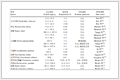
研究所用基础饲料购自青岛正大农业发展有限公司(中国,青岛),饲料的主要成分见表 1。
|
表 1 饲料成分 Table 1 Composition of the feed |
为使饲料均匀稳定携带菌体,先将各组处理后的菌体溶解于50 mL蒸馏水中,喷洒到1 kg饲料表面并混匀,然后用海藻酸钠溶液和鱼油混合包裹制成配合饲料,将饲料充分摇匀后置于阴凉通风处晾干,4 ℃保存。制备混合物时,先将海藻酸钠固体以3.15 g∶100 mL比例和蒸馏水混匀,加热溶解后每100 mL加入4.2 g鱼油混匀,每100 g饲料添加20 mL混合物。对照组饲料以相同方法制备,但不添加任何饲料添加剂,仅使用海藻酸钠溶液和鱼油进行包裹。
1.3 实验动物与养殖管理实验所用凡纳滨对虾由昌邑海景洲生物科技有限公司(中国,潍坊)提供。该公司对虾养殖海水盐度为18,而实验场地青岛瑞滋海洋工程研究院有限公司(中国,青岛)养殖用水盐度约为30。为使对虾适应实验用水盐度,实验开始前的暂养期间对幼虾进行了盐度驯化。暂养期间,每日将养殖海水的盐度升高2,直至与实验场地海水盐度相同。之后挑选大小均匀(平均体长8 cm左右,平均体质量2.8 g左右)的健康对虾450尾,随机均匀分配至30个45 L水族箱中,对照组和处理组每组各75尾,设置5个重复组,每个重复组15尾。
养殖实验期间,每天分别于9:00、13:00、17:00和21:00投喂一次对虾,每天依据对虾具体摄食情况调整投喂量,投喂总量为对虾体质量的10%。每次投喂1 h后收集水体中残饵和粪便,每周进行烘干称重记录。每日换水1/4。养殖期间保持水温为(25.0±0.5) ℃,盐度为(29.0±1.0)。
1.4 样品采集处理养殖实验结束后,停止投喂对虾24 h,使其肠道内粪便排空。从每个水族箱中随机取10尾对虾,每个实验组共采集50尾,记录体质量并采集血液、肝胰腺和肠道样品。
使用1.5 mL无菌注射器抽取对虾血液,4 ℃静置过夜后进行离心(3 000 r/min,10 min)得到上层血浆。使用无菌手术剪和镊子采集对虾肝胰腺,肝胰腺剪碎后存于RNA保护液中,4 ℃静置24 h。所有样品-80 ℃保存。
1.5 指标测定 1.5.1 生长指标实验前后记录对虾初末数量及体质量,统计投入饲料总质量和对虾产生总粪便质量,具体指标计算公式如下:
| $ \begin{gathered} S R=\frac{N_{\text {末 }}}{N_{\text {初 }}} \times 100 \%, \\ S G R=\frac{\ln W_{\text {末 }}-\ln W_{\text {初 }}}{t} \times 100 \%, \\ F E R=\frac{W_{\text {末 }}-W_{\text {初 }}}{W_{\text {饵 }}} \times 100 \%, \\ A D R=\frac{W_{\text {饵 }}-W_{\text {粪 }}}{W_{\text {饵 }}} \times 100 \%。\end{gathered} $ |
式中:SR、SGR、FER和ADR分别为对虾成活率、特定生长率、饲料效率和消化率,N初和N末代表对虾初末数量,W初和W末代表对虾初体质量和末体质量,t代表实验周期,W饵代表实验期间投入饲料总质量,W粪代表养殖实验期间对虾产生的粪便质量。
1.5.2 血清非特异性免疫指标测定采集所得对虾血清中碱性磷酸酶(Alkaline phosphatase,AKP)、酸性磷酸酶(Acid phosphatase,ACP)、总一氧化氮合酶(Total nitric oxide synthase,T-NOS)、过氧化物酶(Peroxidase,POD)、超氧化物歧化酶(Superoxide dismutse,SOD)、溶菌酶(Lysozyme,LZM)、总抗氧化能力(Total antioxidant capacity,T-AOC)和酚氧化酶(Phenoloxidase,PO)含量,反映其免疫状况。所用试剂盒购于南京建成生物有限公司,所有检测步骤均严格遵循试剂盒附带的操作指南执行,以确保检测结果的精确性和可靠性。
1.5.3 免疫信号通路相关基因表达对采集的对虾肝胰腺组织样品进行RNA提取与免疫信号通路相关基因表达分析。首先采用Trizol法提取对虾肝胰腺总RNA,经电泳法检测完整度、紫外分光光度计检测浓度及纯度达到实验标准后,按照ABScript Ⅲ RT Master Mix for qPCR with gDNA Remover试剂盒的操作说明,将其反转录得到cDNA。之后使用2X Universal SYBR Green Fast qPCR Mix试剂盒,并采用SYBR Green嵌合荧光法进行qPCR反应,采用2-ΔΔCt相对定量的方法分析各处理组对虾肝胰腺中相关免疫基因SOD、LZM、LGBP、Imd、Toll、Relish、TOR、eIF4E1α和eIF4E2的表达水平[19],qPCR引物扩增效率经标准曲线验证,效率范围为90%~110%,相关系数R2>0.99。
1.5.4 攻毒实验从对照组和各处理组随机挑选24尾对虾,每个处理设置3个重复,每个重复8尾对虾。基于攻毒预实验数据,确定副溶血弧菌(20160303005-1) 的半数致死浓度(LD50)及适宜注射剂量,利用无菌微量注射器在对虾倒数第三腹节处注射25 μL细菌悬液,注射浓度为1.5×10⁸ CFU/mL。攻毒实验所用副溶血弧菌为对虾急性肝胰腺坏死综合征菌株,由患病凡纳滨对虾中分离得到,使用TSB培养基培养。攻毒期间每日记录各组对虾存活数及生长状态,周期为14 d。
1.6 数据统计分析实验数据以平均值±标准误差(Mean±S.E.M.)表示,使用SPSS 26.0进行单因素方差分析和Tukey’s多重比较分析,显著性水平为P < 0.05。数据满足方差齐性和正态分布。
|
|
表 2 引物序列 Table 2 Sequences of the primers |
如表 3所示,WN组对虾末体质量为(7.94±0.08)g,显著高于DZ组,其特定生长率为(2.40±0.03)%,显著高于WL组(P < 0.05);WB组对虾成活率(94.67±1.33)%,显著高于WK组和DZ组(P < 0.05)。WB、WK、WM和WN组对虾饲料效率显著高于DZ组,其中WB组最高,为(85.42±3.51)%,显著高于其他组(P < 0.05);WB、WK、WL和WN组对虾消化率显著高于DZ组,其中WK组为(90.06±0.45)%,显著高于其他组(P < 0.05)。
|
|
表 3 凡纳滨对虾生长性能(平均值±标准误差) Table 3 Growth performance of L. vannamei (mean±S.E.M.) |
如图 1所示,与DZ组相比,WB组的总一氧化氮合酶、过氧化物酶、超氧化物歧化酶、溶菌酶活性和酚氧化酶含量均显著提高(P<0.05)(见图 1C—G),其中溶菌酶活性最高,为(64.993±5.589)King unit/100 mL (见图 1F)。WK组的酸性磷酸酶、总一氧化氮合酶、超氧化物歧化酶活性和总抗氧化能力显著高于DZ组(P<0.05)(见图 1A、C、E和H)。与DZ组相比,WL、WM和WN组的碱性磷酸酶、酸性磷酸酶、总一氧化氮合酶、过氧化物酶、超氧化物歧化酶活性及酚氧化酶含量和总抗氧化能力均显著提高(P<0.05)(见图 1A—E、G和H),其中WN组的酸性磷酸酶活性、总一氧化氮合酶活性、酚氧化酶含量和总抗氧化能力最高,分别为(8.207±0.247)、(14.184±0.694)、(12.622±1.135)、(0.229±0.004)King unit/100 mL,且除酚氧化酶含量外,其余指标均显著高于其他组(P<0.05)(见图 1B、C、G和H)。

|
( WB、WK、WL、WM和WN分别表示添加枯草芽孢杆菌BSXE-2102活菌体、热灭活完整菌体、活菌发酵液、发酵上清液和超声波破碎菌体的处理组,DZ为对照组。图中不同字母标记代表各组之间存在显著性差异(P < 0.05)。下图同。WB, WK, WL, WM, and WN denote the treatment groups with the addition of live cells, heat-killed whole cells, fermentation broth, fermentation supernatant, and sonication-killed cell-free extracts of Bacillus subtilis BSXE-2102. DZ means the control group. The different letters marked in the same figure indicate significant differences among groups (P < 0.05). The same as follows. ) 图 1 凡纳滨对虾血清的碱性磷酸酶(AKP)、酸性磷酸酶(ACP)、总一氧化氮合酶(T-NOS)、过氧化物酶(POD)、超氧化物歧化酶(SOD)、溶菌酶(LZM)活性及酚氧化酶(PO)含量和总抗氧化能力(T-AOC) Fig. 1 Serum alkaline phosphatase (AKP), acid phosphatase (ACP), total nitric oxide synthase (T-NOS), peroxidase (POD), superoxide dismutase (SOD), lysozyme (LZM) activities, phenoloxidase (PO) content, and total antioxidant capacity (T-AOC) of shrimp L. vannamei |
如图 2所示,与DZ组相比,各处理组对虾SOD基因相对表达量均显著提高(P<0.05),其中WM和WN组显著高于其他组(P<0.05),WN组最高,为4.613±0.263。WB、WK、WL和WN组对虾LZM基因相对表达量显著提高(P<0.05),WB组为3.246±0.155,显著高于其他组(P<0.05)。WB组LGBP基因相对表达量为2.049±0.452,显著高于其他组(P<0.05);WK和WL组相对表达量显著高于DZ组(P<0.05),但WK和WL组组间差异不显著(P>0.05)。WM、WN组相对表达量与DZ组无显著差异(P>0.05)。

|
图 2 凡纳滨对虾肝胰腺SOD、LZM和LGBP基因相对表达量 Fig. 2 Relative expression of SOD, LZM, and LGBP genes in the hepatopancreas of L. vannamei |
如图 3所示,相比DZ组,各处理组Relish、Toll和Imd基因表达量均显著提高(P<0.05)。WM组Relish基因相对表达量最高,为10.375±0.781,显著高于其他组(P<0.05),其余组由高到低依次为WN、WK、WL和WB组,其中WK和WN组组间差异不显著(P>0.05)。WN组Toll基因相对表达量最高,为7.421±0.441,显著高于其他组(P<0.05),其余组由高到低依次为WL、WM、WB和WK组,其中,WL和WM组组间差异不显著(P>0.05)。WB和WN组Imd基因相对表达量最高,分别为2.597±0.328和2.545±0.139,显著高于其他组,但WB和WN组组间差异不显著(P>0.05)。

|
图 3 凡纳滨对虾肝胰腺Relish、Toll和Imd基因相对表达量 Fig. 3 Relative expression of Relish, Toll, and Imd genes in the hepatopancreas of L. vannamei |
如图 4所示,各处理组mTOR信号通路相关基因相对表达量均显著高于DZ组(P<0.05)。WN组TOR基因相对表达量最高,为5.785±0.348,显著高于其他组(P<0.05),其余组由高到低依次为WB、WM、WK和WL组,各组组间差异均显著(P<0.05);WM组eIF4E1α基因相对表达量最高,为4.320±0.435,显著高于其他组(P<0.05),其余组由高到低依次为WN、WK、WL和WB组,其中WK与WN组无显著差异(P>0.05)。eIF4E2基因的相对表达量在WK、WL、WM和WN组间无显著差异(P>0.05),但均显著高于WB组(P<0.05);其中WN组的表达量最高,为2.630±0.108。

|
图 4 凡纳滨对虾肝胰腺TOR、eIF4E1α和eIF4E2基因相对表达量 Fig. 4 Relative expression of TOR, eIF4E1α, and eIF4E2 genes in the hepatopancreas of L. vannamei |
如图 5所示,WB、WK、WL、WM、WN和DZ组对虾累计死亡率分别为38.50%、50.00%、62.50%、54.17%、29.17%和54.17%。其中,WK、WL、WM和DZ组组间差异不显著(P>0.05),而WN组显著低于前述4组(P < 0.05)。另外,WB组对虾累计死亡率显著低于WL组(P < 0.05)。

|
图 5 注射副溶血弧菌后凡纳滨对虾累计死亡率 Fig. 5 Cumulative mortality of L. vannamei after V. parahaemolyticus injection |
抗生素的广泛应用对人类健康和农业发展均产生了深远影响,但也带来诸多问题,尤其是在长期使用和滥用的情况下,细菌在环境胁迫中逐渐适应并产生抗药性,形成了耐药菌株,成为全球健康的重大威胁之一[23]。近年来,益生菌作为新型绿色高效添加剂已被广泛应用于水产养殖领域,在改善养殖水体水质、提高养殖种类生长性能、维持肠道菌群平衡及增强免疫功能等方面具有显著作用[5, 24]。研究表明,枯草芽孢杆菌有助于促进肠道健康、增强免疫功能和提高抗氧化能力[25-28]。饲料中添加枯草芽孢杆菌可明显促进部分养殖动物生长,如凡纳滨对虾 [29]、仿刺参(Apostichopus japonicus)[30]和露斯塔野鲮(Labeo rohita)[31]等。然而,目前枯草芽孢杆菌主要以芽孢和发酵液两种形式进行使用,关于芽孢杆菌不同形式(如活菌、发酵液、灭活菌体等)可能的作用差别及其作用机制研究仍少见报道。本研究在饲料中添加不同形式枯草芽孢杆菌BSXE-2102(活菌体、热灭活完整菌体、活菌发酵液、发酵上清液、超声波破碎菌体),比较了其对凡纳滨对虾生长、非特异免疫和抗病力的影响。结果表明,添加不同形式的枯草芽孢杆菌BSXE-2102均能不同程度提高凡纳滨对虾的生长性能,这与Luo等[32]的研究结果一致。其中,超声波破碎菌体能够显著提高凡纳滨对虾的末体质量、特定生长率、饲料效率和消化率,表现最佳。这一现象可能与超声波处理使细胞内蛋白质等物质的释放有关[33]。研究表明,枯草芽孢杆菌可分泌各种酶,包括α-淀粉酶、左旋天冬酰胺酶、β-葡聚糖酶、脂肪酶和蛋白酶等[34-41],这些产物可能提高了凡纳滨对虾消化吸收营养的能力,进而提高了饲料效率和消化率,并使得末体质量和特定生长率显著提高。其他处理方式可能对这些物质无法释放或保留不完全,如热灭活处理可能使得酶等蛋白质变性失活,进而降低对凡纳滨对虾的益生作用。而活菌组对虾成活率显著高于对照组,可能是得益于枯草芽孢杆菌活菌能够通过竞争性排斥病原菌,进而提高对虾成活率[15]。鉴本研究深度,具体机制仍需进一步研究确定。
3.2 枯草芽孢杆菌BSXE-2102不同添加形式对对虾相关免疫指标的影响对虾作为无脊椎动物,没有像脊椎动物那样的获得性免疫反应,只能依赖先天免疫反应来抵御感染,主要通过细胞免疫和体液免疫[42]。一般来说,细胞免疫依赖于血液中的粒细胞、淋巴细胞和单核细胞等,这些细胞通过识别作用、包裹作用和吞噬病原体来保护机体免受外来病原的侵袭[43]。体液免疫也是虾类免疫系统的重要组成部分,主要通过体液中的相关免疫因子来发挥作用,包括合成和释放多种免疫蛋白,如抗菌肽(AMPs)、蛋白酶抑制剂和类细胞因子等[44]。由于血细胞也参与体液免疫并提供有关因子[45],因此对虾的体液免疫和细胞免疫之间没有明确的界限[46],对虾可以通过免疫级联反应触发细胞免疫和体液免疫,共同抵抗病原侵袭[42]。
抗菌肽、溶菌酶等免疫分子是对虾体液免疫的重要组成部分[45],而血清中氧化酶如SOD和POD活性,非氧化酶如LZM、AKP、ACP和T-NOS活性,以及PO含量和总抗氧化能力,这些可作为反映对虾非特异性免疫水平的指标[47-48]。氧化应激与免疫功能密切相关,过量的活性氧可能损伤免疫细胞,进而影响免疫反应[49]。其中,SOD通过催化超氧阴离子(O2-)的歧化反应避免自由基对细胞造成损害[50],而POD能够分解过氧化氢(H2O2),减轻氧化损伤[51]。T-AOC综合了多种抗氧化酶活性,是衡量体内整体抗氧化能力的指标。本研究发现,各处理组对虾血清中SOD活性相比对照组均显著提高,SOD基因表达量也显著上调(P<0.05)。除热灭活完整菌体处理组外,其他处理组过氧化物酶含量均相较对照组有显著提高(P<0.05)。添加热灭活完整菌体、活菌发酵液和超声波破碎菌体处理组总抗氧化能力显著高于对照组(P<0.05)。这一结果表明,添加不同形式的枯草芽孢杆菌均可提高凡纳滨对虾抗氧化能力,这与多数已有的枯草芽孢杆菌可提高养殖动物的抗氧化能力的研究结果类似[16, 52-53]。非氧化活性酶ACP、AKP、PO、LZM和T-NOS活性也能反映对虾免疫能力[54]。其中,ACP与对虾免疫反应、消化功能及新陈代谢密切相关,AKP参与磷酸酯的水解反应,同时与纤维蛋白和黏多糖合成有关[55]。PO能够在病原侵入时快速启动黑色素化级联反应,阻止病原扩散[56]。而LZM通过水解细菌细胞壁中的肽聚糖消灭细菌[57],NOS则通过催化一氧化氮(NO)的合成,调节免疫细胞的活性,起到抗菌作用[58]。本研究中,活菌处理组对虾血清中T-NOS、LZM和PO活性相比对照组有显著提高(P<0.05),尤其是LZM提高最大,与该组LZM基因相对表达量表现相一致。相比对照组,超声波破碎菌体处理组对虾血清ACP、AKP、T-NOS和PO活性均显著上调(P<0.05),尤其T-NOS效果最明显,与该组Toll、Imd和SOD基因相对表达量上调表现一致。这些结果表明,枯草芽孢杆菌BSXE-2102活菌、热灭活完整菌体、活菌发酵液、发酵上清液和超声波破碎菌体均可显著提高凡纳滨对虾相关免疫参数。从相关机制研究看,Tobita和Meguro[59]报道了枯草芽孢杆菌可通过调节TLR2/MyD88/NF-κB通路诱导IL-12生成并激活巨噬细胞。另外,枯草芽孢杆菌也可通过肽聚糖等成分激活Imd通路[60]。在本研究中,WN组的Toll和Imd通路同时上调,表明枯草芽孢杆菌超声波破碎菌体可能通过NF-κB信号通路的调节,从而显著上调虾体T-NOS表达。值得注意的是,尽管本研究仅活菌处理组LZM酶活性显著高于对照组(P<0.05),但除发酵上清液组外,各处理组对虾肝胰腺LZM基因相对表达量均显著高于对照组(P<0.05)。这一现象可能与基因的转录和翻译过程受多种因素的影响有关,如RNA稳定性、翻译后修饰和酶的活性调节,导致LZM酶活性未能达到预期水平。而活菌则可能通过其表面分子(如肽聚糖、脂多糖等)与对虾免疫系统的模式识别受体发生相互作用,从而激活免疫反应[61]。
Relish是NF-κB家族成员之一,受信号通路激活,调节诱导免疫效应分子表达[62]。抗菌肽广泛分布于整个生物界,被认为是缺乏适应性免疫的生物所必需的物质,由Toll和IMD信号通路调节抗菌肽产生[63]。其中,Toll通路主要作用于革兰氏阳性细菌和真菌,IMD信号优先介导针对革兰氏阴性菌的先天免疫作用[64-65]。除此之外,mTOR信号通路在营养调节中起重要作用,并对细胞发育有着复杂影响[65]。mTORC1是mTOR中代谢的主要调节因子,其中eIF4E蛋白家族由eIF4E1、eIF4E2、eIF4E3组成[66]。本研究中,添加不同形式的枯草芽孢杆菌后对虾肝胰腺Toll、Imd、Relish、eIF4E1、eIF4E2和TOR基因相对表达量均显著提高(P<0.05),说明添加活菌、无细胞提取物和上清液均可促进mTOR信号通路中的基因表达,这一结果与Luo等[32]和刘云慧等[18]研究结果相似。
3.3 枯草芽孢杆菌不同添加形式对对虾抗病力的影响在水产养殖中,细菌性疾病严重影响水产养殖动物健康。弧菌是主要条件性致病菌,包括副溶血弧菌、创伤弧菌(V. vulnificus)和哈维氏弧菌(V. harveyi)等[34, 67-68]。副溶血弧菌可引起对虾急性肝胰腺坏死综合征(AHPNS)或早期死亡综合征(EMS),严重影响对虾健康,造成巨大经济损失[35]。大量研究表明,合理应用益生菌可促进水产动物生长,提高免疫力和抗病力[36]。然而,活性益生菌潜在的安全问题也备受关注,如有的菌株可能携带耐药基因,产生有害代谢物,或引发超敏反应和细菌感染[37]。因此,部分学者对灭活菌体的益生作用进行了研究。例如,Biswas等[38]发现热灭活副干酪乳酸菌(Lactobacillus paracasei spp. paracasei)可显著降低红鳍东方鲀(Takifugu rubripes)体内哈维氏弧菌数量;Ren等[39]发现在凡纳滨对虾饲料中添加热灭活植物乳杆菌(L. plantarum),可提高其生长性能和抗逆性;Hasan等[40]则发现热灭活枯草芽孢杆菌SJ-10可促进牙鲆(Paralichthys olivaceus)生长和提高其先天性免疫能力。本研究发现,添加超声波破碎菌体处理组凡纳滨对虾抗病力均显著高于对照组(P<0.05),而其他处理形式的枯草芽孢杆菌未能显著提高凡纳滨对虾对副溶血弧菌的抵抗力(P>0.05)。这一结果与刘云慧等[18]类似。推测其原因在于,超声波处理能有效破坏细胞结构,释放出细胞壁、胞外多糖、酶类等更多活性成分,这些物质可能对对虾免疫系统产生较强刺激,从而增强其免疫应答,提高对病原微生物的识别和抵抗能力。当然,这一推测仍需通过进一步的研究加以验证。
3.4 枯草芽孢杆菌BSXE-2102作为后生元的潜力益生菌的应用一定程度上促进了水产养殖发展,但与此同时活性益生菌可能存在一定的安全问题也受到人们的关注,如有的菌株可能携带耐药基因、产生有害代谢物,或引发超敏反应和细菌感染[69]。近年来,作为一种新兴的水产养殖添加剂,“后生元”在微生物学、营养学和免疫学等多个领域的交叉研究中,特别是在养殖动物微生物群调节和健康促进方面展现了良好的前景[41]。后生元是由无生命的微生物和/或其成分制成的制剂,可为宿主带来健康益处[11]。后生元包括灭活微生物、菌体组成成分及其代谢产物等,这些成分不仅能产生与活性益生菌类似的益生作用,如抗氧化、抗炎、抗菌和免疫调节等生物活性[70-71],还具有化学结构明确、安全性高、用量较小、便于保存、抗逆性强等优势[72]。Puccetti等[73]发现,后生元在吸收、代谢、分布和排泄特性方面具有优势,这表明其对宿主体内各种组织和器官具有广泛的益生作用。尽管后生元的益生作用机制尚不完全清楚,但其抗菌、抗氧化和免疫调节等特性已被相关实验证实,可通过调节宿主微生物群平衡、代谢和信号通路,从而对机体生理、免疫、神经激素生物调节和代谢反应等产生积极作用[73-75]。因此,相比益生菌,后生元可在预防水产动物病原感染的同时,能更好避免活性益生菌可能引起的相关风险[32-33, 74]。同时,后生元具有更易于加工保存、稳定性高和安全性高的优势。这使得水产养殖后生元成为当前水产微生态制剂的研究热点之一。已有研究表明,后生元对对虾等具有明确的益生作用。例如,地衣芽孢杆菌(B. licheniformis)无细胞提取物和上清液可提高凡纳滨对虾的成活率、调节免疫反应和肠道菌群[75],不同添加形式的胶红酵母(Rhodotorula mucilaginosa)可提高凡纳滨对虾生长性能、免疫反应[76],植物乳杆菌NTU 102无细胞上清液对副溶血弧菌具有抗菌活性[77]。本研究表明,饲料中添加枯草芽孢杆菌BSXE-2102活菌、热灭活完整菌体、发酵上清液和超声波破碎菌体可显著提高饲料转化效率,5种添加形式的枯草芽孢杆菌均可提高凡纳滨对虾免疫相关酶活性和免疫相关基因表达量。然而,各处理比较,仅枯草芽孢杆菌超声波破碎菌体显著提高了凡纳滨对虾对副溶血弧菌的抵抗力。因此, 超声波破碎处理枯草芽孢杆菌BSXE-2102能有效提高凡纳滨对虾的生长性能、免疫以及抗病能力,作为一种潜在后生元制剂,其展现出比活菌更好的实用性和商业化潜力。
4 结语饲料中添加枯草芽孢杆菌BSXE-2102活菌体和灭活菌体均可显著提高凡纳滨对虾的生长性能和免疫能力, 而超声波破碎菌体对凡纳滨对虾对副溶血弧菌的抵抗力表现出更好的作用效果。与活菌相比,后生元更易储存、运输、处理,更易标准化,且安全性更高。因此,枯草芽孢杆菌BSXE-2102超声波破碎菌体具备作为凡纳滨对虾后生元较好的应用潜力,可有效提高凡纳滨对虾的生长性能、免疫水平和对副溶血弧菌的抵抗力。
| [1] |
王兴强, 马甡, 董双林. 凡纳滨对虾生物学及养殖生态学研究进展[J]. 海洋湖沼通报, 2004(4): 94-100. Wang X Q, Ma S, Dong S L. Studies on the biology and cultural ecology of Litopenaeus Vannamei: A review[J]. Transactions of Oceanology and Limnology, 2004(4): 94-100. (  0) 0) |
| [2] |
Thitamadee S, Prachumwat A, Srisala J, et al. Review of current disease threats for cultivated penaeid shrimp in Asia[J]. Aquaculture, 2016, 452: 69-87. DOI:10.1016/j.aquaculture.2015.10.028 ( 0) |
| [3] |
陈昌福, 王玉堂. 水产养殖中抗生素类药物使用现状、问题与对策(连载一)[J]. 中国水产, 2015(4): 65-68. Chen C F, Wang Y T. The current situation, issues, and countermeasures of antibiotic use in aquaculture (serial part 1)[J]. China Fisheries, 2015(4): 65-68. ( 0) |
| [4] |
Okeke E S, Chukwudozie K I, Nyaruaba R, et al. Antibiotic resistance in aquaculture and aquatic organisms: A review of current nanotechnology applications for sustainable management[J]. Environmental Science and Pollution Research, 2022, 29(46): 69241-69274. DOI:10.1007/s11356-022-22319-y ( 0) |
| [5] |
Wang Y B, Li J R, Lin J. Probiotics in aquaculture: Challenges and outlook[J]. Aquaculture, 2008, 281: 1-4. ( 0) |
| [6] |
Elshaghabee F M, Rokana N, Gulhane R D, et al. Bacillus as potential probiotics: Status, concerns, and future perspectives[J]. Frontiers in Microbiology, 2017, 8: 1490. DOI:10.3389/fmicb.2017.01490 ( 0) |
| [7] |
Jiang S, Yan F F, Hu J Y, et al. Bacillus subtilis-based probiotic improves skeletal health and immunity in broiler chickens exposed to heat stress[J]. Animals, 2021, 11(6): 1494. DOI:10.3390/ani11061494 ( 0) |
| [8] |
Latorre J D, Hernandez-Velasco X, Kuttappan V A, et al. Selection of Bacillus spp. for cellulase and xylanase production as direct-fed microbials to reduce digesta viscosity and Clostridium perfringens proliferation using an in vitro digestive model in different poultry diets[J]. Frontiers in Veterinary Science, 2015, 2: 25. ( 0) |
| [9] |
Qin G, Zhao Y, Gan Y, et al. Alterations in gene expressions of Caco-2 cell responses to LPS and ploy (I∶C) stimulation[J]. PeerJ, 2023, 11: e15459. DOI:10.7717/peerj.15459 ( 0) |
| [10] |
Rönner U, Husmark U, Henriksson A. Adhesion of Bacillus spores in relation to hydrophobicity[J]. Journal of Applied Bacteriology, 1990, 69(4): 550-556. DOI:10.1111/j.1365-2672.1990.tb01547.x ( 0) |
| [11] |
Salminen S, Collado M C, Endo A, et al. The International Scientific Association of Probiotics and Prebiotics (ISAPP) consensus statement on the definition and scope of postbiotics[J]. Nature Reviews Gastroenterology & Hepatology, 2021, 18(9): 649-667. ( 0) |
| [12] |
ółkiewicz J, Marzec A, Ruszczyński M, et al. Postbiotics—a s tep beyond pre- and probiotics[J]. Nutrients, 2020, 12(8): 2189. DOI:10.3390/nu12082189 ( 0) |
| [13] |
Patch C, Pearce A J, Cheng M, et al. Bacillus subtilis (BG01-4TM) improves self-reported symptoms for constipation, indigestion, and dyspepsia: A phase 1/2A randomized controlled trial[J]. Nutrients, 2023, 15(21): 4490. DOI:10.3390/nu15214490 ( 0) |
| [14] |
Razafindralambo H. Bacillus subtilis—Functionalities and One Health Applications[M]. London: Intech Open, 2024.
( 0) |
| [15] |
Park Y J, Kim Y J, Yu H H, et al. Cell-free supernatants of Bacillus subtilis and Bacillus polyfermenticus inhibit Listeria monocytogenes biofilm formation[J]. Food Control, 2023, 144: 109387. DOI:10.1016/j.foodcont.2022.109387 ( 0) |
| [16] |
Tao B, Zhang C, Li X, et al. Postbiotics of Bacillus subtilis LCBS1 have beneficial effects on bullfrogs (Lithobates catesbeianus)[J]. Aquaculture, 2023, 574: 739699. DOI:10.1016/j.aquaculture.2023.739699 ( 0) |
| [17] |
Oladokun S, Adewole D. The effect of Bacillus subtilis and its delivery route on hatch and growth performance, blood biochemistry, immune status, gut morphology, and microbiota of broiler chickens[J]. Poultry Science, 2023, 102(4): 102473. DOI:10.1016/j.psj.2022.102473 ( 0) |
| [18] |
田相利, 刘云慧, 刘怡君, 等. 添加不同形式屎肠球菌对凡纳对虾生长性能、非特异免疫及抗病力影响的比较研究[J]. 中国海洋大学学报(自然科学版), 2024, 54(10): 179-189. Tian X L, Liu Y H, Liu Y J, et al. Effects of Enterococcus faecium in different forms on the growth performance, non-specific immunity and disease resistance of Penaeus vannamei[J]. Perio-dical of Ocean University of China, 2024, 54(10): 179-189. DOI:10.16441/j.cnki.hdxb.20240027 ( 0) |
| [19] |
汪仕爽, 罗凯, 王明阳, 等. 屎肠球菌对凡纳滨对虾生长、非特异免疫及抗病力的影响[J]. 中国海洋大学学报(自然科学版), 2023, 53(1): 42-52. Wang S S, Luo K, Wang M Y, et al. Effect of Enterococcus faecium on growth performance, non-specific immunity and disease resistance of Litopenaeus vannamei[J]. Periodical of Ocean University of China, 2023, 53(1): 42-52. DOI:10.16441/j.cnki.hdxb.20220038 ( 0) |
| [20] |
孙艳, 刘飞, 宋晓玲, 等. 饲料中添加益生菌对凡纳滨对虾(Litopenaeus vannamei)非特异免疫基因表达量和抗病力的影响[J]. 海洋与湖沼, 2012, 43(4): 845-851. Sun Y, Liu F, Song X L, et al. Effects of adding probiotics in the feed on non-specific immune gene expression and disease resistance of Litopenaeus Vannamei[J]. Oceanologia et Limnologia Sinica, 2012, 43(4): 845-851. ( 0) |
| [21] |
Lu M, Liu R, Chen Z, et al. Effects of dietary dihydromyricetin on growth performance, antioxidant capacity, immune response and intestinal microbiota of shrimp (Litopenaeus vannamei)[J]. Fish & Shellfish Immunology, 2023, 142: 109086. ( 0) |
| [22] |
Duan Y, Zhang Y, Dong H, et al. Effects of dietary poly-β-hydroxybutyrate (PHB) on microbiota composition and the mTOR signaling pathway in the intestines of Litopenaeus vannamei[J]. Journal of Microbiology, 2017, 55: 946-954. DOI:10.1007/s12275-017-7273-y ( 0) |
| [23] |
Ventola C L. The antibiotic resistance crisis: Part 1: Causes and threats[J]. Pharmacology & Therapeutics, 2015, 40(4): 277-283. ( 0) |
| [24] |
Dawood M A O, Koshio S, Abdel-Daim M M, et al. Probiotic application for sustainable aquaculture[J]. Reviews in Aquaculture, 2019, 11(3): 907-924. DOI:10.1111/raq.12272 ( 0) |
| [25] |
Zokaeifar H, Balcázar J L, Saad C R, et al. Effects of Bacillus subtilis on the growth performance, digestive enzymes, immune gene expression and disease resistance of white shrimp, Litopenaeus vannamei[J]. Fish Shellfish Immunol, 2012, 33(4): 683-689. DOI:10.1016/j.fsi.2012.05.027 ( 0) |
| [26] |
Tao X Y, He J Y, Lu J J, et al. Effects of Bacillus subtilis DSM 32315 (GutcareⓇ) on the growth performance, antioxidant status, immune ability and intestinal function for juvenile Litopenaeus vannamei fed with high/low-fishmeal diets[J]. Aquaculture Reports, 2022, 26: 14. ( 0) |
| [27] |
Jiang N, Hong B, Luo K, et al. Isolation of Bacillus subtilis and Bacillus pumilus with anti-Vibrio parahaemolyticus activity and identification of the anti-Vibrio parahaemolyticus substance[J]. Microorganisms, 2023, 11(7): 16. ( 0) |
| [28] |
Freedman K E, Hill J L, Wei Y R, et al. Examining the gastrointestinal and immunomodulatory effects of the novel probiotic Bacillus subtilis DE111[J]. International Journal of Molecular Sciences, 2021, 22(5): 17. ( 0) |
| [29] |
Kewcharoen W, Srisapoome P. Probiotic effects of Bacillus spp. from Pacific white shrimp (Litopenaeus vannamei) on water quality and shrimp growth, immune responses, and resistance to Vibrio parahaemolyticus (AHPND strains)[J]. Fish Shellfish Immunol, 2019, 94: 175-189. DOI:10.1016/j.fsi.2019.09.013 ( 0) |
| [30] |
Zhang Q, Ma H, Mai K, et al. Interaction of dietary Bacillus subtilis and fructooligosaccharide on the growth performance, non-specific immunity of sea cucumber, Apostichopus japonicus[J]. Fish & Shellfish Immunology, 2010, 29(2): 204-211. ( 0) |
| [31] |
Bisht A, Pandey N. Influence of probiotic administration, dominant gut bacterial strain Bacillus subtilis on growth performance of Labeo rohita (Hamilton) fingerlings[J]. International Journal of Life Science Biotechnology and Pharma Research, 2013, 2(3): 386-392. ( 0) |
| [32] |
Luo K, Tian X, Wang B, et al. Evaluation of paraprobiotic applicability of Clostridium butyricum CBG01 in improving the growth performance, immune responses and disease resistance in Pacific white shrimp, Penaeus vannamei[J]. Aquaculture, 2021, 544: 737041. DOI:10.1016/j.aquaculture.2021.737041 ( 0) |
| [33] |
Luo W, Wang J, Wang Y, et al. Bacteriostatic effects of high-intensity ultrasonic treatment on Bacillus subtilis vegetative cells[J]. Ultrasonics Sonochemistry, 2021, 81: 105862. DOI:10.1016/j.ultsonch.2021.105862 ( 0) |
| [34] |
Gu Q Q, Wang G H, Li N Q, et al. Evaluation of the efficacy of a novel Vibrio vulnificus vaccine based on antibacterial peptide inactivation in turbot, Scophthalmus maximus[J]. Fish Shellfish Immunol, 2021, 118: 197-204. DOI:10.1016/j.fsi.2021.09.008 ( 0) |
| [35] |
Jiao L, Dai T, Zhong S, et al. Vibrio parahaemolyticus infection influenced trace element homeostasis, impaired antioxidant function, and induced inflammation response in Litopenaeus vannamei[J]. Biological Trace Element Research, 2021, 199: 329-337. DOI:10.1007/s12011-020-02120-z ( 0) |
| [36] |
李菊. 益生菌在水产养殖中的研究进展[J]. 水产养殖, 2024, 45(10): 43-47. Li J. Research progress of probiotics in aquaculture[J]. Journal of Aquaculture, 2024, 45(10): 43-47. ( 0) |
| [37] |
Soltani M, Elumalai P, Ghosh K, et al. Bacillus Probiotics for Sustainable Aquaculture[M]. Oxford: CRC Press, 2024: 237-243.
( 0) |
| [38] |
Biswas G, Korenaga H, Nagamine R, et al. Cytokine mediated immune responses in the Japanese pufferfish (Takifugu rubripes) administered with heat-killed Lactobacillus paracasei spp. paracasei (06TCa22) isolated from the Mongolian dairy product[J]. International Immunopharmacology, 2013, 17(2): 358-365. DOI:10.1016/j.intimp.2013.06.030 ( 0) |
| [39] |
Ren X, Han Y, Zeng F, et al. Effects of dietary heat-killed Lactobacillus plantarum and compound probiotics on the growth performance, antioxidative capacity, intestinal morphology and microbiota of Pacific white shrimp Litopenaeus vannamei[J]. Aquaculture Research, 2022, 53(9): 3516-3530. DOI:10.1111/are.15857 ( 0) |
| [40] |
Hasan M T, Jang W J, Lee B J, et al. Heat-killed Bacillus sp. SJ-10 probiotic acts as a growth and humoral innate immunity response enhancer in olive flounder (Paralichthys olivaceus)[J]. Fish Shellfish Immunol, 2019, 88: 424-431. DOI:10.1016/j.fsi.2019.03.018 ( 0) |
| [41] |
Tao L T, Lu H, Xiong J, et al. The application and potential of postbiotics as sustainable feed additives in aquaculture[J]. Aquaculture, 2024, 592: 741237. DOI:10.1016/j.aquaculture.2024.741237 ( 0) |
| [42] |
刘昂, 查广才, 张振霞, 等. 对虾免疫系统及调控机制的研究进展[J]. 韩山师范学院学报, 2013, 34(3): 60-66. Liu A, Cha G C, Zhang Z X, et al. Researchprogress of immunity systems and regulatory mechanisms of penaeid shrimps[J]. Journal of Hanshan Normal University, 2013, 34(3): 60-66. ( 0) |
| [43] |
Hose J E, Martin G G, Tiu S, et al. Patterns of hemocyte production and release throughout the molt cycle in the penaeid shrimp Sicyonia ingentis[J]. Biol Bull, 1992, 183(2): 185-199. DOI:10.2307/1542206 ( 0) |
| [44] |
Tassanakajon A, Somboonwiwat K, Supungul P, et al. Discovery of immune molecules and their crucial functions in shrimp immunity[J]. Fish Shellfish Immunol, 2013, 34(4): 954-967. DOI:10.1016/j.fsi.2012.09.021 ( 0) |
| [45] |
李光友. 中国对虾疾病与免疫机制[J]. 海洋科学, 1995(4): 1-3. Li G Y. Review of disease and immune mechanism in Penaeus chinensis[J]. Marine Sciences, 1995(4): 1-3. ( 0) |
| [46] |
Iwanaga S, Lee B L. Recent advances in the innate immunity of invertebrate animals[J]. BMB Reports, 2005, 38(2): 128-150. DOI:10.5483/BMBRep.2005.38.2.128 ( 0) |
| [47] |
Long L, Liu H, Lu S. Effects of low salinity on growth, digestive enzyme activity, antioxidant and immune status, and the microbial community of Litopenaeus vannamei in biofloc technology aquaculture systems[J]. Journal of Marine Science and Engineering, 2023, 11(11): 2076. DOI:10.3390/jmse11112076 ( 0) |
| [48] |
Shen W Y, Fu L L, Li W F, et al. Effect of dietary supplementation with Bacillus subtilis on the growth, performance, immune response and antioxidant activities of the shrimp (Litopenaeus vannamei)[J]. Aquaculture Research, 2010, 41(11): 1691-1698. DOI:10.1111/j.1365-2109.2010.02554.x ( 0) |
| [49] |
Santo A, Zhu H, Li Y R. Free radicals: From health to disease[J]. Reactive Oxygen Species, 2016, 2: 245-263. ( 0) |
| [50] |
Fridovich I. Superoxide radical and superoxide dismutases[J]. Annual Review of Biochemistry, 1995, 64: 97-112. DOI:10.1146/annurev.bi.64.070195.000525 ( 0) |
| [51] |
Parrilla-Taylor D P, Zenteno-Savín T, Magallón-Barajas F J. Antioxidant enzyme activity in pacific whiteleg shrimp (Litopenaeus vannamei) in response to infection with white spot syndrome virus[J]. Aquaculture, 2013, 380: 41-46. ( 0) |
| [52] |
Wang Y, Wang Q, Xing K, et al. Dietary cinnamaldehyde and Bacillus subtilis improve growth performance, digestive enzyme activity, and antioxidant capability and shape intestinal microbiota in tongue sole, Cynoglossus semilaevis[J]. Aquaculture, 2021, 531: 735798. DOI:10.1016/j.aquaculture.2020.735798 ( 0) |
| [53] |
Magouz F, Abu-Ghanima H, Zaineldin A I, et al. Dietary Bacillus subtilis relieved the growth retardation, hepatic failure, and antioxidative depression induced by ochratoxin A in Thinlip Mullet (Liza ramada)[J]. Aquaculture Reports, 2022, 22: 100984. DOI:10.1016/j.aqrep.2021.100984 ( 0) |
| [54] |
Zheng L, Xie S, Zhuang Z, et al. Effects of yeast and yeast extract on growth performance, antioxidant ability and intestinal microbiota of juvenile Pacific white shrimp (Litopenaeus vannamei)[J]. Aquaculture, 2021, 530: 735941. DOI:10.1016/j.aquaculture.2020.735941 ( 0) |
| [55] |
Prasath S A, Valarmathi V, Muthukumaravel K. Effect of copper on the phosphatases enzyme activity of Litopenaeus vannamei[J]. Research Journal of Life Sciences, Bioinformatics, Pharmaceutical and Chemical Sciences, 2019, 5: 405-414. ( 0) |
| [56] |
Amparyup P, Charoensapsri W, Tassanakajon A. Prophenoloxidase system and its role in shrimp immune responses against major pathogens[J]. Fish Shellfish Immunol, 2013, 34(4): 990-1001. DOI:10.1016/j.fsi.2012.08.019 ( 0) |
| [57] |
Wu J, Tian S, Luo K, et al. Dietary recombinant human lysozyme improves the growth, intestinal health, immunity and disease resistance of Pacific white shrimp Litopenaeus vannamei[J]. Fish Shellfish Immunol, 2022, 121: 39-52. DOI:10.1016/j.fsi.2021.12.052 ( 0) |
| [58] |
Rodríguez-Ramos T, Carpio Y, Bolívar J, et al. Nitric oxide synthase-dependent immune response against gram negative bacteria in a crustacean, Litopenaeus vannamei[J]. Fish Shellfish Immunol, 2016, 50: 50-55. DOI:10.1016/j.fsi.2016.01.019 ( 0) |
| [59] |
Tobita K, Meguro R. Bacillus subtilis BN strain promotes Th1 response via Toll-like receptor 2 in polarized mouse M1 macrophage[J]. Journal of Food Biochemistry, 2022, 46(2): e14046. ( 0) |
| [60] |
Wang Q, Wang J, Ren M, et al. Peptidoglycan recognition protein-S1 acts as a receptor to activate AMP expression through the IMD pathway in the silkworm Bombyx mori[J]. Developmental & Comparative Immunology, 2021, 115: 103903. ( 0) |
| [61] |
Sánchez-Salgado J L, Pereyra M A, Alpuche-Osorno J J, et al. Pattern recognition receptors in the crustacean immune response against bacterial infections[J]. Aquaculture, 2021, 532: 735998. DOI:10.1016/j.aquaculture.2020.735998 ( 0) |
| [62] |
Karin M. NF-κB and cancer: Mechanisms and targets[J]. Molecular Carcinogenesis, 2006, 45(6): 355-361. DOI:10.1002/mc.20217 ( 0) |
| [63] |
Amparyup P, Kondo H, Hirono I, et al. Molecular cloning, genomic organization and recombinant expression of a crustin-like antimicrobial peptide from black tiger shrimp Penaeus monodon[J]. Molecular Immunology, 2008, 45(4): 1085-1093. DOI:10.1016/j.molimm.2007.07.031 ( 0) |
| [64] |
Li F, Xiang J. Signaling pathways regulating innate immune responses in shrimp[J]. Fish Shellfish Immunol, 2013, 34(4): 973-980. DOI:10.1016/j.fsi.2012.08.023 ( 0) |
| [65] |
Zhuang Y, Huang H, Liu X L, et al. Effect of bovine lactoferricin on the growth performance, digestive capacity, immune responses and disease resistance in Pacific white shrimp, Penaeus vannamei[J]. Fish Shellfish Immunol, 2022, 123: 282-289. DOI:10.1016/j.fsi.2022.03.012 ( 0) |
| [66] |
Evsikov A V, Marín De Evsikova C. Evolutionary origin and phylogenetic analysis of the novel oocyte-specific eukaryotic translation initiation factor 4E in Tetrapoda[J]. Development Genes and Evolution, 2009, 219: 111-118. DOI:10.1007/s00427-008-0268-2 ( 0) |
| [67] |
Nair A V, Antony M L, Praveen N, et al. Evaluation of in vitro and in vivo potential of Bacillus subtilis MBTDCMFRI Ba37 as a candidate probiont in fish health management[J]. Microbial Pathogenesis, 2021, 152: 104610. DOI:10.1016/j.micpath.2020.104610 ( 0) |
| [68] |
Karnjana K, Soowannayan C, Wongprasert K. Ethanolic extract of red seaweed Gracilaria fisheri and furanone eradicate Vibrio harveyi and Vibrio parahaemolyticus biofilms and ameliorate the bacterial infection in shrimp[J]. Fish Shellfish Immunol, 2019, 88: 91-101. DOI:10.1016/j.fsi.2019.01.058 ( 0) |
| [69] |
Khanjani M H, Mozanzadeh M T, Gisbert E, et al. Probiotics, prebiotics, and synbiotics in shrimp aquaculture: Their effects on growth performance, immune responses, and gut microbiome[J]. Aquaculture Reports, 2024, 38: 102362. DOI:10.1016/j.aqrep.2024.102362 ( 0) |
| [70] |
Frouël S, Le Bihan E, Serpentini A, et al. Preliminary study of the effects of commercial lactobacilli preparations on digestive metabolism of juvenile sea bass (Dicentrarchus labrax)[J]. Journal of Molecular Microbiology and Biotechnology, 2008, 14(1-3): 100-106. ( 0) |
| [71] |
童雨翠, 张静, 陈霈瑶, 等. 后生素: 一类具有潜力的新型饲料添加剂[J]. 饲料工业, 2021, 42(18): 12-17. Tong Y C, Zhang J, Chen P Y, et al. Postbiotics: A novel and promising feed additives[J]. Feed Industry, 2021, 42(18): 12-17. ( 0) |
| [72] |
李婉琪, 武琳, 韩雨哲, 等. 后生元在水产饲料中应用的研究进展[J]. 饲料工业, 2024, 45(10): 65-71. Li W Q, Wu L, Han Y Z, et al. Research progress on the application of postbiotics in aquatic animal feed[J]. Feed Industry, 2024, 45(10): 65-71. ( 0) |
| [73] |
Puccetti M, Xiroudaki S, Ricci M, et al. Postbiotic-enabled targeting of the host-microbiota-pathogen interface: Hints of antibiotic decline?[J]. Pharmaceutics, 2020, 12(7): 624. DOI:10.3390/pharmaceutics12070624 ( 0) |
| [74] |
Aguilar-Toalá J E, Garcia-Varela R, Garcia H S, et al. Postbiotics: An evolving term within the functional foods field[J]. Trends in Food Science & Technology, 2018, 75: 105-114. ( 0) |
| [75] |
Vega-Carranza A, Escamilla-Montes R, Luna-González A, et al. Survival, immune response, and gut microbiota in Litopenaeus vannamei fed with synbiotics and postbiotics and challenged with Vibrio parahaemolyticus[J]. Aquaculture International, 2024, 32(1): 361-381. DOI:10.1007/s10499-023-01165-w ( 0) |
| [76] |
Wang B, Liu Y, Luo K, et al. 'Biotic'potential of the red yeast Rhodotorula mucilaginosa strain JM-01 on the growth, shell pigmentation, and immune defense attributes of the shrimp, Penaeus vannamei[J]. Aquaculture, 2023, 572: 739543. DOI:10.1016/j.aquaculture.2023.739543 ( 0) |
| [77] |
Lin T H, Pan T M. Characterization of an antimicrobial substance produced by Lactobacillus plantarum NTU 102[J]. Journal of Microbiology, Immunology and Infection, 2019, 52(3): 409-417. DOI:10.1016/j.jmii.2017.08.003 ( 0) |
2. Qingdao Ruizi Marine Engineering Research Institute Limited Company, Qingdao 266408, China