 2020, Vol. 19


2) College of Marine Geosciences, Ocean University of China, Qingdao 266100, China
The Yellow Sea is a semi-enclosed shallow sea located between mainland China and Korean Peninsula. The total area is approximately 3.8×10⁵ km2, with an average water depth of 44 m. The Yellow Sea Warm Current passes over the mud deposit zones in the central and south-eastern Yellow Sea. The other main hydrodynamic factors include Yellow Sea Coastal Current, Kuroshio Current, and Tsushima Current (Fig. 1). All of these currents notably influence the distribution of water masses and sediments (Wang et al., 2014). The mud deposit area in the central South Yellow Sea is the broadest mud patch in the Yellow Sea (Wang et al., 1988) which was associated with a cyclonic eddy current system at high sea level with a stable sedimentary environment and preserved a relative high-resolution sediment record of the late Holocene (Liu et al., 1999). The interaction between northward inflow of the Yellow Sea Warm Current and southward inflow of the Yellow Sea Coast Current may be the main hydrodynamic factor that engenders the eddy circulation system (Hu, 1984; Shen et al., 1993) which may account for the mud sediment deposit in the distal mud area. The central South Yellow Sea mud deposit zones, where water depth can exceed 70 m, with average of 55 m, has an approximately 6.1×10⁴ km2 in area. Previous studies indicated that this mud area is one of the modern depocenters on the continental shelf sea in eastern China, with depositional rate from 1.0 to 1.3 mm yr−1 approximately (De Master et al., 1985; Li et al., 2014; Wang et al., 2014a; Fig. 1).

|
Fig. 1 Location of core YS01 in the Yellow Sea. Modified from Beardsley et al. (1985) and Su (1998). |
Global sea levels have risen since the last deglaciation, and in response, the Yellow Sea sedimentary environment has changed radically and received massive deposits of terrigenous fine particulate matter, resulting in the formation of different mud sedimentary areas under the action of a complex ocean dynamics system (Li et al., 1997). As the most effective marine paleoenvironmental information source, massive mud sediments provide excellent materials for investigating the Yellow Sea Warm Current and the related formation about the evolution of cold water and the sedimentary environment.
Many researchers have carried out extensive researches on mud sediments in the Yellow Sea in recent years (Zheng et al., 1979; Hao et al., 1980; Wang et al., 1988; Zheng, 1988; Sun et al., 2014; Wang et al., 2014b). Since the early 1990s, understanding the marine environment by using the changes in benthic foraminiferal assemblages and oxygen and carbon isotope compositions since the last deglaciation has been the key subject of research in the South Yellow Sea mud areas (Wang et al., 2009). Kim and Kucera (2000) analyzed the foraminifera in core samples from the central South Yellow Sea mud area and concluded that the Holocene transgression started at 15.09 cal. kyr B.P. and the modern Yellow Sea circulation began to form between 8.47 and 6.63 cal. kyr B.P. Furthermore, these authors analyzed the δ18O values of foraminifera in various areas of the South Yellow Sea and concluded that the paleosalinity of the Yellow Sea has risen since the Holocene (Kim and Kennett, 1998). Li et al. (2000) analyzed samples from core YSDP102, which was collected in the southeastern Yellow Sea mud area, and preliminarily concluded that the Yellow Sea warm current and the accompanying southeastern Yellow Sea cold water formed approximately 6400 years ago. The Yellow Sea Warm Current significantly strengthened over time and has remained up to the present. Based on benthic foraminifera and stable isotope compostitions, since 8.4 cal. kyr B.P., the South Yellow Sea has evolved from a low-salinity estuarine environment to a low-salinity neritic environment, and then to its modern shelf sea environment (Xiang et al., 2008). Meng et al. (1998) discussed the paleoenvironmental events and environmental changes in theSouth Yellow Sea since 15 cal. kyr B.P. and suggested that the climate fluctuated sharply during the last deglaciation and the transition from the late glacial to the postglacial period. Zhuang et al. (2002) hypothesized that the South Yellow Sea mud areas began to form at approximately 9.7 cal. kyr B.P. Wang et al. (2009) found fine-grained sediments on top of a postglacial sedimentary sequence within postglacial transgression sedimentary record in the mud area of the northern South Yellow Sea, which suggests that modern Yellow Sea circulation began to form after the high sea level period in the middle Holocene and has continued to the present.
This paper was based on the core YS01 collected from the South Yellow Sea central mud area and high resolution AMS14C dating, benthic foraminiferal analysis and the particle size analysis have been carried out to discuss the sedimentary characteristics in the central southern Yellow Sea since the last deglaciation. We extracted the benthic foraminifera data and particle size parameters to reconstruct the marine paleoenvironment evolutionary history of South Yellow Sea since the last deglaciation. The structural characteristics of benthic foraminiferal assemblages in sediments have been demonstrated to explore the changes to the marine environment that have occurred in this region since 13 kyr B.P.
2 Materials and MethodsCore YS01 was collected from the west-central South Yellow Sea mud area (35.5201˚N, 122.4876˚E) at a water depth of 58.5 m (Fig. 1). The total length of the core is 29.23 m, but this study focused on the upper 12.92 m.
Samples for particle size analysis were taken at 1 cm intervals, and a total of 1237 bulk samples were measured using a laser particle size analyzer (Malvern Mastersizer2000) at the Institute of Marine Geology, Ministry of Land and Mineral Resource, China. The range of the instrument is 0.02 – 2000 μm, the resolution ratio is 0.01 φ and the relative error of repeated measurements is less than 3%. A 0.5 g subsample was placed into 50 mL beakers, into which distilled water and 30% H2O2 were added. 24 h later, add 10% HCl to the beakers and stir it to remove carbonate minerals. After 24 h of standing and subsequent ultrasonic dispersion, the samples were placed into the analyzer to measure the particle size compositions.
A total of 321 samples at 4 cm intervals were prepared for benthic foraminiferal analyses. The volume of each sample was approximately 95 cm3. Samples were oven dried at 60℃ and weighed (10 g). Diluted H2O2 (10%) was added to help the disaggregation of the indurated samples when needed. After the samples were washed through a 63 μm sieve, the coarse fraction was oven dried at 60℃ and stored for foraminiferal studies. The taxonomy of benthic foraminifera follows Wang (1985), Wang et al. (1988) and Loeblich and Tappan (1994). The abundance was used to indicate the density of foraminifera.
| $ {\rm{Foraminiferal}}{\kern 1pt} {\kern 1pt} {\kern 1pt} {\kern 1pt} {\kern 1pt} {\kern 1pt} {\rm{abundance}} = {\rm{Number}}{\kern 1pt} {\kern 1pt} {\kern 1pt} {\kern 1pt} {\rm{of}}{\kern 1pt} {\kern 1pt} {\kern 1pt} {\kern 1pt} {\rm{individuals/g}}{\rm{.}} $ |
The simple diversity (S) was used to indicate the species richness of foraminifera.
| $ {\rm{Simple{\kern 1pt} {\kern 1pt} {\kern 1pt} {\kern 1pt} {\kern 1pt} {\kern 1pt}diversity}}{\kern 1pt} {\kern 1pt} (S) = {\rm{Number{\kern 1pt} {\kern 1pt} {\kern 1pt} {\kern 1pt} {\kern 1pt} {\kern 1pt}of{\kern 1pt} {\kern 1pt} {\kern 1pt} {\kern 1pt} {\kern 1pt} {\kern 1pt}species/sample}}{\rm{.}} $ |
The Shannon index [H(s)] was calculated to evaluate the variation of benthic foraminiferal complex diversity.
| $ H(s) = \sum\limits_{i = 1}^s {{p_i}} \ln {p_i} $ |
where pi is the proportion of the ith species.
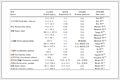
3 Results 3.1 ChronologyMixed specimens of the benthic foraminifera from 14 horizons were selected for accelerator mass spectrometry (AMS)14C dating at the Woods Hole Oceanographic Institution, USA, and Beta Analyses Company, USA (Fig. 2). Raw radiocarbon results were converted to calendar ages following the method of Stuiver et al. (1998) by using the CALIB 5.0.1 program.

|
Fig. 2 Profile photographs of the core YS01. The bars show the ages, which were calculated based on AMS14C dating performed at the Woods Hole Oceanographic Institution, USA (red bars), and the Beta Analytic Radiocarbon Dating Laboratory, USA (blue bars). |
We can get the Marine Reservoir Effect value for core YS01, ΔR = −100 ± 36, according to the average ΔR value for western and eastern South Yellow Sea which provided by CALIB 5.0.1 (Table 1). Based on these 14 calendar ages, we obtained a calendar age of 12760 yr B.P. for the oldest (1292 cm) portion of the core using linear interpolation (Fig. 3).
|
Table 1 AMS14C ages of foraminifera samples in core YS01 |

|
Fig. 3 3 Down-core variation of ages and sedimentation rates in core YS01. The AMS14C ages are shown with the red line, and the depositional rates are shown with the blue line. |
Based on the lithology and grain size characteristics, core YS01 can be divided into two main depositional units (DU1 and DU2) (Fig. 4).

|
Fig. 4 Variation of the grain-size compositions and main parameters for the core YS01. |
1) DU1 (1292 – 1082 cm) can be divided into a lower part and an upper part.
Lower part: DU1a (1292 – 1210 cm) is gray to grayish-brown silty clay. This section also includes lenticular rust-colored clay, bivalve fragments and plant roots in the top part. The median grain size ranges from 10.4 μm to 16.4 μm, and the mean grain size is 13.1 μm. The silt content is high, and the average content of silt is 70.4%, the average content of clay is 23.3%, and the average content of sand is 6.3%. The average sorting coefficient is 1.9, the average skewness is 0.20, and the average kurtosis value is 0.88. The moisture content is 15.6% – 22.0% in this section (Fig. 4).
Upper part: DU1b (1210 – 1082 cm) is grayish-brown to dark gray clay with some fine sand (Fig. 4). The average mean grain size is 10.2 μm. At the top of this part (1123 – 1130 cm), bioturbation is present, and the burrows are filled with bivalve fragments. At the bottom of this section, dense pores approximately 1 – 2 mm in diameter can be seen. This section is in erosional contact with DU2.
2) DU2 (1082 – 0 cm) can also be divided into 2 parts.
Lower part: DU2a (1082 – 800 cm) is dark gray, gray brown or gray clay.
The median grain size is between 5.1 and 7.7 µm, with an average of 6.1 µm. This section has an average content of 34.9% clay, 64.4% silt and 0.7% sand. This indicates that the sorting coefficient is high and that the sediment particles are fine. The average sorting coefficient is 1.7, the average skewness is 0.07, and the average kurtosis is 1.01 (Fig. 4). Sporadic bivalve fragments are present. Dense spots of black-gray organic matters are present at 1075 – 1080 cm. At 820 – 830 cm and 995 – 1025 cm, biological burrows can be observed.
Upper part: DU2b (800 – 0 cm) is characterized by gray to grayish-brown clayey silt. The median grain size ranges from 3.9 μm to 5.7 μm, and the mean grain size is 5.0 μm. The average clay content is 40.1%, the average silt content is 59.8%, and the average sand content is 0.1% (Fig. 4). The sample has horizontal bedding, and bivalves with a diameter of approximately 5 mm are present at 232 cm and 561 cm. These data suggest that the hydrodynamic conditions were weak during the deposition of sediments.
3.3 Benthic Foraminiferal CommunityCore YS01 contains abundant benthic foraminifera. We analyzed 63080 tests from 321 samples with benthic foraminifera and identified a total of 59 benthic foraminafera species (including undefined species) belonging to 35 genera. Additionally, 220 planktonic foraminifera tests were
found in two horizons: the segment at 888 – 890 cm with 215 tests (Globigerina bulloides and Neogloboquadrina pachyderma), and the segment at 908 – 910 cm with 5 tests (Globigerina bulloides). All foraminiferal tests belong to common species that are widely distributed in the Quaternary strata in the Yellow Sea and the East China Sea and represent coastal to shallow shelf sea sedimentary environments (Murray, 1971; Hao et al., 1980; Wang et al., 1980; Wang et al., 1985; Wang et al., 1988; Zheng, 1988).
The abundance of benthic foraminifera in core YS01 was approximately 20 to 30 g−1, with the maximum value of 158 g−1. From 0 – 620 cm, the foraminiferal abundance changed gradually, with an average abundance of 18 g−1. In contrast, from 620 – 1292 cm, the abundance changed dramatically, with a maximum value of 158 g−1 (at 1086 cm) and an average abundance of 22 g−1 (Fig. 5).

|
Fig. 5 Abundance, simple diversity (S) and Shannon index (H(s)) of benthic foraminiferal community in core YS01. |
The simple diversity value (S), similar to abundance, changed dramatically in this core. The highest simple diversity value in the core is 24 species, while the lowest value was 0. The change of the Shannon index was similar to that of the simple diversity value. The majority of the Shannon index values were between 2 and 2.5 (Fig. 5).
Classified by the texture of foraminiferal tests, the foraminiferal assemblages were dominated by hyaline tests, with an average content of 95.2%. Agglutinated tests were the second abundant at 4.3%, and porcelaneous tests were the least abundant, with an average content of only 0.5% in core YS01 (Fig. 6).

|
Fig. 6 Relative contents of hyaline tests, agglutinated tests and porcelaneous tests in core YS01. |
The characteristics of the benthic foraminiferal fauna in core YS01 are remarkable because the dominant species in the samples are near-shore and shallow-water species. There are six kinds of foraminiferal assemblages in the core (Fig. 7). Additionally, the distribution of foraminifera in the eastern Yellow Sea surface sediments are used as references (Wang et al., 1980; Wang et al., 1985; Wang et al., 1988; Lei and Li, 2016), based on the assumption of corresponding regional sedimentary environment. We divided the core into six groups based on the benthic foraminiferal assemblages (Fig. 7).

|
Fig. 7 The basic indexes and main species contents of the benthic foraminifera in core YS01. |
Group Ⅰ (1292 – 1082 cm): the Ammonia beccarii var.Protelphidium tuberculatum assemblage. This assemblage is dominated by A. beccarii var. (average: 39.5%) and P. tuberculatum (average: 32.7%). Other common species include Cribrononion subincertum (8.0%), A. compressiuscula (6.5%), Buccella frigida (5.8%), and Elphidium advenum (4.0%).
Group Ⅱ (1082 – 800 cm): the Ammonia ketienziensis-Bulimina subula assemblage. This assemblage is dominated by A. ketienziensis (average: 22.4%) and B. subula (average: 22.0%). Common species include B. marginata (14.7%), Astrononion tasmanensis (10.4%), and P. tuberculatum (6.6%).
Group Ⅲ (800 – 621 cm): the Ammonia ketienziensis-Bulimina marginata assemblage. This assemblage is dominated by A. ketienziensis (average: 15.8%) and B. marginata (average, 13.0%). Other common species include P. tuberculatum (9.4%), Gaudryina pacifica (7.4%) and Epistominella naraensis (6.9%). Note that the average content of G. pacifica reaches the highest value in this section.
Group Ⅳ (621 – 408 cm): the Astrononion tasmanensis-Ammonia ketienziensis assemblage. This assemblage is dominated by Astro. tasmanensis (average: 23.5%) and A. ketienziensis (average: 17.0%). Other common species include A. pauciloculata and Cassidulina carinata.
Group Ⅴ (408 – 85 cm): the Astrononion tasmanensis assemblage. The high level of Astro. tasmanensis abundance (28.2%) in this assemblage is the defining characteristic. The other obvious feature is the high content of A. ketienziensis, which is significantly higher in this assemblage than in other assemblages, and the average content is 23.2%.
Group Ⅵ (85 – 0 cm): the Ammonia ketienziensis-Buccella frigida assemblage. This assemblage is dominated by A. ketienziensis (average: 25.3%) and B. frigida (average: 12.3%). In addition, E. advenum (15.0%) and P. tuberculatum (8.7%) are also common.
4 DiscussionIn the 1990s, researches on Greenland ice core δ18O data led to the theory of alternating temperatures. Evidences for the alternation of glacial and interglacial periods are common in the global scope (Grootes et al., 1993). Studies in recent decades have found that stalagmites in southern China can be used to construct a high-precision absolute time scale. Therefore, these records have replaced that in ice core as new global paleoclimate indicators (Henderson, 2006; Wang et al., 2009). This paper compared the records of δ18O values in the Dongge Cave stalagmite, δ18O values in the Greenland GISP2 ice core, and foraminiferal data in core YS01 (Fig. 8).

|
Fig. 8 Sedimentary records in core YS01 compared with other climate proxies from the Northern Hemisphere. (a), GISP2 δ18O isotope record (red; Groots et al., 1993; Stuiver et al., 1995); (b), 5-year-resolution stalagmite δ18O isotope record from China Dongge Cave (brown; Wang et al., 2005); (c), reconstructed sea-level rise curves for Western Pacific regional seas since the last deglaciation (dark blue; modified from Li et al., 2014; light green squares obtained by Chough et al., 2004); (d), the water depth curve calculated by transfer function in the South Yellow Sea (light blue; Wang, 2017); (e) – (h), relative abundance of benthic foraminifera in core YS01: A. beccarii var. (orange), B. subula (green), A. ketienziensis (ocean blue) and Astro. tasmanensis (purple). The black line is the five-point running average curve of each proxy; the grey belts and yellow belts denote the four depositional stages in core YS01 since the last deglaciation. |
Environmental factors, including temperature, salinity, water depth and sediment features, regulate the distribution of benthic foraminifera (Murray, 1971; Lei and Li, 2016; Petersen et al., 2016; Wang et al., 2016). According to the foraminiferal species compositions and the AMS14C dating data, the paleoenvironment evolution in the studied area can be divided into the following stages:
1) Near-shore depositional stage (13.1 – 9.5 kyr B.P., 1292 – 1082 cm): The depositional unit corresponding to this period is DU1. The foraminiferal assemblage associated with this stage is assemblage Ⅰ. The sediments are composed of gray silty clay and silty sand. The foraminifera at this stage are dominated by A. beccarii var., P. tuberculatum, a number of C. subincertum and the coldwater species B. frigida (Fig. 8). A. beccarii var. is the most widely distributed near-shore euryhaline species in the world, and it is widely distributed in offshore deposits around China. This species is a typical shallow-water species and is mainly found in water depths of less than 20 m in the South Yellow Sea (Wang et al., 1980, 1988; Wang, 1985). P. tuberculatum is a typical near-shore and shallowwater species that is mainly distributed in waters with depths of less than 30 m in the South Yellow Sea and the Bohai Sea (Wang et al., 1988). The P. tuberculatum is mainly distributed in the Yellow Sea coastal current area of the South Yellow Sea (Wang et al., 1988; Lei and Li, 2016). C. subincertum is widely distributed in the modern shelf sea area and occurred in the Quaternary layers. It is common at depths below 50 m along the inner continental shelf in intertidal zones and estuary areas (Wang et al., 1980).
This stage was associated with coastal and estuarine facies and transitional facies sedimentary environment. The environment during this period, the early Holocene, was characterized by melting and retreating glaciers, which represented the transition from a dry and cold climate to a warm climate (Fig. 8). The benthic foraminiferal assemblage primarily consists of the near-shore and shallow-water species A. beccarii var. and P. tuberculatum along with the estuarine intertidal species C. subincertum, indicating that the study site in this period was featured by a near-shore sedimentary environment. Lenticular rustcolored clay and plant roots appeared in the lower part of the core, and the abundance of foraminifera increased rapidly in the upper part, indicating that the water depth likely increased during this period.
2) Near-shore to shallow-sea transition stage (9.5 – 5.6 kyr B.P., 1082 – 800 cm): The corresponding deposition unit is DU2a. The sediment in this section is gray silty clay. The content of sand is very low, less than one percent. This period is characterized by foraminiferal assemblage Ⅱ. The dominant species in the core are the middle shelf sea species A. ketienziensis, B. subula and B. marginata (Fig. 7). A. ketienziensis is mainly distributed on the northeastern shelf at water depths of 50 – 100 m in the East China Sea and along the shelf areas with depths greater than 50 m in the Yellow Sea (Wang et al., 1980). B. subula is mainly distributed in the sediments at depths of more than 50 m in the South Yellow Sea (Wang et al., 1980). B. marginata is a cosmopolitan species and is widely distributed in the modern Mediterranean Sea, Atlantic Ocean, Pacific Ocean, eastern South China Sea and the Yellow Sea. Astro. tasmanensis is mainly found at depths of 50 m in cold-water environments and large numbers occurred at a water depth of 60 m in the southern area of the Yellow Sea (Wang et al., 1980, 1988).
This period was characterized by rising temperatures with subsequent rapid sea level rise (Wang et al., 2014). In this stage, the tests of the foraminifera from core YS01 are mainly hyaline. The benthic foraminiferal assemblage in this stage is significantly different from that of the previous stage. The assemblages of the coastal and intertidal zones were replaced with middle and outer continental shelf species. The grain size of sediments changed little during this period. The sediments are mainly composed of silty sand and clay, reflecting a stable sedimentary environment. Based on the foraminiferal assemblage, in this stage, the water depth was significantly higher than that in the previous stage. The sedimentary environment shifted from a coastal or near-shore environment to a shallow shelf sea environment (Fig. 8).
We note that planktonic foraminifera were found at the top of this unit. Accordingly, we speculate that the Yellow Sea Warm Current formed at approximately 6.8 kyr B.P. This age is consistent with previous research results (Xiang et al., 2008), which suggest that the Yellow Sea Warm Current formed at approximately 6 – 7 kyr B.P. (Liu et al., 1999; Baker et al., 2000; Li et al., 2007). Compared with that in the previous period, the occurring abundance of G. pacifica in this stage (Fig. 7), which indicates a middle and outer shelf sea environment, is markedly higher, suggesting that the water depth in the area had increased. Previous research results show that the global sea level was rising (Li et al., 2014). On the Pacific coasts of Australia (Baker et al., 2000; Lambeck et al., 2002), the South China Sea (Yu et al., 2009), Japan (Hongo et al., 2010) and the Philippines (Berdin et al., 2004), the sea level at 8 kyr B.P. was higher than the current sea level. Similar results have also been found in Brazil (Angulo et al., 1999; Ybert et al., 2003) and Antarctica (Hall et al., 2004). The foraminiferal assemblage in core YS01 are consistent with the globally high sea level observed in other regions during this period.
3) Shallow-sea depositional stage (5.6 – 2.9 kyr B.P., 800 – 408 cm): The sediment in this section is silty clay. The foraminiferal assemblages include groups Ⅲ and Ⅳ. These dominate assemblages were characterized by benthic foraminifera with hyaline tests such as A. ketienziensis, Astro. tasmanensis and B. marginata (Fig. 7). They are typical species living in the present shallow shelf sea of China (Wang et al., 1980, 1988), indicating a normal marine condition. Furthermore, the test compositions of benthic foraminifera also changed with a considerable increase of agglutinated shells, especially the species G. pacifica with the highest average content in this section (Fig. 7).
In general, agglutinated foraminifera build tests from small sediment particles cemented together, while calcareous species require a specific amount of dissolved CaCO3 to build calcite tests. Therefore, the agglutinated species reach their peak abundance in areas with low CaCO3, i.e., low salinity, turbulent or deep-sea marine environment (Greiner, 1970; Murray, 2006; Wu et al., 2015). However, in this stage, the assemblage of core YS01 is clearly dominated by shallow water species and the seafloor is covered by a mixture of silt and clay, indicating that the marine environment was close to the normal shallow sea, i.e., lower energy sedimentary environment (Fig. 2). Consequently, we suggest that the typical agglutinated foraminifera species (Fig. 7) in the core YS01 during this period were primarily controlled by the sediment type (Li et al., 2010), possibly correlated with fine-grained sediments due to the raised sea level.
Based on previous research results of central mud deposits located in the South Yellow Sea, global sea level reached the highstand state at about 6 – 7 kyr B.P., though the low amplitude fluctuations of sea level occurred (Zong, 2004; Li et al., 2014; Wang et al., 2014a). The sea level in this time maintained a high and relatively stable state (Liu et al., 2004; Fig. 8). As thus, during this period the study area is featured by the combination of relative modern shallow sea foraminiferal species and fine sediments, indicating a typical and stable shallow shelf sea sedimentary environment.
4) Modern depositional stage (2.9 kyr B.P. to present, 408 – 0 cm): This part corresponds to the upper sedimentary unit DU1a. The section contains mainly gray silty clay and a grayish-brown silty clay layer. The foraminiferal assemblages are groups Ⅴ and Ⅵ. The shallow-sea species, Astro. tasmanensis and A. ketienziensis, are most abundant. The content of B. frigida is high, and E. advenum and P. tuberculatum are also common in this segment. This combination reflects a shallow shelf sea environment with cold-water conditions (Wang et al., 1980). Furthermore, these assemblages are consistent with the current benthic foraminiferal assemblage, indicating that the marine environment in the area approached that of the present during this stage (Fig. 8).
5 ConclusionsThe sediments from core YS01 contain abundant benthic foraminifera but rare planktonic foraminifera. The benthic foraminifera are dominated by stenohaline cold shallow-water species and euryhaline brackish-water species. Based on the lithology and the particle size compositions, the core YS01 was divided into two main depositional units, DU1 and DU2. And the foraminiferal communities can be grouped into six assemblages.
Thus it can be seen that the changes of marine environment in this region are basically consistent with the global environment changes since the last deglaciation by comparing the particle size compositions and foraminaferal distribution in core YS01 with other proxies, which shows a good correspondence. In general, the marine environment in this area evolved from near-shore to shallow water environment since the last deglaciation. We identified four stages of marine environmental evolution since the last deglaciation: the near-shore depositional stage (13.1 – 9.5 kyr B.P.); the transitional stage from near-shore deposition to shallow-sea deposition (9.5 – 5.6 kyr B.P.); the high sea level stage with shallow-sea deposition (5.6 – 2.9 kyr B.P.), and from 2.9 kyr B.P. to the present, which is a stable shallow-sea depositional stage.
AcknowledgementsThis work was supported by the China Geological Survey Project (Nos. 121201005000150004 and GZH20110 0202), and by the Taishan Scholar Project.
Angulo, R.J., Giannini, P.C.F., Suguio, K. and Pessenda, L.C.R., 1999. Relative sea-level changes in the last 5500 years in southern Brazil (Laguna-Imbituba region, Santa Catarina State) based on vermetid 14C ages. Marine Geology, 159(1-4): 323-339. DOI:10.1016/S0025-3227(98)00204-7 (  0) 0) |
Baker, R. and Haworth, R., 2000. Smooth or oscillating late Holocene sea-level curve?Evidence from the palaeo-zoology of fixed biological indicators in east Australia and beyond. Marine Geology, 163(1-4): 367-386. DOI:10.1016/S0025-3227(99)00118-8 ( 0) |
Beardsley, R.C., Limeburner, R., Yu, H. and Cannon, G.A., 1985. Discharge of Changjiang (Yangtze River) into the East China Sea. Continental Shelf Research, 4(1-2): 57-76. DOI:10.1016/0278-4343(85)90022-6 ( 0) |
Berdin, R.D., Siringan, F.P. and Maeda, Y., 2004. Holocene sea-level high stand and its implications for the vertical stability of Panglao Island, southwest Bohol, Philippines. Quaternary International, 115: 27-37. ( 0) |
Chough, S.K., Lee, H.J., Chun, S.S. and Shinn, Y.J., 2004. Depositional processes of late Quaternary sediments in the Yellow Sea:A review. Geosciences Journal, 8: 211-264. DOI:10.1007/BF02910197 ( 0) |
Demaster, D.J., Mckee, B.A., Nittrouer, C.A., Qian, J.C. and Cheng, G.D., 1985. Rates of sediment accumulation and particle reworking based on radiochemical measurements from continental-shelf deposits in the East China Sea. Continental Shelf Research, 4: 143-158. DOI:10.1016/0278-4343(85)90026-3 ( 0) |
Greiner, G.O., 1970. Distribution of major benthonic foramina-feral groups on the Gulf of Mexico continental shelf. Micropaleontology, 1970: 83-101. ( 0) |
Grootes, P.M., Stuiver, M., White, J.W.C., Johnsen, S. and Jouzel, J., 1993. Comparison of oxygen isotope records from the GLSP2 and GRIP Greenland ice cores. Nature, 366: 552-554. DOI:10.1038/366552a0 ( 0) |
Hall, B.L., Baroni, C. and Denton, G.H., 2004. Holocene relative sea-level history of the southern Victoria Land Coast, Antarctica. Global and Planetary Change, 42(1-4): 241-263. DOI:10.1016/j.gloplacha.2003.09.004 ( 0) |
Hao, Y.C., Qiu, S.Y., Lin, J.X. and Zeng, X.L., 1980. Fora-minifera. Science Press, Beijing (in Chinese).
( 0) |
Henderson, G.M., 2006. Caving in to new chronologies. Science, 313: 620-622. DOI:10.1126/science.1128980 ( 0) |
Hongo, C. and Kayanne, H., 2010. Holocene sea-level record from corals:Reliability of paleodepth indicators at Ishigaki Island, Ryukyu Islands, Japan. Palaeogeography, Palaeoclimatology, Palaeoecology, 287(1-4): 143-151. DOI:10.1016/j.palaeo.2010.01.033 ( 0) |
Hu, D.X., Ding, Z. and Xiong, Q., 1984. Preliminary study of a summer cyclonic eddy in the northern East China Sea. Studia Marina Sinica, 21: 87-98 (in Chinese with English abstract). ( 0) |
Kim, J.M. and Kennett, J.P., 1998. Paleoenvironmental changes associated with the Holocene marine transgression, Yellow Sea (Hwanghae). Marine Micropaleontology, 34: 71-89. DOI:10.1016/S0377-8398(98)00004-8 ( 0) |
Kim, J.M. and Kucera, M., 2000. Benthic foraminifer record of environmental changes in the Yellow Sea (Hwanghae) during the last 15, 000 years. Quaternary Science Reviews, 19: 1067-1085. DOI:10.1016/S0277-3791(99)00086-4 ( 0) |
Lambeck, K., 2002. Sea-level change from mid-Holocene to re-cent time:An Australian example with global implications. Ice Sheets, Sea Level and the Dynamic Earth, 29: 33-50. ( 0) |
Lei, Y. and Li, T., 2016. Atlas of Benthic Foraminifera from China Seas:The Bohai Sea and the Yellow Sea. Springer-Verlag GmbH, Germany and Science Press, Beijing, 1-399.
( 0) |
Li, B.H., Kong, X.M., Wang, X.Y. and Long, J.P., 2010. Foraminifera in surface sediments of the Tonkin Gulf, northern South China Sea. Acta Micropalaeontologica Sinica, 27(2): 99-108 (in Chinese with English abstract). ( 0) |
Li, G., Li, P., Liu, Y., Qiao, L., Ma, Y., Xu, J. and Yang, Z., 2014. Sedimentary system response to the global sea level change in the East China Seas since the last glacial maximum. Earth-Science Reviews, 139: 390-405. DOI:10.1016/j.earscirev.2014.09.007 ( 0) |
Li, S.Q., Liu, J., Wang, S.J. and Yang, Z.G., 1997. Sedimentary characters in the eastern South Yellow Sea during the postglacial transgression. Marine Geology & Quaternary Geology, 17(4): 1-12 (in Chinese with English abstract). ( 0) |
Li, T.G., Jiang, B., Sun, R.T., Zhang, D.Y., Liu, Z.X. and Li, Q., 2007. Evolution pattern of warm current system of the East China Sea and the Yellow Sea since the last deglaciation. Quaternary Science, 27(6): 945-954 (in Chinese with English abstract). ( 0) |
Li, T.G., Li, S.Q., Cang, S.X., Liu, J. and Jeong, H.C., 2000. Paleo-hydrological reconstruction of the southern Yellow Sea inferred from foraminiferal fauna in core YSDP102. Oceano-logia et Limnologia Sinica, 31(6): 588-595. ( 0) |
Li, X.Y., Zhao, Q.H., Yao, Z.Q., Wang, Q., Jian, Z.M. and Shi, X.F., 2015. Transgressive records of last million years in the Bohai Sea, China:Evidence from foraminifera and ostracoda of core BH08. Marine Geology & Quaternary Geology, 35(6): 93-108 (in Chinese with English abstract). ( 0) |
Liu, J., Li, S.Q., Wang, S.J., Yang, Z.G., Ge, Z.S. and Chang, J.H., 1999. Sea level changes of the Yellow Sea and formation of the Yellow Sea Warm Current since the last deglaciation. Marine Geology & Quaternary Geology, 19(1): 13-24 (in Chinese with English abstract). ( 0) |
Liu, J.P., Millimam, J.D., Gao, S. and Cheng, P., 2004. Holocene development of the Yellow River's subaqueous delta, North Yellow Sea. Marine Geology, 209: 45-67. DOI:10.1016/j.margeo.2004.06.009 ( 0) |
Loeblich, Jr., A., R. and Tappan, H., 1994. Foraminifera of the Sahul Shelf and Timor Sea. Cushman Foundation for Foraminiferal Research Special Publication, 31: 661. ( 0) |
Meng, G.L., Han, Y.S. and Wang, S.Q., 1998. Paleoclimate events and environment evolution of the shelf area in the South Yellow Sea during the past 15 ka. Oceanologia et Limnologia Sinica, 29(3): 297-305 (in Chinese with English abstract). ( 0) |
Murray, J.W., 1971. An Atlas of British Recent Foraminiferids. Heinemann Educational Books, London, 1-244.
( 0) |
Murray, J.W., 2006. Ecology and Applications of Benthic Foraminifera. Cambridge University Press, Cambridge, 1-426.
( 0) |
Petersen, J., Riedel, B., Barras, C., Pays, O., Guihéneuf,, A, ., Mabilleau, G., Schweizer, M., Meysman, F.J.R. and Jorissen, F.J., 2016. Improved methodology for measuring pore patterns in the benthic foraminiferal genus Ammonia. Marine Micropaleontology, 128: 1-13. DOI:10.1016/j.marmicro.2016.08.001 ( 0) |
Shen, S., Chen, L., Gao, L. and Li, A., 1993. Discovery of Ho-locene cyclonic eddy sediment and pathway sediment in the southern Yellow Sea. Oceanologia et Limnologia Sinica, 24(6): 463-570 (in Chinese with English abstract). ( 0) |
Stuiver, M., Grootes, P.M. and Braziunas, T.F., 1995. The GISP2 δ18O climate record of the past 16, 500 years and the role of the sun, ocean, and volcanoes. Quaternary Research, 44(3): 341-354. DOI:10.1006/qres.1995.1079 ( 0) |
Stuiver, M., Reimer, P.J., Bard, E., Beck, J.W., Burr, G.S., Hu-ghen, K.A., Kromer, B., Mc Cormac, G., Plicht, J.V.D. and Spurk, M., 1998. INTCAL98 Radiocarbon age calibration 24, 000-0 cal BP. Radiocarbon, 40: 1041-1083. DOI:10.1017/S0033822200019123 ( 0) |
Su, J.L., 1998. Circulation dynamics of the China seas north of 18˚N coastal segment. In:The Sea.Robinson A.R., and Brink K.H., eds., John Wiley & Sons Inc, New York, 483-505.
( 0) |
Sun, R.T., Chang, F.M., Nan, Q.Y., Liu, X. and Jiang, H.Y., 2014. Benthic foraminiferal distributions and quantitative trans-fer functions for the southern Yellow Sea inner shelf. Acta Micropalaeontologica Sinica, 31(2): 118-129 (in Chinese with English abstract). ( 0) |
Wang, F.F., Gao, M.S., Liu, J., Pei, S.F., Li, C.F., Mei, X. and Yang, S.X., 2016. Distribution and environmental significance of live and dead benthic foraminiferal assemblages in surface sediments of Laizhou Bay, Bohai Sea. Marine Micropaleontology, 123: 1-14. DOI:10.1016/j.marmicro.2015.12.006 ( 0) |
Wang, F.F., Liu, J., Qiu, J.D., Liu, X.G. and Mei, X., 2014a. Thickness variation and provenance of mid-Holocene mud sediments in the central and western South Yellow Sea. Marine Geology & Quaternary Geology, 34(5): 1-11 (in Chinese with English abstract). ( 0) |
Wang, F.F., Zhang, Y., Qiu, J.D., Liu, J. and Liu, X.G., 2014b. Late Quaternary distribution characters of foraminifera and ostracoda in the offshore area of southern Shandong Peninsula and paleoenvironmental evolution. Acta Micropalaeontologica Sinica, 31(2): 130-146 (in Chinese with English abstract). ( 0) |
Wang, H.Y., 2017.Characteristics and environmental significance of benthic foraminiferal assemblages in the South Yellow Sea mud area since MIS 3.PhD thesis.Ocean University of China.
( 0) |
Wang, L.B., Yang, Z.S., Zhao, X.H., Xing, L., Zhao, M.X., Saito, Y. and Fan, D.J., 2009. Sedimentary characteristics of core YE-2 from the central mud area in the South Yellow Sea during last 8400 years and its interspace coarse layers. Marine Geology & Quaternary Geology, 29(5): 1-11 (in Chinese with English abstract). ( 0) |
Wang, P.X., 1985. Marine Micropaleontology of China. China Ocean Press, Beijing, 1-370.
( 0) |
Wang, P.X., Min, Q.B. and Bian, Y.H., 1980. Distribution of foraminifera and ostracoda in bottom sediments of the northwestern part of the southern Yellow Sea and its geological significance. In: Papers on Marine Micropaleontology.Wang P.X., et al., eds., China Ocean Press, Beijing, 61-83 (in Chinese with English abstract).
( 0) |
Wang, P.X., Zhang, J., Zhao, Q., Min, Q., Bian, Y., Zheng, L., Cheng, X. and Chen, R., 1988. Foraminifera and Ostracoda in Bottom Sediments of the East China Sea. China Ocean Press, Beijing, 1-438.
( 0) |
Wang, Y., Cheng, H., Edwards, R., He, Y., Kong, X., An, Z., Wu, J., Kelly, M., Dykoski, C. and Li, X., 2005. The Holocene Asian Monsoon:Links to solar changes and North Atlantic climate. Science, 308(5723): 854-857. DOI:10.1126/science.1106296 ( 0) |
Wang, Y.H., Li, G.X., Zhang, W.G. and Dong, P., 2014. Sedimentary environment and formation mechanism of the mud deposit in the central South Yellow Sea during the past 40 kyr. Marine Geology, 347: 123-135. DOI:10.1016/j.margeo.2013.11.008 ( 0) |
Wu, J., Liu, C., Fürsich,, F., T., Yang, T. and Yin, J., 2015. Foraminifera as environmental indicators and quantitative sali-nity reconstructions in the Pearl River Estuary, southern China. The Journal of Foraminiferal Research, 45(3): 205-219. DOI:10.2113/gsjfr.45.3.205 ( 0) |
Xiang, R., Yang, Z.S., Saito, Y., Fan, D.J., Chen, M.H., Guo, Z.G. and Chen, Z., 2008. Paleoenvironmental changes during the last 8400 years in the southern Yellow Sea:Benthic foraminiferal and stable isotopic evidence. Marine Micropaleontology, 67(1-2): 104-119. DOI:10.1016/j.marmicro.2007.11.002 ( 0) |
Ybert, J.P., Bissa, W.M. and Catharino, E.L.M., 2003. Environmental and sea-level variations on the southeastern Brazilian coast during the late Holocene with comments on pre-historic human occupation. Palaeogeography, Paleoclimatology, Palaeoecology, 189(1-2): 11-24. DOI:10.1016/S0031-0182(02)00590-4 ( 0) |
Yu, K.F., Zhao, J.X., Done, T. and Chen, T.G., 2009. Microatoll record for large century-scale sea-level fluctuations in the mid-Holocene. Quaternary Research, 71(3): 354-360. DOI:10.1016/j.yqres.2009.02.003 ( 0) |
Zheng, S.Y., 1988. The Agglutinated and Porcelaneous Forami-nifera of the East China Sea. Science Press, Beijing, 1-337.
( 0) |
Zheng, G.Y., 1988. Quaternary stratigraphic division of the hole QC2 in the southern Huanghai Sea. Marine Geology & Quaternary Geology, 8(4): 1-9 (in Chinese with English abstract). ( 0) |
Zheng, Z.Z., Zheng, S.Y. and Fu, Z.X., 1979. Preliminary fau-nal analysis of the benthic foraminifera of the East China Sea. Chinese Science Bulletin, 19: 903-906. ( 0) |
Zhuang, L.H., Chang, F.M., Li, T.G. and Yan, J., 2002. Foraminiferal faunas and Holocene sedimentation rates of core EY02-2 in the South Yellow Sea. Marine Geology & Quaternary Geology, 22(4): 7-14 (in Chinese with English abstract). ( 0) |
Zong, Y.Q., 2004. Mid-Holocene sea-level highstand along the southeast Coast of China. Quaternary International, 117: 55-67. DOI:10.1016/S1040-6182(03)00116-2 ( 0) |