 2022, Vol. 21


2) Collaborative Innovation Center for Zhejiang Marine High-Efficiency and Healthy Aquaculture, Ningbo University, Ningbo 315211, China;
3) The Affiliated Hospital of Medical School of Ningbo University, Ningbo 315020, China
Food allergy is an abnormal response of the mucosal immune system to food protein delivered through the oral route (Sampson, 2004). The main symptoms of food allergy are diarrhea, emesis, allergic rhinitis, eczema, asthma, etc., and the serious reactions are also accompanied by collapse and shock and can even be life-threatening (Burks et al., 2012). Crustacean was designated as one of the eight major allergic foods by FAO/WHO (FAO/WHO, 2001). In recent years, the food allergy caused by crustaceans has increased. In the United States, Mexico, and Canada, food allergy from crustaceans affected 0.3% – 4.2% of the general population (Moshe et al., 2010; Martín et al., 2015; Warren et al., 2019). In China, Vietnam, and Singapore, 3.0% – 7.5% of people suffered with food allergies from crustaceans (Zeng et al., 2015; Goh et al., 2018; Thu et al., 2020).
Tropomyosin (TM) was reported as a major allergen in various crustacean species, such as Penaeus vannamei Boone (Bai et al., 2016), Eriocheir sinensis (Liu et al., 2010) and Scylla Serrata (Nurul Izzah et al., 2015). Allergen of the second protein family, arginine kinase (AK), was described in Litopenaeus vannamei (Sun et al., 2015) and Scylla paramamosain (Yang et al., 2015). Sarcoplasmic calcium-binding proteins (SCPs) from Procambarus clarkia (Suzanne et al., 2015) and S. paramamosain (Mao et al., 2013) were described as novel shrimp allergens. Myosin light chain (MLC) was a new allergen that had been described in L. vannamei (Ayuso et al., 2008), P. clarkii (Zhang et al., 2015), and Crangon crangon (Kerstin et al., 2011), but it was not described in crab. Other allergens, such as hemocyanin (HMC) (Piboonpocanun et al., 2011) and troponin C (Tn C) (Wai et al., 2019) have also been characterized. Recently, it was found that pancreatic lipase (PL) from the P. trituberculatus cDNA library constructed by our laboratory had a lipase structure domain that was similar to phospholipase A1 (AAB48072.1), which was reported to be similar to bee venom allergen (King et al., 1996) (Fig.1). Therefore, PL was supposed to be a potential crab allergen.

|
Fig. 1 Product structural domain of pancreatic lipase from Portunus trituberculatus and phospholipase A1 from Vespula vulgaris. A, amino acids sequence of pancreatic lipase; B, amino acids sequence of phospholipase A1; C, product structural domain of pancreatic lipase; D, product structural domain of phospholipase A1. |
As an important economic species in China's marine aquaculture, Portunus trituberculatus is widely consumed as a delicious crustacean. However, it is recognized as one of the potential causes of food allergy. Knowing about the expression levels of allergen protein in different tissues of P. trituberculatus can provide an eating risk reference for people who are allergic to crabs.
Component-resolved diagnosis (CRD) provides a major step in improving the accuracy of diagnosing IgE-mediated food allergy, and it has allowed identifying single molecular allergen components responsible for sensitization (Guillermo et al., 2019). Instead of relying on the crude allergen extracts used in standard allergy diagnostics, the use of purified natural and recombinant allergens for CRD can not only reveal co-sensitization and/or cross-sensitization, but also allow us to detect sensitization to allergens that are not present in sufficient quantities in natural extracts (Borres et al., 2016). It was reported that recombinant allergens may improve the diagnostic efficiency of specific IgE (sIgE) in shrimp (Yang et al., 2010) and house dust mites (Pittner et al., 2004). Furthermore, recombinant allergens can be controlled in quality, purity, and yield artificially compared to the purified natural allergens (Curin et al., 2017).
Recently, CRD was generally used in enzyme-linked immunosorbent assay (ELISA) and Western blot (WB). Compared with WB, ELISA is a more sensitive, simple, and rapid test method that has considerable application in clinical diagnostics (Yeung, 2006). The critical diagnose value of positive or negative by ELISA is called the cut-off value. To determine the cut-off value, the methods including standard deviation ratio, test to negative ratio, receiver operating characteristic (ROC), mean of negative control + 2 or 3 SD, etc., were used, wherein the ROC curve is the best method to set the cut-off value (Parkinson et al., 1988). The ROC curve shows the correlation between sensitivity and specificity of a certain method. The closer the curve to the upper left, the larger the area under the ROC curve (AUC), indicating that this method has higher sensitivity, specificity, and diagnostic value. Moreover, the cut-off value is determined by the Youden index (Aycan et al., 2010) or the positive likelihood ratio (Woldetensay et al., 2018). At present, CRD had less research on the kit of crab food anaphylaxis, and the ROC curve analysis was always used on the sIgE values to diagnose shrimp allergy (Tuano et al., 2017).
In this study, the sIgE reactivity of recombinant TM, MLC, and PL proteins from P. trituberculatus were detected by ELISA. The expressions of TM protein in the gonads, muscle, heart, gill, and hepatopancreas were analyzed by WB. Next, the ELISA reagent for detecting crab food anaphylaxis was studied by using recombinant TM protein as antigen.
2 Materials and Methods 2.1 Human SeraSera were obtained from crab-allergic patients from the Affiliated Hospital of Medical School of Ningbo University and Hangzhou Zheda Dixun Biological Gene Engineering Company. The experiments were carried out in accordance with the ethical standards formulated in the Helsinki Declaration. The inclusion criteria of this study were as follows: 1) all patients had a history of crab allergy; 2) the allergic response was confirmed by the positive crabspecific IgE (sIgE > 0.35 IU mL−1). Sera from non-allergic healthy people with neither history of crab allergy nor sIgEnegative was used as a negative control. The study population comprised 121 crab-allergic individuals (68 male and 53 female patients; age: 6 months–66 years) and 50 nonallergic healthy individuals (10 male and 20 female people; age: 4 months – 63 years; the other 20 cases had missing information). All sera were stored at −20℃ until use.
2.2 Tissue Preparation and cDNA SynthesisAdult pond-reared crabs and wild-caught crabs were purchased from an aquaculture company and market, respectively. The experiments were approved by the appropriate committee of the local animal institute. The individual live crab was dissected on ice. The abdominal muscle was immersed in liquid nitrogen immediately and then kept at −80℃ for RNA extraction, and six tissues (ovary, testis, heart, muscle, gill, and hepatopancreas) were kept at −80℃ for protein extraction.
Total RNA from the muscle was extracted by RNAiso Plus (Takara, Japan). The cDNA was synthesized from RNA with M-MLV reverse transcriptase (Promega, USA) and RNase Inhibitor (Thermo, USA) and stored at −80℃. The RNA loading amounts were adjusted according to the measured concentration.
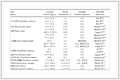
2.3 Expression and Purification of rPtTM, rPtMLC, and rPtPLThe expression and purification of the pET-21a(+)-PtX recombinant proteins (designated as rPtX, X indicates different potential allergen including TM, MLC, and PL) were performed as described previously (Lu et al., 2017). Primers used for recombinant proteins were shown in Table 1.
|
Table 1 Sequences and purposes of primers used in this study |
Serum IgE reactivity of rPtX was detected by an allergen-specific IgE test kit (Zheda Dixun, Hangzhou) with modification. The purified recombinant protein was used as the plate-coating antigen. The patient sera and standard solution (human IgE with the concentrations of 0.35, 0.70, 3.50, 17.50, 50.00, and 100.00 IU mL−1) were added to the corresponding well and incubated at 37℃ for 45 min. All plates were subsequently washed five times with wash buffer and horseradish peroxidase (HRP)-conjugated goat antihuman IgE was added and incubated at 37℃ for 45 min. After washing five times, 3, 3', 5, 5'-tetramethylbenzidine (TMB) was used as a substrate and incubated for 15 – 20 min at 37℃. Then the reaction was immediately terminated by the addition of stop solution (0.5 mol L−1 HCl). The absorbance was then measured at 450 nm (A450) using a microplate reader. For the calibration curve, the logarithm of the concentration of the IgE calibrator solution was taken as the abscissa, and the A450 value was the ordinate.
2.5 The Expression of PtTM in Different TissuesThe anti-TM polyclonal antibody was provided by Hua-Bio. The purified rPtTM was injected into a New Zealand rabbit to generate a polyclonal antibody. The specificity of the polyclonal antibody was examined by WB. Six tissues were chosen in the WB assay: testis, ovary, hepatopancreas, heart, gill, and muscle. This procedure was performed as described previously (Xu et al., 2017). The protein signals were detected by using Developer and Fixer Kit (Beyotime) and ChemiScope 3300 (Shanghai, China). The statistical gray level of each band was calculated using Image J software.
2.6 Optimization of the ELISA Reagent for Crab Food AnaphylaxisTo develop a qualitative detection reagent for food allergy ELISA, the reaction conditions, including the coating concentration and the conditions of antigen and the blocking, and the dilution of the secondary antibody, were optimized. The highest A450 for the positive serum or A450 ratio for the positive and negative controls (P/N value) was regarded as the optimal pair.
2.6.1 Optimization of the rPtTM coating concentrationThe rPtTM was diluted to a concentration of 16 μg mL−1 and used as the antigen. The first column of microtiter plates was coated with 50 μL rPtTM and doubling diluted from the second column to the last one. Microplates were coated for 3 h at 37℃ and overnight at 4℃ with different concentrations of rPtTM. After blocked with 1% bovine serum albumin (BAS) for 3 h at 37℃ and overnight at 4℃, the plates were washed three times by PBS (Double Helix Biotechnology, Shanghai, China), and the 1 – 11 columns of plates were incubated for 30 min at 37℃ with an allergic serum which was collected from 113 crab-allergic people, while the same amount was taken from each patient and they were mixed thoroughly. The 12th column without serum was employed as the negative control. After washing, HRP-conjugated goat anti-human IgE (KPL, USA) (1:1500 dilution) was added and incubated for 30 min at 37℃. TMB (Solarbio, Beijing, China) was used as a substrate and incubated for 15 min at 37℃, and the reaction was immediately terminated by the addition of HCl (1 mol L−1). Between each incubation, the plates were washed with ELISA Wash Buffer (BBI, Canada). All experiments were conducted in duplicate. The plates were detected at 450 nm using a microplate detector.
2.6.2 Optimization of the rPtTM coating time and temperatureBased on the result of 2.6.1, the microplates were coated with rPtTM at the optimal concentration and incubated under three conditions. The first group was incubated for 3 h at 37℃ and overnight at 4℃; the second group was incubated for 3 h at 37℃; the third group was incubated overnight at 4℃. After blocking and washing, the microplates were incubated with allergic serum, or healthy people's serum which was collected from 50 healthy people and mixed thoroughly, while the same amount was taken from each sample. All experiments were conducted in triplicate and were performed as described in 2.6.1.
2.6.3 Optimization of the blocking conditionsBased on the results of 2.6.1 and 2.6.2, the microplates were coated with rPtTM at the optimal conditions. After washing, the microplates were blocked with 1%, 1.2%, 1.5% BSA (Solarbio) and 2%, 4%, 6% skimmed milk powder (Nestle, Switzerland). According to the blocking conditions, the experiments were divided into three groups as described in 2.6.2. After blocking and washing, the microplates were incubated with allergic serum and healthy people's serum. All experiments were conducted in triplicate and were performed as described in 2.6.1.
2.6.4 Optimization of the dilution of HRP-conjugated goat anti-human IgEBased on the results of 2.6.1, 2.6.2, and 2.6.3, the microplates were coated, blocked, and incubated with optimal conditions. After washing, the microplates were incubated for 30 min at 37℃ with allergic serum and healthy people's serum. Then, the plates were washed five times and incubated for 30 min at 37℃ with HRP-conjugated goat anti-human IgE (diluted at 1:1500, 0.67 μg mL−1; 1:2000, 0.5 μg mL−1; 1:2500, 0.4 μg mL−1). All experiments were conducted in triplicate and were performed as described in 2.6.1.
2.6.5 Determination of cut-off valueBased on all the optimal conditions above, the sera of 113 patients with crab allergy and 50 healthy people were detected. The data were processed with SPASS 17.0 statistical software. 1 or 0 were entered in the first column, which 1 represented the sera from patients with crab allergy and 0 represented the sera from healthy people. The detected A450 values were entered in the second column. The ROC curve was made by using the first column as state variable and the second column as test variable. With different thresholds in the ROC curve, the sensitivity, specificity, positive likelihood ratio (sensitivity/1-specificity), and Jorden index (sensitivity + specificity-1) corresponding to each cut-off were calculated. The threshold with the highest values of positive likelihood ratio and Jorden index was regarded as the optimal cut-off value.
3 Results 3.1 Recombinant Expression of PtTM, PtMLC, and PtPLThe recombinant plasmid pET-21a(+)-PtTM, pET-21a(+)-PtMLC and pET-21a(+)-PtPL were transformed into E. coli Origami (DE3) and expressed as described above. Following the IPTG induction, major bands of the expected protein were observed (Fig.2). The molecular weights of purified rPtTM, rPtMLC, and rPtPL were 28.27 kDa, 17.61 kDa, and 35.84 kDa, respectively (Fig.2).

|
Fig. 2 SDS-PAGE analysis of the fusion protein rPtTM, rPtMLC, and rPtPL. Staining with Coomassie brilliant blue R-250. A, SDS-PAGE of rPtTM; B, SDS-PAGE of rPtMLC; C, SDS-PAGE of rPtPL. M, rainbow protein marker; 1, protein from uninduced fusion protein; 2, protein from fusion protein induced with IPTG; 3, purified fusion protein. |
The capability of recombinant protein to react with serum sIgE was determined by the relationship between sIgE concentration and grading standard (Table 2) and international grading standard curve (Fig.3). The international grading standard showed that when the sIgE concentration was 0.35 IU mL−1, A450 attained 0.2; thus, 0.2 was regarded as the critical value to definite the ability of the recombinant protein to react with serum sIgE. The reactivity against rPtTM, rPtMLC, and rPtPL by the serum IgE of crab-allergic patients was determined by ELISA. As shown in Fig.4, among the 51 crab-allergic sera, 21 (41.2%) had positive IgE to rPtTM; among the other 70 crab-allergic sera, 1.4% (1/70) and 12.9% (9/70) were IgE-positive to rPtMLC and rPtPL, respectively.
|
|
Table 2 Relationship between specific IgE concentration and international grading standard |

|
Fig. 3 Standard curve of sIgE concentration. |

|
Fig. 4 ELISA result of rPtTM, rPtMLC, rPtPL, and sera from patients with crab allergy. |
WB results showed that the expression of TM was similar in pond-reared crab and wild-caught crab, which was mainly expressed in the muscle, followed by the heart and a small amount in the gill (Fig.5A). The TM expression was detected in the testis of pond-reared crab, but was not detected in that of wild-caught crab. The β-actin and TM protein were not detected in the hepatopancreas. Moreover, the expression level of TM in the heart of pond-reared crab was significantly higher than that of wild-caught crab (P < 0.05) (Fig.5B).

|
Fig. 5 Expression of TM in different tissues of P. trituberculatus. A, Western blot results of TM in different tissues; B, relative expression of TM in different tissues. O, ovary; T, testis; H, heart; M, muscle; G, gill; He, hepatopancreas; * P < 0.05. |
The ELISA results of coating with different concentrations of rPtTM (Fig.6) showed that A450 gradually reduced when the coating mass of rPtTM decreased, indicating that the specific bond between the antigen (TM) and the corresponding antibody reduced. However, with the increasing of rPtTM coverage, the A450 did not rise any more, which was because the binding of antigens to antibodies had reached its limit. As the coating mass of rPtTM decreased from 50 to 25 ng per well, the A450 value significantly decreased. Therefore, 50 ng per well was selected as the optimal coating concentration for TM allergen. The P/N values of different coating times and temperatures were shown in Fig.7, and the highest value was obtained. Therefore, 3 h at 37℃ was selected as the optimal coating conditions for TM allergen.

|
Fig. 6 ELISA results (A450) of the rPtTM with different concentrations. |

|
Fig. 7 Ratio of ELISA results (A450) of pooled allergic sera to healthy sera reacted with the rPtTM in different coating conditions. 1, coated for 3 h at 37℃ then at 4℃ overnight; 2, coated for 3 h at 37℃; 3, coated at 4℃ overnight. |
The P/N values of different blocking conditions (Fig.8) showed that the blocking effect of BSA was better than that of skimmed milk powder, and the optimal blocking conditions was incubating with 1.2% BSA for 37℃ at 3 h. The ELISA results of HRP-conjugated goat anti-human IgE with different dilutions (Table 3) showed that the A450 values decreased with the increase of the secondary antibody dilution. Therefore, the 1:1500 dilution was selected as the optimal concentration of secondary antibody.

|
Fig. 8 Ratio of ELISA results (A450) of pooled allergic sera to healthy sera reacted with the rPtTM in different blocking conditions. 1, coated for 3 h at 37℃ then at 4℃ overnight; 2, coated for 3 h at 37℃; 3, coated at 4℃ overnight. |
|
|
Table 3 ELISA results of HRP labeled goat anti-human IgE antibody with different dilutions (A450, mean ± SD) |
The ROC curve was obtained (Fig.9), and the sensitivity and specificity were calculated for different thresholds (Table 4). Compared to other thresholds, the threshold of 0.45 yielded the highest positive likelihood ratio and Jordan index. Therefore, the cut-off value of ELISA was used to detect crab anaphylaxis. When the cut-off value was 0.45, the AUC was 0.979, which was the highest value. The sensitivity, specificity, positive likelihood ratio, and Jordan index were 83.52%, 98.00%, 41.76, and 0.82, respectively. Moreover, the diagnostic efficiency of this method was 85.0% compared to the sensitization result (41.2%).

|
Fig. 9 ROC curve of rPtTM in the detection of crab anaphylaxis. |
|
|
Table 4 Efficiency of diagnosing crab anaphylaxis at different thresholds |
In recent years, recombinant proteins have been widely used for the detection of sensitization of allergens. The sIgE reactivity of recombinant TM from P. trituberculatus was similar to that from P. clarkia (Yi et al., 2011), Melicertus latisulcatus (Koeberl et al., 2014) and S. serrata (Liang et al., 2009), indicating that TM is one of the major crab allergens, and it might be reliable to detect the sensitization by ELISA which used recombinant protein as coating antigen. The weak sIgE reactivity of rPtMLC was similar to that of L. vannamei (Ayuso et al., 2008) and P. clarkia (Zhang et al., 2015), which indicated that MLC might also be a crab allergen. The immune response of rPtPL was obvious, but few reports could be referred to discuss the allergenic nature of PL. So, it was considered as a potential allergen temporarily.
TM is present in various muscle (skeletal, smooth, and cardiac) and non-muscle cells (Scellini et al., 2015). In the muscle, TM plays central role in the regulation of muscle contraction (Borovikov et al., 2011). In non-muscle cells, it plays vital role in maintaining the integrity of the cytoskeleton (Khaitlina, 2015). In this study, the expression of TM protein in different tissues of P. trituberculatus was similar to that of Thalamita prymna (Miyazaki et al., 1992) and Marsupenaeus japonicas (Han et al., 2012). As an important protein component, TM was mainly expressed in the muscle and heart, which had performed a long-time muscle contraction, and was also present in the gills. It was found that neither the reference protein nor target protein were detected in the hepatopancreas through repeated experiments. The antibody and experiment operations would not be the main influencing factors according to the results in other tissues, and the high fatty acids in the hepatopancreas of P. trituberculatus would affect the quality of protein extraction. There were three layers, including upper (fat), middle (protein), and lower (cell debris) layers, after lysis and centrifugation in the process of protein extraction. The fat can be removed by using a 0.22-μm or 0.45-μm centrifugal filter tube, or using filter paper or glass wool.
The muscle was the main edible part of the crab. That no significant difference in the expression of TM between the muscles of pond-reared crabs and wild-caught crabs indicated that the intake of wild-caught crabs did not increase the risk of allergy. The different expressions of TM in the hearts of pond-reared crabs and wild-caught crabs indicated that the hearts of pond-reared crabs had a higher demand for TM than wild-caught crabs. It was reported that the TM mRNA level was different in the ovarian development of P. clarkia (Shui et al., 2016). In Macrobrachium nipponense, the expression level of TM gene was the highest in androgenic glands and higher in testes than in ovaries (Jin et al., 2014). It indicated that TM might be involved in the development of crustacean gonadal glands, though more investigations are needed to explore the role of TM in gonad development of the pond-reared crabs and wild-caught crabs.
PtTM (ABS12234.1) shared high similarity with that from E. sinensis (A4URH3.1, 99.30% identity), S. tranquebarica (QHW05412.1, 98.94% identity), Erimacrus isenbeckii (BAF47268.1, 98.94% identity), and Scylla olivacea (QHW-05411.1, 98.24% identity). Therefore, TM was used as an antigen of ELISA for analyzing crab food anaphylaxis. However, there is strong homology of tropomyosin among the crustaceans, and it also shares sequence homology with house dust mites and cockroaches as they are all arthropods (Villalta et al., 2010; Abramovitch et al., 2013). Future investigations are needed to consider cross-reactivity.
During the optimization of blocking conditions, the BSA was found to have a better blocking effect than skimmed milk powder, which was similar to the research of ELISA reagent for Metapenaeu ensis anaphylaxis (Chen et al., 2010). However, the reaction conditions in different reports were always different. For example, in a competitive ELISA, which was carried out to screen the hybridoma cell lines for the anti-glycinin activity of soybean, gelatin was used as a blocking reagent instead of BSA or skim milk powder (Xi et al., 2010). The incubating time and temperature of coating in the ELISA reagent for E. sinensis anaphylaxis (Chen et al., 2012) was 37℃ for 3 h and then 4℃ overnight instead of 37℃ for 3 h. The incubating time of blocking was also different between the ELISA in this study and a sandwich ELISA for the detection of shrimp tropomyosin (Zeng et al., 2019). Therefore, it is still necessary to optimize the reaction conditions in order to obtain a better detection effect when developing an ELISA reagent for food allergy analysis.
The ROC curve was used to determine the optimal cutoff value of the ELISA reagent for analyzing crab food anaphylaxis, and the cut-off value of 0.45 was inconsistent with the 0.159 of E. sinensis anaphylaxis (Huang et al., 2010). It was reported that the cut-off values of hepatitis C antibody determined by two kinds of ELISA analysis systems were different (Tang et al., 2014), and the cut-off values were also different in two commercial ELISA kits which were used for serodiagnosis of pertussis (Waldemar et al., 2011). The reasons for this result may be as follows: firstly, the recombinant protein instead of crude protein extract was used as the coating antigen in this study. Secondly, the cut-off value was calculated by the ROC curve instead of using the mean of negative control + 2 or 3 SD. Additionally, experimental reagents and conditions were different. However, the limit of quantitation corresponding to the cut-off values could not be obtained due to the lack of human IgE standards substance (Werner et al., 2007).
5 ConclusionsIn summary, the ELISA results revealed that MLC and PL are potential allergens of P. trituberculatus, but more studies are needed to verify the allergic characteristic of MLC and PL. The ELISA reagent developed with rPtTM had fine sensitivity and specificity, and may be applicable for laboratory detection of crab anaphylaxis. But the detection limit and the cross-reactivity between crab, shrimp, and dust mite are worthy of further studies. It is the first time to reveal the expression of TM protein in different tissues of P. trituberculatus in this study. The result of target protein detection might be affected by the undetected internal reference protein in the hepatopancreas, which provides some clues for further investigations.
AcknowledgementsThe authors would like to thank all the members of the Crustacean Study Laboratory for their technical advice and helpful discussions. This research was supported by Zhejiang Provincial Natural Science Foundation of China (No. LY18H110003), and the General Scientific Research Project of Zhejiang Education Department (No. Y201940887).
Abramovitch, J. B., Kamath, S., Varese, N., Zubrinich, C., Lopata, A. L., O'Hehir, R. E., et al.. 2013. IgE reactivity of blue swimmer crab (Portunus pelagicus) tropomyosin, Por p 1, and other allergens; cross-reactivity with black tiger prawn and effects of heating. PLoS One, 8(6): e67487. DOI:10.1371/journal.pone.0067487 (  0) 0) |
Aycan, K., Macmillan, N. A., and Rotello, C. M.. 2010. Positive and negative remember judgments and ROCs in the plurals paradigm: Evidence for alternative decision strategies. Memory and Cognition, 38(5): 541-554. DOI:10.3758/MC.38.5.541 ( 0) |
Ayuso, R., Grishina, G., Bardina, L., Carrillo, T., Blanco, C., Ibáñez, M. D., et al.. 2008. Myosin light chain is a novel shrimp allergen, Lit v 3. Journal of Allergy and Clinical Immunology, 122(4): 795-802. DOI:10.1016/j.jaci.2008.07.023 ( 0) |
Bai, G. L., Huang, L. Y., Du, B. J., Wang, Q. Q., and Ning, Y.. 2016. Isolation and characterisation of tropomyosin from shrimp (Penaeus vannamei Boone) and its association property at high ionic strength. Natural Product Research, 30(1): 115-119. DOI:10.1080/14786419.2015.1033622 ( 0) |
Borovikov, Y. S., Avrova, S. V., Karpicheva, O. E., Robinson, P., and Redwood, C. S.. 2011. The effect of the dilated cardiomyopathy-causing Glu40Lys TPM1 mutation on actin-myosin interactions during the ATPase cycle. Biochemical and Biophysical Research Communications, 411(3): 496-500. DOI:10.1016/j.bbrc.2011.06.138 ( 0) |
Borres, M. P., Nobuyuki, M., Sakura, S., and Motohiro, E.. 2016. Recent advances in component resolved diagnosis in food allergy. Allergology International, 65(4): 378-387. DOI:10.1016/j.alit.2016.07.002 ( 0) |
Burks, A. W., Tang, M., Sicherer, S., Muraro, A., Eigenmann, P. A., Ebisawa, M., et al.. 2012. ICON: Food allergy. Journal of Allergy and Clinical Immunology, 129(4): 906-920. DOI:10.1016/j.jaci.2012.02.001 ( 0) |
Chen, W., Huang, H. B., Liu, Q. Y., Wu, M. C., and Wu, J.. 2012. Research of ELISA reagent for crab food anaphylaxis. Chinese Journal of Marine Drugs, 31(6): 42-44 (in Chinese with English abstract). ( 0) |
Chen, W., Liu, P. J., Liu, Q. Y., You, C. X., Wu, M. C., Wu, J., et al.. 2010. Research of ELISA reagent of specific IgE for Metapenaeu ensis anaphylaxis. Chinese Journal of Marine Drugs, 29(4): 22-27 (in Chinese with English abstract). ( 0) |
Curin, M., Garib, V., and Valenta, R.. 2017. Single recombinant and purified major allergens and peptides. Annals of Allergy Asthma and Immunology Official Publication of the American College of Allergy Asthma and Immunology, 119(3): 201-209. ( 0) |
FAO/WHO. 2001. Evaluation of allergenicity of genetically modified foods. Report of a Joint FAO/WHO Expert Consultation of Allergenicity of Foods Derived from Biotechnology. New York: 22-25. ( 0) |
Goh, S. H., Soh, J. Y., Loh, W., Lee, K. P., Tan, S. C., Heng, W. J. K., et al.. 2018. Cause and clinical presentation of anaphylaxis in Singapore: From infancy to old age. International Archives of Allergy and Immunology, 175(1-2): 91-98. DOI:10.1159/000485127 ( 0) |
Guillermo, T. P., Claudio, C., Pedro, L. S. E., Diego, A. T., and Manuel, D. T. B.. 2019. Sensitization profile in patients with respiratory allergic diseases: Differences between conventional and molecular diagnosis (a cross-sectional study). Clinical and Molecular Allergy, 17(1): 8. DOI:10.1186/s12948-019-0112-4 ( 0) |
Han, F., Wang, Z. Y., and Wang, X. Q.. 2012. Prokaryotic expression, antibody preparation and tissue expression identification of tropomyosin in Marsupenaeus japonicas. Journal of Fisheries of China, 36(6): 879-883 (in Chinese with English abstract). DOI:10.3724/SP.J.1231.2012.27817 ( 0) |
Huang, H. B., Chen, W. W., Chen, W., Li, J., Li, X. D., and Liu, Q. Y.. 2010. Detection of serum specific IgE to crab allergen in different group people with extracted Eriocheir sinensis allergens. Chinese Journal of Biochemical Pharmaceutics, 31(2): 128-130 (in Chinese with English abstract). ( 0) |
Jin, S. B., Jiang, S. F., Xiong, Y. W., Qiao, H., Sun, S. M., Zhang, W. Y., et al.. 2014. Molecular cloning of two tropomyosin family genes and expression analysis during development in oriental river prawn. Macrobrachium nipponense. Gene, 546(2): 390-397. ( 0) |
Kerstin, B., Wangorsch, A., Garoffo, L. P., Reuter, A., Conti, A., Taylor, S. L., et al.. 2011. Generation of a comprehensive panel of crustacean allergens from the North Sea Shrimp Crangon crangon. Molecular Immunology, 48(15-16): 1983-1992. DOI:10.1016/j.molimm.2011.06.216 ( 0) |
Khaitlina, S. Y.. 2015. Tropomyosin as a regulator of actin dynamics. International Review of Cell and Molecular Biology, 31(8): 255-291. ( 0) |
King, T. P., Lu, G., Gonzalez, M., Qian, N., and Soldatova, L.. 1996. Yellow jacket venom allergens, hyaluronidase and phospholipase: Sequence similarity and antigenic cross-reactivity with their hornet and wasp homologs and possible implications for clinical allergy. Journal of Allergy and Clinical Immunology, 98(3): 588-600. DOI:10.1016/S0091-6749(96)70093-3 ( 0) |
Koeberl, M., Kamath, S. D., Saptarshi, S. R., Smout, M. J., Rolland, J. M., O'Hehir, R. E., et al.. 2014. Auto-induction for high yield expression of recombinant novel isoallergen tropomyosin from King prawn (Melicertus latisulcatus) for improved diagnostics and immunotherapeutics. Journal of Immunological Methods, 415: 6-16. DOI:10.1016/j.jim.2014.10.008 ( 0) |
Liang, Y. L., Cao, M. J., Guo, C., Su, W. J., Zhang, L. J., and Liu, G. M.. 2009. Cloning and expression of tropomyosins from crabs. Journal of Fisheries of China, 33(1): 24-29 (in Chinese with English abstract). ( 0) |
Liu, G. M., Cao, M. J., Huang, Y. Y., Cai, Q. F., Weng, W. Y., and Su, W. J.. 2010. Comparative study of in vitro digestibility of major allergen tropomyosin and other food proteins of Chinese mitten crab (Eriocheir sinensis). Journal of the Science of Food and Agriculture, 90(10): 1614-1620. DOI:10.1002/jsfa.3988 ( 0) |
Lu, J. K., Yu, Z. B., Mu, C. K., Li, R. H., Song, W. W., and Wang, C. L.. 2017. Characterization and functional analysis of a novel C-type lectin from the swimming crab Portunus trituberculatus. Fish and Shellfish Immunology, 64: 185-192. DOI:10.1016/j.fsi.2017.03.013 ( 0) |
Mao, H. Y., Cao, M. J., Maleki, S. J., Cai, Q. F., Su, W. J., Yang, Y. et al.. 2013. Structural characterization and IgE epitope analysis of arginine kinase from Scylla paramamosain. Molecular Immunology, 56(4): 463-470. DOI:10.1016/j.molimm.2013.04.016 ( 0) |
Martín, B. B., Tonatiuh Ramses, B. P., Nicole, M. R., Jaime, M. R., and Martín, R. F.. 2015. Prevalence of peanut, tree nut, sesame, and seafood allergy in Mexican adults. Revista De Investigacion Clinica Organo Del Hospital De Enfermedades De La Nutricion, 67(6): 379-386. ( 0) |
Miyazaki, J. I., Makioka, T., Fujiwara, Y., and Hirabayashi, T.. 1992. Tissue specificity of crustacean tropomyosin. Journal of Experimental Zoology, 263(3): 235-244. DOI:10.1002/jez.1402630303 ( 0) |
Moshe, B. S., Harrington, D. W., Soller, L., Fragapane, J., Joseph, L., St Pierre, Y., et al.. 2010. A population-based study on peanut, tree nut, fish, shellfish, and sesame allergy prevalence in Canada. Journal of Allergy and Clinical Immunology, 125(6): 1327-1335. DOI:10.1016/j.jaci.2010.03.015 ( 0) |
Nurul Izzah, A. R., Rosmilah, M., Zailatul Hani, M. Y., Noormalin, A., Faizal, B., and Shangnaz, M.. 2015. Identification of major and minor allergens of Mud crab (Scylla Serrata). Medicine and Health, 10(2): 90-97. ( 0) |
Parkinson, R. M., Conradie, J. D., Milner, L. V., and Marimuthu, T.. 1988. The interpretation of ELISA results by means of the standard deviation ratio. Journal of Immunological Methods, 115(1): 105-110. DOI:10.1016/0022-1759(88)90316-X ( 0) |
Piboonpocanun, S., Jirapongsananuruk, O., Tipayanon, T., Boonchoo, S., and Goodman, R. E.. 2011. Identification of hemocyanin as a novel non-cross-reactive allergen from the giant freshwater shrimp Macrobrachium rosenbergii. Molecular Nutrition & Food Research, 55(10): 1492-1498. ( 0) |
Pittner, G., Vrtala, S., Thomas, W. R., Weghofer, M., and Valenta, R.. 2004. Component-resolved diagnosis of house-dust mite allergy with purified natural and recombinant mite allergens. Clinical and Experimental Allergy, 34(4): 597-603. DOI:10.1111/j.1365-2222.2004.1930.x ( 0) |
Sampson, H. A.. 2004. Update on food allergy. Journal of Allergy and Clinical Immunology, 113(5): 805-820. DOI:10.1016/j.jaci.2004.03.014 ( 0) |
Scellini, B., Piroddi, N., Flint, G. V., Regnier, M., Poggesi, C., and Tesi, C.. 2015. Impact of tropomyosin isoform composition on fast skeletal muscle thin filament regulation and force development. Journal of Muscle Research and Cell Motility, 36(1): 11-23. DOI:10.1007/s10974-014-9394-9 ( 0) |
Shui, Y., Xu, Z. H., and Zhou, X.. 2016. Expression of the tropomyosin gene during the ovarian development of Red Swamp Crayfish (Procambarus clarkii). Journal of Anhui Agricultural University, 43(1): 42-46 (in Chinese with English abstract). ( 0) |
Sun, Y. F., Huang, J. F., Xiang, J. J., Wang, C. X., and Chen, C. F.. 2015. Proteomics and immunological analysis of arginine kinase, an important shrimp allergen from Litopenaeus vannamei. Food Science, 36(1): 170-173 (in Chinese with English abstract). ( 0) |
Suzanne, E. R., Wheatly, M. G., and Gillen, C.. 2015. Calcium binding to Procambarus clarkii sarcoplasmic calcium binding protein splice variants. Comparative Biochemistry and Physiology, Part B: Biochemistry and Molecular Biology, 179: 57-63. DOI:10.1016/j.cbpb.2014.09.008 ( 0) |
Tang, J., Bao, J. L., Meng, C. R., and Zhang, Z. X.. 2014. Confirmation and analysis of the cut-off value in hepatitis C antibody determined by ELISA with receiver operating characteristic curve. Laboratory Medicine, 29(8): 826-830 (in Chinese with English abstract). ( 0) |
Thu, T. K. L., Thuy, T. B. T., Huong, T. M. H., An, T. L. V., Emma, M., and Lopata, A. L.. 2020. The predominance of seafood allergy in Vietnamese adults: Results from the first population-based questionnaire survey. World Allergy Organ, 13(3): 100-102. ( 0) |
Tuano, K. T. S., Anvari, S., Hanson, I. C., Hajjar, J., Seeborg, F., Noroski, L. M., et al.. 2017. Utility of shrimp and Der p 10 specific IgE for shrimp allergy diagnosis in non-house dust mite sensitized patients. bioRxiv: 199620. DOI:10.1101/199620 ( 0) |
Villalta, D., Tonutti, E., Visentini, D., Bizzaro, N., and Mistrello, G.. 2010. Detection of a novel 20 kDa shrimp allergen showing cross-reactivity to house dust mites. European Annals of Allergy and Clinical Immunology, 42(1): 20-24. ( 0) |
Wai, C. Y., Leung, N. Y., Yin Leung, A. S., Lam, M. C., Xu, K., Shum, Y., et al.. 2019. Troponin C is the major shrimp allergen among Chinese patients with shellfish allergy. Journal of Allergy and Clinical Immunology, 143(2): AB270. ( 0) |
Waldemar, R., Iwona, P. S., Paweł, S., and Aleksandra, A. Z.. 2011. Reliability of the cut-off value in the routine serodiagnosis of pertussis performed by the commercial ELISA assays. Medycyna Doświadczalna i Mikrobiologia, 63(1): 73-80. ( 0) |
Warren, C. M., Aktas, O. N., Gupta, R. S., and Davis, C. M.. 2019. Prevalence and characteristics of adult shellfish allergy in the United States. Journal of Allergy and Clinical Immunology, 144(5): 1435-1438.e5. DOI:10.1016/j.jaci.2019.07.031 ( 0) |
Werner, M. T., Fæste, C. K., and Egaas, E.. 2007. Quantitative Sandwich ELISA for the determination of tropomyosin from crustaceans in foods. Journal of Agricultural and Food Chemistry, 55(20): 8025-8032. DOI:10.1021/jf070806j ( 0) |
Woldetensay, Y. K., Belachew, T., Tesfaye, M., Spielman, K., and Scherbaum, V.. 2018. Validation of the Patient Health Questionnaire (PHQ-9) as a screening tool for depression in pregnant women: Afaan Oromo version. PLoS One, 13(2): e0191782. DOI:10.1371/journal.pone.0191782 ( 0) |
Xi, M., Peng, S., He, P., Han, P., Wang, J., Qiao, S., et al.. 2010. Development of monoclonal antibodies and a competitive ELISA detection method for glycinin, an allergen in soybean. Food Chemistry, 121(2): 546-551. DOI:10.1016/j.foodchem.2009.12.045 ( 0) |
Xu, Y. R., Fan, Y. S., and Yang, W. X.. 2017. Mitochondrial prohibitin and its ubiquitination during spermatogenesis of the swimming crab Charybdis japonica. Gene, 627: 137-148. DOI:10.1016/j.gene.2017.06.025 ( 0) |
Yang, A. C., Arruda, L. K., Santos, A. B. R., Barbosa, M. C. R., Chapman, M. D., Galvão, C. E. S., et al.. 2010. Measurement of IgE antibodies to shrimp tropomyosin is superior to skin prick testing with commercial extract and measurement of IgE to shrimp for predicting clinically relevant allergic reactions after shrimp ingestion. Journal of Allergy and Clinical Immunology, 125(4): 872-878. DOI:10.1016/j.jaci.2009.11.043 ( 0) |
Yang, Y., Cao, M. J., Alcocer, M., Liu, Q. M., Fei, D. X., Mao, H. Y., et al.. 2015. Mapping and characterization of antigenic epitopes of arginine kinase of Scylla paramamosain. Molecular Immunology, 65(2): 310-320. DOI:10.1016/j.molimm.2015.02.010 ( 0) |
Yeung, J., 2006. Enzyme-linked immunosorbent assays (ELISAs) for detecting allergens in foods. In: Detecting Allergens in Food. Koppelman, S. J., and Hefle, S. L., eds., Woodhead Publishing, Cambridge, 109-124.
( 0) |
Yi, H. T., Xia, L. X., Liu, F., Yan, H., Huang, Z., Tang, M. J., et al.. 2011. The cloning expression, purification and characterization of a fragment of red swamp crayfish major allergen tropomyosin. Journal of Jiangxi Normal University, 35(3): 280-285 (in Chinese with English abstract). ( 0) |
Zeng, G. Q., Luo, J. Y., Huang, H. M., Zheng, P. Y., Luo, W. T., Wei, N. L., et al.. 2015. Food allergy and related risk factors in 2540 preschool children: An epidemiological survey in Guangdong Province, southern China. World Journal of Pediatrics, 11(3): 219-225 (in Chinese with English abstract). DOI:10.1007/s12519-015-0030-6 ( 0) |
Zeng, L., Song, S., Zheng, Q., Luo, P., Wu, X., and Kuang, H.. 2019. Development of a sandwich ELISA and immunochromatographic strip for the detection of shrimp tropomyosin. Food and Agricultural Immunology, 30(1): 606-619. DOI:10.1080/09540105.2019.1609912 ( 0) |
Zhang, Y. X., Chen, H. L., Maleki, S. J., Cao, M. J., and Liu, G. M.. 2015. Purification, characterization, and analysis of the allergenic properties of myosin light chain in Procambarus clarkii. Journal of Agricultural and Food Chemistry, 63(27): 6271-6282. DOI:10.1021/acs.jafc.5b01318 ( 0) |