 2015, Vol.35

1 引言
海平面变化是地球系统科学研究的基本内容。进入21世纪以来,全球气候变暖引起全球海平面持续上升,沿海地区尤其是河口三角洲地区遭受海平面上升威胁最为强烈[1, 2, 3, 4, 5, 6, 7, 8, 9, 10],海平面上升的应对策略与行动已成为各国科学界和政府的重要议程[11, 12, 13, 14]。但是,自20世纪90年代以来,海平面上升对河口三角洲地区影响的研究热点,逐渐从全球理论海平面上升转向区域相对海平面上升,主要原因是相对海平面上升速率可能为前者的数十甚至上百倍[1, 7],对该地区城市发展的危害更为严重。而且,全球32个大河流域强烈人类活动导致入海泥沙通量快速减少,其与海平面上升、地面沉降叠加,将可能导致河口拦门沙等地貌单元消失[15, 16],使得大河河口三角洲地区城市环境、生态及众多国计民生工程处于危险境地,我国的长江、黄河和珠江河口三角洲地区为最危险之列[2]。
世界上80%百万人口以上的城市分布在河口海岸地区(图1),许多国际大城市就处于河口三角洲,这些城市中心城区的地面高程低于高潮位,风暴潮、洪水等灾害随着气候变暖、海平面上升不断叠加并放大,使得河口城市海岸防护、排涝和供水安全风险增大。如1953年北海风暴潮给莱茵河口地区带来严重灾难,死亡近2000人,淹没土地20×104ha[17];2005年卡特里娜飓风导致位于美国密西西比河口的新奥尔良市损毁严重[18];2011年泰国湄南河口三角洲地区洪灾导致国家经济遭到重创,全球供应链遭到破坏和中断[19];2012年10月30日“桑迪”飓风袭美带来狂风暴雨,美国部分区域积水达2m,造成至少500亿美元的损失,纽约地铁遭淹,首都华盛顿特区和纽约等5个洲均宣布进入紧急状态[20];2014年1至2月份英国遭遇了250年来最严重的洪灾,成千上万房屋被淹没[21]; 1997年9711号超强台风导致长江河口三角洲地区灾情严重[22]; 2013年10月7日台风“菲特”使得浙江余姚遭遇新中国成立以来最严重水灾,70 % 以上城区受淹,损失严重[23]。 同样,海平面下降也会对河口三角洲地区社会经济带来灾害性影响,如长江三角洲地区大约3.8ka B.P. 时气候向冷干突变转型,海平面下降,导致新石器文化最高阶段的良渚文化突然消失[24]。

|
图1 世界百万人口以上城市及主要河口城市海平面变化图中蓝色正值表示上升,绿色负值表示下降; 数据来源于PSMSL (Permanent Service for Mean Sea Level),即英国利物浦平均海平面常设办事处 Fig.1 City with more than one million populations in the world and sea level rise in the major estuarine city. Sea level rise in dark blue color and sea level fall in green color,data is from PSMSL network |
上海市位处长江河口,是我国的经济、金融、航运和贸易中心,大部分地面高程在高潮位以下,中心城区地面高程普遍小于3.5m(吴淞基面,下同),最低处为2.2m,受相对海平面上升威胁显著[25]。因此,长期以来上海市一直重视相对海平面对城市环境、社会、经济安全的危害性影响评估。1931年上海工务局已开始注意到地面标高的损失(即地面沉降),并开展监测; 1956年上海市市政工程局针对上海市区地面沉降、潮水经常上岸,提出 “围起来,打出去”的防汛排水原则; 1994年上海市政府开始组织研究和评估海平面上升的影响,其以吴淞潮位站为基准站; 1996年针对IPCC AR1报告提出理论海平面上升速率1~2mm/a[26],并叠加当时地面沉降和构造沉降的研究成果,预计到2010年、2030年和2050年上海海平面分别上升10~25cm、20~40cm和50~70cm,即相对海平面上升速率为7.5~12.5mm/a[25],为当时的上海市重大工程建设、城市规划与建设提供了重要依据。
但是,上海吴淞潮位站1990~2010年间实测平均海平面上升5.2cm,即2.6mm/a[27],远小于1996年的预测值24cm[25],也与20世纪90年代以来全球理论海平面升速加快至1.80~5.95mm/a[28]不符。究其原因,可能是长江河口地区海平面变化的区域主控因子出现了新的情况,即虽然浦东大力开发,高层建筑和密集建筑群、城市轨道交通系统形成的点状、线状工程建设导致地面沉降,但地面沉降控制措施有效[29]。而且,流域三峡大坝、南水北调等一系列拦、蓄、引、调水利工程和水土保持及大规模河道采砂等人为干扰活动增强,导致长江口来水来沙逐年减少,特别是2003年三峡水库蓄水以来,大通站输沙率已降至1.5×108t/a(2003~2008年平均值),仅相当于过去的1/3,水下三角洲、河口河槽和水下岸滩侵蚀不断加剧及水位下降 ?[30, 31, 32, 33]。同时,河口海岸大规模滩涂围垦、深水航道、边滩和心滩水库、跨江和跨海大桥建设导致水位抬高[34, 35]和深度基准面抬升[36],南汇嘴至芦潮港岸段水下岸坡闭合水深近10年来刷深约1m[33]。
鉴于IPCC第五次评估报告[28]和中国应对气候变化的政策与行动2013年度报告均未考虑上述流域与河口工程对河口相对海平面上升幅度的影响,而长江流域拦、蓄、引、调水持续增强、来沙持续减少以及河口大型工程建设持续增多,河口相对海平面变化的不确定性增大,而且上海市人口增加58 % ,国民生产总值增长了5.8倍,还有临港新城、漕河泾化工区等重要新城区开发,海平面上升导致的城市海岸防护、防洪排涝、供水风险增大[27, 37, 38]。为此,本文拟从流域—河口—海洋连续水动力系统角度,评估气候变化和人类活动双重驱动的海平面变化幅度及其对河口三角洲城市安全的影响,并提出相应对策。
2 上海地区2030年相对海平面上升幅度鉴于长江口和杭州湾沿海平均海面有明显的季节变化(31.1~42.2cm)[39],理论海平面变化幅度的分析,选用吴淞(1912~2000年)、高桥(1965~2011年)、芦潮港(1977~2011年)、堡镇(1965~2011年)和金山嘴(1957~2011年)等5个验潮站(图2)的年平均潮位作为年平均海面,潮位资料均经过地面沉降订正,各站平均潮位均统一采用吴淞基面。经与城市安全有关多方协商,确定吴淞潮站位为2030年长江河口地区及上海市海平面变化预测基准站。

|
图2 长江河口和杭州湾北岸主要潮位站、验潮点、地面沉降剖面及主要工程分布 红色数据点(验潮点)名称见 表3 Fig.2 Distribution of tidal stations,tidal point,land subsidence profile and major engineering in the Changjiang River (Yangtze River) estuary and the north coast of the Hangzhou Bay |
计算方案Ⅰ采用灰色线性回归模型[40]和小波分析相结合的方法,分析估算吴淞潮位观测站1912~2000年半潮面实测值,预测2011~2030年半潮面上升值为3.6cm(图3)。计算方案Ⅱ采用最小二乘法[41]和小波分析,预测2011~2030年半潮面上升值为4.4cm。本文采取两个方案的平均值,即理论海平面上升值为4cm(即2mm/a)[27]。然后,选择吴淞1912~1980年年均海平面作为分析样本,取1981~2000年均海平面作为后报检验样本,做10年外推,获得2001~2010年海平面上升值为3.1cm,该值略大于实测值2.6cm[27],故其后外推20年(2011~2030年)海平面上升值5.1cm[27]偏大的可能性较大。因此,本文仍采用两个方案的平均值4cm,即未来海平面上升速度为2mm/a(2011~2030年),其与IPCC AR5[28]全球海平面平均上升速度相比,接近于中期平均值2.0mm/a(1971~2010年),略高于长期平均值1.7mm/a(1901~2010年),低于短期平均值3.2mm/a(1993~2010年)。其也大于由验潮站数据简单加权平均估算的全球理论海平面上升速度1.0~1.8mm/a[42, 43],而小于潮位站与卫星测高数据的综合观测值2.1mm/a[43],以及由Topex/Poseidon卫星1993~1999年间测高数据计算的全球平均理论海平面上升速度 2.0±0.2mm/a[44]和由全球变暖引起海水热膨胀理论计算的全球理论海平面上升速度 2.6±0.4mm/a(1950~1998年)[42],3.2±0.2mm/a(1993~1998年)[45, 46]。

|
图3 长江河口吴淞潮位站海平面实测值(蓝色) 和利用灰色线性回归模型[40] 与小波分析相结合方法计算的预测值(红色) Fig.3 Measured (in blue color) and predicted (in red color) tidal level by a combined linear regression analysis integrated with gray system[40] and wavelet analysis at Wusong Tidal Station in the Changjiang River (Yangtze River) estuary |
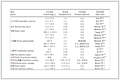
构造沉降[47]幅度采用佘山高精度甚长基线干涉仪(VLBI)1988~1994年间国际联测数据分析结果为1mm/a[25](2011~2030年)。地面沉降幅度和趋势分级分区分析,采用上海市境内由西向东、由北向南4个断面(图2中aa′、bb′、cc′和dd′)上的刘行、嘉定、汽车二厂、白鹤、华漕、北新泾、国棉一厂、外白渡桥、金桥、顾路、政法学院、小闸、吴泾、塘桥、北蔡、唐镇、面粉厂和朱泾等18个分层标2000~2009年间累积地面沉降的变化幅度(表1)及规律,建立趋势面模型[27, 40]。根据高斯-马尔科夫定理,利用最小二乘法进行多项式系数的最佳线性无偏估计,使残差平方和最小,并进行趋势面模型的适度检验[48]。
|
表1 上海市由陆至海4个断面2000~2009年间地面沉降量 *(单位:mm) Table 1 Land subsidence along the four seaward profiles of Shanghai City(unit: mm) |
利用该趋势面模型的分析结果表明:2000~2009年间上海市境内总体上已形成3个明显的地面沉降中心,其中2个在沿黄浦江岸的浦东新区,1个在苏州河沿岸(地面沉降危害Ⅰ级区域)。前者为浦东新区外高桥沉降中心,其形成与该区2000~2006年间浦东新区快速大规模的城市工业建设以及地下水大量开采有关; 后者为苏州河沿岸地面沉降中心,其形成可能与2006年开始建设的上海虹桥综合交通枢纽有关,以及近些年上海市政府为控制中心城区和浦东新区的地面沉降而采取的地下水开采西移有关。而且,2000~2009年间18个分层标数据的地面沉降控制点大部分集中在浦东新区和中心城区,整个上海市南部(西南和东南)地面沉降控制点缺乏,由此导致上海市西南和东南地面沉降预测误差较大。但2010~2013年,苏州河沿线地面沉降速率已控制在5mm/a以内,局部河段还出现缓慢反弹趋势。
根据以软粘土为主体的上海地面沉降泊松旋回模型,预测2011~2030年吴淞潮位站地区地面沉降8cm[25],即4mm/a。该预测值与吴淞潮位站邻近区域2010~2013年累计地面沉降量平均值(5mm/a)[49]接近。
河口河槽冲刷幅度分析,大通站横断面数据1970年 采用航道水深,2014年5月采用Edge Tech 3100浅地层剖面仪现场测量结果(图4)。两者对比分析结果表明: 长江河口潮区界河段河槽近45年来冲刷2~4m,该值与前人结果[30]不一致,原因不仅与流域拦蓄引调工程和水土保持工程有关,可能还与该河段涉水工程有关。吴淞潮位站所在长江河口段南支河槽横断面采用长江口海图水深数据[50, 51]。南支主槽总体上在2003年6月三峡水库试运营后冲刷,2002~2006年平均净冲刷了60~70cm,而2006~2008年平均淤积了16~18cm[51],但2003~2013年间年均冲刷量是1997~2002年冲刷量的3倍,考虑到崇明岛北岸大规模促淤围垦工程导致北支河槽冲淤演变趋势和淤浅幅度,即1958~1981年平均淤浅1.2m; 1981~1991年间平均淤浅20cm,2005年与1991年的平均水深变化相近[51]; 未来20年邻近水域的白茆沙与新浏河沙护滩及南沙头通道潜堤,以及中央沙圈围和青草沙水库等一系列促淤圈围工程可能导致的冲淤趋势 ?[40, 50, 51, 52],推断到2030年南支主槽在现有基础上净冲刷2~10cm。

|
图4 长江河口干流潮区界大通水文观测站河段横断面 (a)1970年根据航道水深绘制;(b)2014年6月15日利用浅地层剖面仪实测获得;(c)2014年4月15日在横断面中央采集的床沙样品,含砾粗砂、花岗岩和角闪岩砾石直径2~40mm;(d)2014年6月15 日横断面南侧冲刷地貌和泥砾,泥砾直径3~120mm Fig.4 Channel cross section in the tidal limit part at Datong Hydrological Station in the Changjiang River (Yangtze River) estuary. (a)Drawn by the waterway depth in 1970;(b)Measured by shallow profiler EdgeTech 3100 on June 15th 2014;(c)Bed sediment samples of coarse sands with gravels in diameter ranging from 2mm to 40mm composed of granite and amphibolites collected on April 15th 2014;(d)Erosion landform with mud gravel in diameter ranging from 3mm to 120mm collected on June 15th 2014) |
由长江河口众多围垦工程(图2)抬高的局部水位和雍水分析,借鉴北支1989~2000年间围垦导致青龙港潮位站平均潮位上升38cm[34]和北槽深水航道治理导致横沙潮位站1997~2007年间平均潮位抬高17cm[53]的记录,考虑到吴淞潮位站所在南支主槽局部水位受北槽深水航道的影响较为显著,采用MIKE21数值模型模拟分析。结果表明,到2030年河口工程导致吴淞潮位站局部水位抬升8~10cm[27]。
综合上海地区相对海平面变化的构造沉降、地面沉降、理论海平面上升、局部水位抬升及河槽冲刷等5个主要影响因子,预测以吴淞潮位站为基准的上海地区2030年相对海平面上升10~16cm(表2)。从灾害风险评估角度,下文均采用16cm。
|
|
表2 本文预测值与1994年中国科学院地球科学部[54]、上海市1996年[25 ]预测值比较 Table 2 Predicted values of sea level rise by Department of Earth Sciences,Chinese Academy of Sciences (1994)[54], Shanghai City Water Conservancy Bureau (1996)[25] and present paper |
设计高潮位、设计波高和沿江沿海潮流流速是海岸防护工程的3个主要参数。海平面上升对设计高潮位的影响分析,选用金山嘴、芦潮港、外高桥、马家港、堡镇、横沙(图2和 表3中1、3、8、10、15、20)等6个代表性潮位站(图2)年最高潮位的0.5 % 、1 % 、2 % 和5 % 等4个设计频率进行分析。海平面上升对防汛堤顶设计波高的影响分析,也选择上述6个代表性潮位站20年一遇、50年一遇、100年一遇、200年一遇设计波高,采用极值水位分析和PⅢ曲线拟合分析方法; 调和常数则选择M2分潮和迟角。计算结果表明,海平面上升16cm将使沿江沿海高潮位抬升8~24cm(表3),设计高潮位上升16cm,设计波高上升12.48cm,M2分潮振幅抬升6~20cm,迟角减小。
|
|
表3 丰水年海平面上升后各验潮站点水位、表层流速和底层流速变化 Table 3 Change in water level,surface current velocity,and bottom current velocity by the sea level rise at each individual tidal station in abundant water year in the Shanghai area |
海平面上升对沿江沿海潮流流速的影响分析,采用课题组开发的长江河口和近海三维水动力及温盐运动数学模型[27, 55]、上海市大陆片区黄浦江水系及江岛片区崇明水系的感潮河网一维水动力数学模型[27]。选用金山嘴、金汇港闸、芦潮港、南汇嘴观海公园、大治河闸外、陈行水库近川沙河、炮台公园近吴淞口、外高桥、三甲港海滨公园近川杨河、马家港、民主村、青草沙水库西段、长兴岛北堤隧桥下、崇西水闸、堡镇、团旺闸外、东滩公园、堡镇港北闸、庙港北闸、横沙、横沙岛北、横沙岛东、南槽中、北槽中、北港中、南港中、北港中、北支中、南支中、青龙港等30个代表性站点(见 图2和 表3)。模拟计算的典型水情和时段分别选取1998年(丰水年)7月15日至8月27日和1997年(平水年)8月8日至8月20日。上游开边界由大通实测的逐日径流量给出,外海开边界考虑16个主要分潮,由其调和常数合成给出潮位变化过程,以及海平面上升值。初始水位设为海平面上升值。风场考虑夏季的平均风况,南风4m/s。
当海平面上升16cm时的模拟计算结果显示: 杭州湾北岸潮位增加14~18cm,表层流速最大增加为2.0~4.0cm/s; 长江口南岸潮位增加8~22cm,表层流速最大增加3.0~16.0cm/s; 长兴岛沿岸潮位增加12~19cm,表层流速最大增加4.0~4.5cm/s,长兴岛北堤隧桥段变化最大,最大减少量1.0~7.0cm/s,青草沙水库西端变化大; 崇明岛沿岸潮位增加11~24cm,北支庙港北闸~堡镇港北闸段变幅略低12~17cm,表层流速最大增加3.5~9.0cm/s; 横沙岛沿岸潮位增加12.0~23.0cm,表层流速最大增加5.0~20.0cm/s(见 表3); 河口段各河槽涨落潮流量增大,最大增加值北支上段600~950m3/s,北港上段3000~3900m3/s,北槽上段2100~3800m3/s,南槽上段1600~1700m3/s。
为此,应对之策宜实施分区设防,大陆片及长兴岛海塘满足200年一遇加12级风,崇明岛及横沙岛片满足100年一遇加11级风,并按海平面上升后各阶段水平年相应标准陆续加高加固及实施重点保滩和应急保滩工程[27, 56]。
4 海平面上升对城市供水安全的影响采用课题组建立的长江河口及近海水域三维水动力和温盐模型[27, 55],模拟计算分析长江大通站枯水期90 % 来水保证率下,海平面上升对上海市三大水源地的陈行、青草沙和东风西沙水库(图2)取水口的取水保证率、最长连续不宜取水天数、取水水质和供水水质、取水水量和供水水量等6项指标。模拟分析结果表明: 海平面上升16cm,取水口最低潮位也将同步上升,取水口所处水深更深,取水保证程度更高,将更有利于取水口的取水条件; 对最长连续不宜取水天数均有影响,青草沙水库相对大些,陈行水库次之,东风西沙最小; 取水水质含氯度仅青草沙超出安全范围,其两个水库变化在安全范围之内; 供水水质基本安全,影响不大; 取水量减少,陈行水库供水安全水量影响较大,其他两个水库由于本身库容大,水库仍处于安全状态(表4)。
|
|
表4 枯季90 % 来水保证率、海平面上升16cm对上海市主要供水安全指标的影响* Table 4 Impact of sea level rise 16cm at water guarantee rate at 90% in dry season on the main fresh water supply safety index,Shanghai City |
应对之策为加强长江口水源地(水库群)资源整合、 联动与开发,加强咸潮入侵监测、 咸潮控制水工程措施和预报预警体系建设。
5 应对海平面上升的上海城市行动指南2011年7-8月对上海市全岸段海岸防护工程结构与布局、 沿岸经济发展情况的实地调查结果显示: 上海市区陆地岸段的海堤防护工程级别比较高,基本采用防浪墙-两级护坡-两级消浪平台-丁坝-顺坝-异形体的结构。宝山区石洞口码头处以及奉贤区岸段的海堤防护级别略低,但防护级别均达到了抵御风暴潮的防护级别(图5)。崇明岸段只有简单的防浪墙,即桨砌块石护坡的防汛墙结构,有的地方甚至土堤结构,或者只有护坡结构,但从防汛墙开始到光滩面,生长着宽广的植被,且长势旺盛。这些宽广的植被有很强的防护海岸能力,加之崇明岸线附近基本以农业用地为主,没有大规模工业开发建设,减少人工建筑痕迹,与其生态岛建设目标相适合。

|
图5 上海市海岸带海岸防护结构分布 Fig.5 Coastal protection facility along the Shanghai coastal area |
海平面上升主要对占上海市土地面积62.1%、人口40.4%、GDP36.3%的金山区、奉贤区、浦东新区、宝山区及崇明县临海等滨水地区的社会经济发展产生影响。其中,金山、奉贤区仍以第二产业为主,金山区杭州湾北岸是石油化工产业集聚区; 浦东新区与宝山区第三产业比重高于第二产业,浦东新区沿岸祝桥镇坐落着上海浦东国际机场; 宝山区月浦镇集聚了全国最大的钢铁生产企业——宝钢集团,及众多电厂、煤气厂、水厂等公共基础设施。崇明县一产比重大于10%,与其他行政区相比经济较为落后,但崇明县位于长江入海口,由崇明、长兴和横沙三岛组成,拥有东滩鸟类国家级自然保护区(东滩湿地)、东平国家森林公园、明珠湖、西沙湿地等生态资源,对于崇明乃至上海具有极其重要的作用(表5)。
|
|
表5 2009年上海市沿岸行政区社会经济情况* Table 5 Social and economic data of each individual coastaladministrative regions in Shanghai City in 2009 |
上海市从20世纪90年代就已开始重视海平面上升对城市防汛、海岸防护等工程的影响,同时致力于建立地面沉降监测系统、海洋观测预警系统,并从导致海平面上升的源头——气候变暖入手采取了应对行动,如上海已建立了一个覆盖全市的地面沉降监测网络,包括全市各区县的43个基岩标、146个GPS监测点和326个水位观测点,能够随时预报上海各区域地面沉降现状; 由于地面沉降和理论海平面上升,黄浦江老港区受到威胁,港区功能逐渐衰弱减退,愈来愈不能适应上海经济的发展,2002年6月洋山深水港区开工建设,对于上海建设国际航运中心、加快浦东开发具有重要意义; 2007年上海规划建设中国第一个海底观测站,完善上海以及邻近海域的海洋综合观测和灾害预警系统,2009年已在东海内陆架建成一个浅水海底观测试验站,下一步将在舟山东部的长江口区域扩大规模,布设观测网络体系,形成海底观测网; 2009年上海市决定打造崇明岛、临港新城、虹桥枢纽三大低碳实践区以应对气候变暖和海平面上升,并指出发展低碳经济是上海的必然选择,也是应对气候变暖、减轻海平面上升威胁的积极举措。
但是,城市安全决策需要对海平面上升的自然适应过程进行准确判断,如依据三峡大坝建成后长江泥沙逐渐减少的趋势,规划长江三角洲围垦和生态环境建设[58]; 对社会响应机制,包括组织保障机制、科技支撑机制、运行机制进行创新,涉及海洋系统、技术、政策,产业,城市规划等不同方面,是一项复杂的综合巨系统。因此,立足于上海国际金融中心建设、国际航运中心建设以及城市发展方式转变和功能转型的发展目标,在分析借鉴国内外滨海城市应对海平面上升经验的基础上,提出以下上海应对海平面上升的行动实施步骤:
(1)近期行动(2012~2015年): 继续采取有效措施,严格控制地面沉降; 重新考虑城市基础设施的设计标准; 供水多元化,并考虑将城市自来水取水口向长江水移动; 上海疏浚海道与造地同步进行; 城市给排水工程与防护工程更新升级; 完善海岸带生态环境修复工程。
(2)中期行动(2016~2020年): 完善海平面监测预警系统,考虑实施海平面上升因素的专项、城市、区域规划,赋予海平面上升因素的上海综合规划法律效力。
(3)远期行动(2021~2030年): 节能减排; 更新规划编制。
6 结论在目前全球气候变暖和海平面上升,世界及我国沿海各地城市内涝灾害普发情况下,从流域—河口—海洋系统角度,研究长江河口地区理论海平面上升、构造沉降、河口城市地面沉降、流域三峡大坝建设导致的河口河槽冲刷和河口局域工程导致的水位抬升等的复合效应,预测2010~2030年上海地区相对海平面上升10~16cm。海平面上升将使上海近岸海域潮位增高8~24cm,设计高潮位抬升16cm,设计波高上升12.48cm,沿江沿海表层潮流流速增大2~20cm/s,最大涨落潮流量增大1600~3800m3/s。海平面上升也将使上海市主要水源地取水量减少,对陈行水库供水安全水量影响较大。为此,需在流域范围内开展协调条件下,提出上海市应对海平面上升的近期、中期和远期行动指南。
致谢 对上海市科学技术委员会给予的资助和国家海洋局东海预报台、上海市供水调度监测中心给予的支持和帮助表示诚挚的感谢!
| 1 | Milliman J D, Broadus J M, Gable E. Environmental and economic implication of rising sea level and subsiding deltas, the Nile and Bengal examples. Ambio, 1989, 18 (6):340~345 |
| 2 | Syvitski J P M, Albert J K, Irina O et al. Sinking deltas due to human activities. Nature Geoscience, 2009,(2):681~686 |
| 3 | Torbjorn E T, Davin J W, Joep E A S et al. Mississippi delta subsidence primarily caused by compaction of Holocene strata. Nature Geoscience, 2008,(1):173-176 |
| 4 | Meyssignac B, Cazenave A. Sea level:A review of present-day and recent-past changes and variability. Journal of Geodynamics, 2012, 58:96~109 |
| 5 | Gornitz V. Sea-level rise and coasts. In:Rosenzweig C, Solecki W D eds. Climate Change and A Global City:An Assessment of the Metropolitan East Coast Region. New York:Academic Press, 2001. 21-46 |
| 6 | Kabat P, Fresco L O, Stive M J F et al. Dutch coasts in transition. Nature Geoscience, 2009, 2:450~452 |
| 7 | 任美锷, 张忍顺. 最近80年来中国的相对海平面变化. 海洋学报, 1993, 15 (5):87-97 Ren Mei'e, Zhang Renshun. Relative sea level chang in China for last 80 years. Acta Oceanologica Sinica, 1993, 15 (5):87~97 |
| 8 | 刘岳峰, 韩慕康, 邬 伦. 海平面上升对我国主要三角洲平原影响的综合评估. 第四纪研究, 1999,(3):284-284 Liu Yuefeng, Han Mukang, Wu Lun. The integrated assessment of sea level rise impact on China coast. Quaternary Sciences, 1999,(3):284~284 |
| 9 | 肖笃宁, 韩慕康, 李晓文等. 环渤海海平面上升与三角洲湿地保护. 第四纪研究, 2003, 23 (3):237-246 Xiao Duning, Han Mukang, Li Xiaowen et al. Sea level rising around Bohai Sea and deltaic wetlands protection. Quaternary Sciences, 2003, 23 (3):237~246 |
| 10 | 谢志仁, 袁林旺. 略论全新世海面变化的波动性及其环境意义. 第四纪研究, 2012, 32 (6):1065-1077 Xie Zhiren, Yuan Linwang. Fluctuation characteristics of Holocene sea-level change and its environmental implications. Quaternary Sciences, 2012, 32 (6):1065~1077 |
| 11 | Cazenave A, Le Cozannet G. Sea level rise and its coastal impacts. Earth's Future, 2013, 2 (2):15~34 |
| 12 | Brown S, Nicholls R J, Woodroffe C D et al. Sea level rise impacts and responses:A global perspectice. In:Finkl ed. Coastal Hazards. Netherlands: Springer, 2013. 117~149 |
| 13 | Katsman C A, Sterl A, Beersma J J et al. Exploring high-end scenarios for local sea level rise to develop flood protection strategies for a low-lying delta——The Netherlands as an example. Climate Change, 2011, 109 (3-4):617~645 |
| 14 | Nicholls R J, Cazenave A. Sea-level rise and its impact on coastal zones. Science, 2010, 328 (5985):1517~1520 |
| 15 | Mikhailova V N, Mikhailova M V. Regularities in sea level rise impact on the hydrological regime and morphological structure of river deltas. Water Resources, 2010, 37 (1):1~15 |
| 16 | Reeve D E, Karunarathna H. On the prediction of long-term morphodynamic response of estuarine systems to sea level rise and human interference. Continental Shelf Research, 2009, 29 (7):938~950 |
| 17 | Smith A J M, Nienhuis P H, Saeijs H L F. Changing estuaries, changing views. Hydrobiologia, 2006, 565:339~355 |
| 18 | Miguel A G, Yvan A, Reide C et al. The effect of Hurrican Katrina and Rita on the seabed of the Louisiana shelf. Sedimentary Record, 2007, 5 (1):1543-8740 |
| 19 | World Bank. The World Bank Supporrts Thailand's Post-Floods Recovery Effort. 13 December 2011 |
| 20 | Gordon. Hurricane sandy:After the deluge. Nature, 2013, 498 (7446):421~422 |
| 21 | National Climate Information Center. UK seasonal weather summary winter 2013/2014. Weather, 2014, 69 (4):99 |
| 22 | 上海市人民政府交通办公室. 9711台风对长江口及杭州湾海岸影响调查记录. 1997 Traffic Office of Shanghai Municipal People's Government. Survey Record of Impact of 9711 Typhoon on the Coast of Yangtze Estuary and Hangzhou Bay. 1977 |
| 23 | 王建平. "余姚水灾"的人为致灾性——以《余姚市防台风应急预案》启动失误为视角. 中国人口、资源与环境, 2014, 24 (5):510-513 Wang Jianping. Human factors of flood in Yuyao City:In the perspective of errors in the starting stage of emergency plan of typhoon in Yuyao City. China Population, Resources and Environment, 2014, 24 (5):510~513 |
| 24 | 黎 兵, 魏子新, 李 晓. 长江三角洲第四纪沉积记录与古环境响应. 第四纪研究, 2011, 31 (2):316-328 Li Bing, Wei Zixin, Li Xiao. Records from Quaternary sediment and palaeo-environment in the Yangtze River delta. Quaternary Sciences, 2011, 31 (2):316~328 |
| 25 | 上海市水利局. 海平面上升对上海影响及对策研究系列报告. 1996 Shanghai City Water Conservancy Bureau. Sea Level Rise in Shanghai Influence and Countermeasure Research Series Report. 1996 |
| 26 | 陈西庆. 近70年长江口海面变化研究及其意义. 地理学报, 1990, 45 (4):387-398 Chen Xiqing. Sea-level changes from 1922 to 1987 in the Changjiang River mouth and its signicance. Acta Geographica Sinica, 45 (4):387~398 |
| 27 | 华东师范大学, 上海市水务规划设计研究院. 长江口海平面上升对城市安全影响及应对关键技术研究报告. 2013 East China Normal University, Shanghai Water Planning Design and Research Institute. Impacts of Sea Level Rise in the Changjiang Estuary on the City Safety and Countermeasure Research Series Report. 2013 |
| 28 | IPCC. 5th Assessment report(2013). In:Stocker T F, Qin D, Plattner G K et al.eds. Climate Change 2013:The Physical Science Basis. Contribution of Working Group I to the Fifth Assessment Report of the Intergovernmental Panel on Climate Change. http://www.ipcc. ch/report/ar5/wg1/#. UsH O_tW-Ag |
| 29 | 王寒梅. 上海地面沉降风险评价及防治管理区建设研究. 上海地质, 2010, 31 (4):7-17 Wang Hanmei. Experimental research of shallow aquifer pressure groundwater recharge based on dual control pattern of groundwater level and land subsidence. Shanghai Geology, 3 1 (4):7~17 |
| 30 | Dai Z J, Chu A, Stive M J F et al. Impact of the Three Gorges Dam overruled by an extreme climate hazard. Natural Hazard, 2012, 13 (4):310~316 |
| 31 | Dai Z J, Liu J T, Wei W et al. Detection of the Three Gorges Dam influence on the Changjiang(Yangtze River)submerged delta. Scientific Reports, 2014, 4:6600, doi:10.1038/srep06600 |
| 32 | He Yufang, Cheng Heqin, Chen Jiyu. Morphological evolution of mouth bars on the Yangtze estuarine waterways in the last 100 years. Journal of Geographical Sciences, 2013, 23 (2):219~230 |
| 33 | 计 娜, 程和琴, 杨忠勇等. 近30年来长江口岸滩沉积物与地貌演变特征. 地理学报, 2013, 68 (7):937-946 Ji Na, Cheng Heqin, Yang Zhongyong et al. Sedimentary and morphological evolution of nearshore coast of Yangtze Estuary in the last 30 years. Acta Geographica Sinica, 2013, 68 (7):937~946 |
| 34 | 程和琴, 陈吉余, 黄志良等. 长江河口北支河床演变过程中的人为驱动效应. 见: 陈吉余主编. 21世纪的长江河口. 北京: 海洋出版社, 2009. 128-148 Cheng Heqin, Chen Jiyu, Huang Zhiliang et al. Human driving effect on the riverbed evolution of north channel in the Yangtze Estuary. In:Chen Jiyu ed. The 21st Century Yangtze Estuary. Beijing:China Ocean Press, 2009. 128-148 |
| 35 | 杨正东, 朱建荣, 王 彪等. 长江河口潮位站潮汐特征分析. 华东师范大学学报(自然科学版), 2012,(3):111-119 Yang Zhengdong, Zhu Jianrong, Wang Biao et al. Analysis of tidal characteristics of the tide gauges in the Changjiang Estuary. Journal of East China Normal University(Natural Science),2012,(3): 111-119 |
| 36 | 上海海事局海测大队. 长江口深度基准面的变化与应用研究报告. 2013 Marine Survey Center of Shanghai Maritime Bureau. Depth Datum Change and Its Application Report in the Changjiang Estuary. 2013 |
| 37 | 程和琴. 海平面上升对城市安全影响关键技术研究进展与建议. 世界水务海洋科技动态, 2013, 2:34-48 Cheng Heqin. Progresses and suggestions of the key technology for the impact evaluation of sea level rise on the city safety. World Water and Marine Science and Technology Development, 2013, 2:34-48 |
| 38 | 程和琴, 赵建虎, 陈永平等. 基于GNSS的河口三角洲地区城市水患致灾预警研究进展. 测绘通报, 2012,(增刊):38-40 Cheng Heqin, Zhao Jianhu, Chen Yongping et al. Research progress of city flood disaster early warning in the estuary-delta area based on the GNSS. Bulletin of Surveying and Mapping, 2012,(Suppl.):38~43 |
| 39 | 毛兴华, 顾圣华, 莫丹锋等. 长江口潮位变化对潮型影响的研究. 水文, 2013, 33 (2):11-14 Mao Xinghua, Gu Shenghua, Mo Danfeng et al. Impact of tidal level change on tidal form in Yangtze Estuary. Journal of China Hydrology, 33 (2):11~14 |
| 40 | 王冬梅, 程和琴, 张先林等. 新世纪上海地区相对海平面变化影响因素及预测方法. 上海国土资源, 2011, 32 (3):35-40 Wang Dongmei, Cheng Heqin, Zhang Xianlin et al. Impacts of multifactors and prediction technique of relative sea level in Shanghai district. Shanghai Land & Resources, 2011, 32 (3):35~40 |
| 41 | 秦曾灏, 李永平. 上海海平面变化规律及其长期预测方法的初探. 海洋学报, 1997, 19 (1):1-7 Qin Zenghao, Li Yongping. Preliminary research of the sea level change discipline and long-term prediction methodology. Acta Oceanologica Sinica, 1997, 19 (1):1~7 |
| 42 | Gornitz V. Global coastal hazards from future sea level rise. Palaeo-geography, Palaeoclimatology, Palaeoecology, 1991, 89:379~398 |
| 43 | John A C, Neil J W, Leonard F K et al. Revisiting the Earth's sea-level and energy budget from 1961 to 2008. Geophysical Research Letters, 2011, 38:L18601 |
| 44 | 董晓军, 黄 珹. 利用TOPEX/Pos-eidon卫星测高资料监测全球海平面变化. 测绘学报, 2000, 29 (3):266-272 Dong Xiaojun, Huang Cheng. Monitoring global mean sea level variation with TOPEX/Pos-eidon altimetry. Acta Geodaetica et Cartographica Sinica, 2000, 29 (3):266~272 |
| 45 | Cabanes C, Cazenave A, Provost C. Sea level rise during past 40 years determined from satellite and in situ. observations. Science, 2001, 294 (5543):840~42 |
| 46 | Ishii M, Kimoto M, Kachi M. Historical ocean subsurface temperature analysis with error estimates. Monthly Weather Review, 2003,(131):51~73 |
| 47 | 黎 兵, 王寒梅, 谢建磊等. 长江口地区地面沉降的深部动力学机制分析. 第四纪研究, 2009, 29 (2):318-326 Li Bing, Wang Hanmei, Xie Jianlei et al. Analysis of deep dynamics on land subsidence in Yangtze River Estuary, Eastern China. Quaternary Sciences, 2009, 29 (2):318~326 |
| 48 | 薛禹群. 我国地面沉降模拟现状及需要解决的问题. 水文地质工程地质, 2003,(5):1-5 Xue Yuqun. The present situation and the need to address the problem of simulation of land subsidence in China. Hydrogeology and Engineering Geology, 2003,(5):1~5 |
| 49 | 王寒梅, 焦 珣. 海平面上升影响下的上海地面沉降防治策略. 气候变化研究进展, 2015, 待刊 Wang Hanmei, Jiao Xun. Control strategy of land subsidence in Shanghai under sea level rise. Advances in Climate Change Research, 2015, in press |
| 50 | 徐海根. 长江河口河槽. 见: 陈吉余主编. 21世纪的长江河口. 北京: 海洋出版社, 2009. 19-41 Xu Haigen. Channel in the Changjiang Estuary. In:Chen Jiyu ed. The 21st Century Yangtze Estuary. Beijing:China Ocean Press, 2009. 19-41 |
| 51 | 张晓鹤, 李九发, 朱文武等. 近期长江河口冲淤演变过程研究. 海洋学报, 2015, 待刊 Zhang Xiaohe, Li Jiufa, Zhu Wenwu et al. Study on recent changes of erosion and siltation in the Yangtze estuary. Acta Oceanologica Sinica, 2015, in press |
| 52 | 杨作升, 陈晓辉. 百年来长江口泥质区高分辨率沉积粒度变化及影响因素探讨. 第四纪研究, 2007, 27 (5):690-699 Yang Zuosheng, Chen Xiaohui. Centurial high resolution records of sediment grain-size variation in the mud area off the Changjiang(Yangtze River)estuary and its influencial factors. Quaternary Sciences, 2007, 27 (5):690~699 |
| 53 | 刘 杰, 陈吉余, 徐志扬. 长江口深水航道治理工程实施后南北槽分汊段河床演. 水科学进展, 2008, 19 (5):605-612 Liu Jie, Chen Jiyu, Xu Zhiyang. River-bed evolution in the braided reach of the south and north passage after implementing Yangtze estuary deepwater navigational improvements. Advances in Water Science, 19 (5):605~612 |
| 54 | 施雅风, 朱季文, 谢志仁等. 长江三角洲及毗连地区海平面上升影响预测与防治对策. 中国科学(D辑), 2000, 30 (3):225-232 Shi Yafeng, Zhu Jiwen, Xie Zhiren et al. Impact prediction and prevention countermeasures of sea level rise in the Changjiang(Yangtze)delta and adjacent area. Science in China (Series D), 2000, 30 (3):225~232 |
| 55 | Wu H, Zhu J R, Choi B H. Links between saltwater intrusion and subtidal circulation in the Changjiang Estuary:A model-guided study. Continental Shelf Research, 2010, 30:1891~1905 |
| 56 | 李世阳, 徐 健. 海平面上升对上海市防潮标准影响研究. 中国水运, 2013, 13 (1):68-69 Li Shiyang, Xu Jian. Research on the impacts of sea level rise on the flood proofing standard of Shanghai City. China Waterway, 2013, 13 (1):68~69 |
| 57 | 上海市统计局编. 上海市统计年鉴. 北京: 中国统计出版社, 2010. http://www.stats-sh.gov.cn/2004 shtjtjnjtjnj 2010.htm Shanghai Municipal Statistics Bureau. Shanghai statistical year book. Beijing:China Statistics Press. 2010. http://www.stats-sh.gov.cn/ 2004 shtjtjnjtjnj 2010.htm |
| 58 | 李从先, 杨守业, 范代读等. 三峡大坝建成后长江输沙量的减少及其对长江三角洲的影响. 第四纪研究, 2004, 24 (5):495-500 Li Congxian, Yang Shouye, Fan Daidu et al. The change in Changjiang suspended load and its impact on the delta after completion of Three-Gorge Dam. Quaternary Sciences, 2004, 24 (5):495~500 |
 , Chen Zujun②, Ruan Renliang③, Xu Guiquan②, Zeng Gang④, Zhu Jianrong①, Dai Zhijun①, Chen Xiaoyong⑤, Gu Shenghua⑥, Zhang Xianlin⑦, Wang Hanmei⑧, Chen Jiyu①
 Abstract
In the current global warming and sea level rise, frequent occurrence of waterlogging and salt water intrusion exists in the worldwide estuarine and coastal cities. The relative sea level rise is dozens or even hundreds of times the absolute sea level rise in these areas. Complex effect of absolute sea level rise, tectonic subsidence, land subsidence by the groundwater extraction in the coastal cities, scour depth caused by the human intervention in the river catchment of Changjiang River (Yangtze River) as Three Gorges Dam, rise of water level and depth datum led by the land reclamation and deep waterway regulation has been estimated from the point of view of the continuous system consisted of river catchment, estuary and coastal sea in the present paper. The results show that: (1)The absolute sea level rise is 2.0mm/a (2011~2030). It is an average value of the results analyzed from the annually averaged sea level in the records at the Wusong gauge station (1912~2000) using a combined linear regression analysis integrated with grey system with wavelet analysis proposed by the authors, and using the least square method integrated with wavelet analysis. (2)The tectonic subsidence is cited 1mm/a (2011~2030), the measured by the very long baseline interferometer(VLBI) in 1990s. (3)Land subsidence is cited as 4mm/a(2011~2030) predicted in 1996. (4)Scour depth of the estuarine channel is estimated at 2~10cm (2011~2030) and the rise of water level is estimated at 8~10cm (2011~2030). Therefore, the relative sea level rise (RSLR) will be speculated about 10~16cm (2010~2030) in the Shanghai City.
The RSLR will lead to the rise of tidal level 8~24cm, the rise of tidal current 2~20cm/s, the rise of design high tidal level 16cm and the rise of design wave height 12.48cm, respectively, for the coastal defense in the coming 20 years. The RSLR will also reduce the flood control standard and adaptive action should be implemented as the partition fortification as the improvement of seawall standard to meet 200 years plus 12 level wind along the coastline of mainland and Changxing Island, to meet once in 100 years with 11 levels of winds along the coastline of Chongming Island and Hengsha Island, and gradually heightening and strengthening and implementing key beach protection and emergency protection plan. Impacts of sea level rise on the fresh water supply in three reservoirs named Chenhang, Qingcaosha, and Dongfengxisha are simulated by our three-dimensional hydrodynamic and temperature and salinity model of the Changjiang Estuary with the adjacent waters in dry season runoff guarantee rate at Datong station. Six indicators of the impacts are guaranteed rate of water intake, the longest continuous days with no water, intake water quality and supply water quality, intake water quantity and supply water quantity. Simulated results show that three reservoirs will be affected. To this end, the action guideline to the sea level rise strategy in the Shanghai City have been proposed to the Shanghai government as (1) recent actions (2012~2015) to upgrade the city water supply and drainage engineering and protective engineering; (2)interim actions (2016~2020) to improve sea level monitoring and early warning system, and then the special, city, regional planning considering sea level rise; (3)long term actions (2021~2030) to implement both the safety and the transformation and development of the city.